Mera and Island Peak Climbing - 26 Days

Twin Peaks Climbing with a Challenging Pass
based on 7 reviews
Mera and Island peak climbing
climb Mera Island peak
climb mera island peak in Nepal
Trip Photos
At a Glance
Duration26 Days
Trip GradeStrenuous
i
Maximum Altitude6476 m
Best TimeOct-Nov, Apr-May

Trip Overview

The Mera and Island Peak Climbing expedition into the infamous Everest Himalayas of Nepal, where the world’s highest mountain range dominates the sky horizon, offers you an adventurous opportunity to summit two of the most iconic trekking peaks. The combined Mera and Island Peak climbing itinerary of 26 days ensures proper acclimatization and increases the summit success rate.

Trekkers and climbers on this combined Mera and Island Peak expedition itinerary via Amphu Labtsa Pass not only explore the legendary Hinku and Imja Tse Valleys but also cross one of the high mountain passes in the Everest Trekking and Climbing region, Amphu Labtsa Pass, at an elevation of 5,845 m/19,177 ft above sea level. Physically demanding, your mental resilience is also tested, especially during the Island Peak climbing sections.

While Mera Peak (6,476 m) represents the pinnacle of the combined trek and climb, Island Peak also presents some challenging sections. Therefore, it is a must that trekkers and climbers have an excellent level of physical fitness and are ready for basic living standards with limited access to modern facilities. The more experienced you are, the easier the trekking and climbing trails during the Mera and Island Peak expedition.

Mountain Monarch here has more than two decades of experience in organizing premium trekking, climbing, and tours in Nepal. Our Mera and Island Peak climbing cost, including for the years 2026 and 2027, is reasonable without any hidden expenses. Our Mera and Island Peak Expedition Cost covers guides, porters, oxygen cylinders, and climbing permit fees. Hassle-free experience guaranteed. Bookings are now open!

What to expect during the combined high-altitude climbing journey to Mera Peak and Island Peak?

Both some of the best beginner-friendly trekking peaks in Nepal, Mera Peak (6,476 m) and Island Peak (6,189 m), when combined together in a single trip, offer you an incredibly rewarding Himalayan adventure and high-altitude challenges, generating a sense of achievement like never before. Test yourself before attempting 7,000 m and gradually 8,000 m peaks like the Manaslu Expedition and Everest Expedition (8,848.86 m).

Expect limited modern amenities and infrastructure at high-altitude infrastructure areas in rugged and remote Himalayan terrain. In and around the Mera Peak, high mountain pass, and Island Peak, the weather is everything. It can change in the blink of an eye, so dressing in layers, having the right gear and equipment, and preparation are essential to conquer the Twin Peaks safely and have the best experience possible.

Where are the Mera Peak and Island Peak located in Nepal?

Mera Peak is the highest trekking peak in Nepal, while Island Peak, formerly also called Imja Tse, is known for its technical sections. Located inside the iconic Solu Khumbu region, Mera Peak lies to the southeast of Mount Everest (Sagarmatha, referred to as Chomolungma in Tibet) within the Makalu Barun National Park. Island Peak, however, comes within the Sagarmatha National Park area and follows the classic Everest Base Camp Trekking route.

On combined hiking and climbing journeys to Mera Peak and Island Peak, trekkers and climbers traverse off the beaten path as compared to the Everest Base Camp Trek, the Gokyo Lakes Trek, the Everest Circuit Trek, and the Everest Three Passes Trek trails. For those who enjoy the solitude, pristine nature, and raw Himalayan wilderness, the Mera and Island Peak Climbing provides you with a golden opportunity to do so.

Mountain views during the climbing trip to Mera and Island Peak

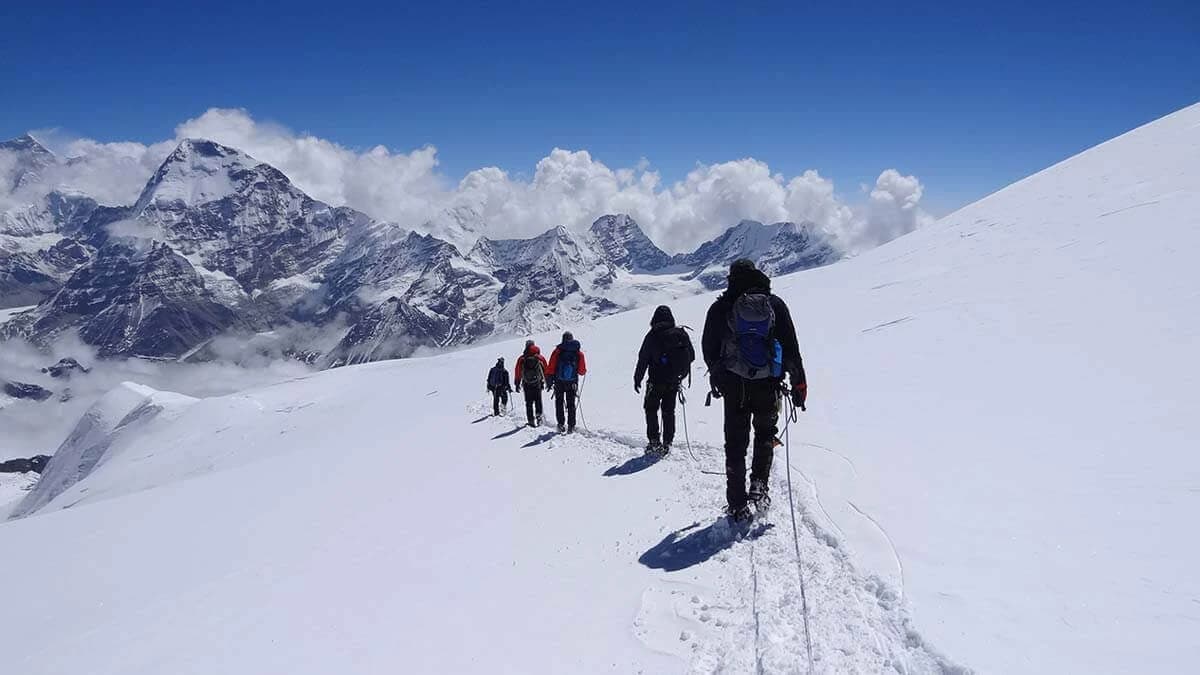
If there’s one word that has to define the Mera and Island Peak combined expedition, that would be majestic mountain views as far as you can see. While you steal glimpses of several majestic mountain ranges on the trekking route, the high-altitude climbing trail in Everest, Nepal, offers you close-ups. Both the summit points of Mera Peak and Island Peak are the ultimate vantage points.

Specifically, the top of Mera Peak provides you with sweeping views of at least five of the tops of world, such as Everest (8,848 m), Kanchenjunga (8,586 m), Lhotse (8,516 m), Makalu (8,485 m), and Cho Oyu (8,188 m). Where the Island Peak (Imja Tse) summit ensures you a full 360-degree view of the highest mountain in the world, Mount Everest, along with Ama Dablam, Nuptse, and Lhotse.

Which culture predominated the expedition trail to Mera and Island Peak?

To climb the Mera Peak and later on Island Peak, at first, adventurers trek several days starting from Lukla. Witnessing the diverse landscapes from lush green valleys to barren lands with minimal vegetation, you also encounter Himalayan locals, most of whom are Sherpas in the Upper Himalayas. Celebrated worldwide as the “Tigers of Snow” for their outstanding mountaineering skills, the Sherpa culture adds much to the memorable trip.

Along the trekking route, their typical stone houses, sacred monasteries, gompas, and mani walls are often adorned with colorful prayer flags showcasing the strong influence of Tibetan Buddhism, making the combined Mera and Island Peak climbing trip more than just about mountains. As you stay in local teahouses in villages such as Piuyan, Chalen Kharka, Khola Kharka, Khare, and Kongme Dingma, an enriching cultural experience is guaranteed.

How is the Amphu Labtsa Pass? Can beginners cross it?

Connecting the remote and isolated Hinku Valley with the legendary Khumbu region of the Everest Himalayas, Amphu Laptsa Pass at an altitude of 5,845 m is a significant mountain pass that you cross during the Mera and Island Peak Climbing itinerary. Away from human inhabitants, with some steep ascents and descents and unpredictable weather, it is one of the most challenging phases of hiking for the Mera and Island Peak climb.

The pass provides you with a taste of mountaineering. While doable by beginners as well, it is, however, necessary that you have a good level of physical fitness, mental resilience, and basic climbing knowledge. Prepare yourself for glacier travel and use of crampons, harnesses, and ice axes, and stunning Himalayan panoramas of Ama Dablam, Lhotse, and Baruntse toward the Imja Valley. A milestone achievement to cherish for a lifetime.

Can you see wildlife on this Mera and Island Peak combined expedition?

Yes, while you embark on the trekking trails, at first close to and within the Makalu Barun National Park and later on the Sagarmatha National Park, you have a high chance of coming across several ranges of flora and fauna. As you trek from the dense rhododendron forests in the midst of pine to the high alpine desert and vast shimmering glaciers of the Khumbu region, look forward to an unforgettable Himalayan wildlife observation.

While shy and elusive, on your lucky day, you may spot Himalayan Tahr, musk deer, and red pandas in lower and subtropical zones from Lukla to Kothe up to 4,000 m, traversing across the woodland of rhododendron, magnolia, pine, and hemlock. Above 4,000 m, expect blue sheep (Bharal), pika, marmots, yaks, and Jhopkyo, and if extremely fortunate, a majestic snow leopard while journeying for Mera and Island Peak Climbing via Amphu Labtsa Pass.

Climbing preparation, training, gear, and guidance for Mera and Island Peak

At Mountain Monarch, a government-licensed trek, climb, and tour company in Nepal with more than two decades of experience, your safety and satisfaction are put as utmost priority. Therefore, our comprehensive package, the Mera and Island Peak expedition cost, including for the years 2026 and 2027, includes the provision of essential trekking and climbing gear and equipment. Sturdy climbing boots, a sleeping bag, and down jackets.

As per need, our medically trained and experienced guide, adequate Nepalese staff, and one porter per person mean you do not have to worry about the hectic camping setups. Before you officially attempt the final summit to Mera Peak and Island Peak via Amphu Labtsa Pass, our mountain guides also provide you with essential climbing training. It complements the climbing preparation you did before and makes the trip success rate high.

The Best Mera Peak and Island Peak Climbing Itinerary and Cost for 2026 and 2027

The Mera and Island Peak expedition itinerary of 26 days begins with your arrival in Kathmandu, Nepal. After a day of preparation, you officially set off for the trail on the third day with an adventurous mountain flight to Lukla. From Lukla, instead of taking the standard Everest Base Camp hiking route, you take a path less trodden to the Hinku Valley, a pristine and rarely explored region of the Makalu Barun area.

Days 15 and 16 are dedicated to Mera Peak climbing, and then you cross the Amphu Labtsa Pass, enter the Imja Valley, and begin tracing the route for climbing Island Peak. By the 21st day, you would have already made it to the top of Island Peak, venturing through Seto Pokhari, a sacred lake nestled over 5,000m beneath the towering ramparts of Chamlang, Lhotse, and Everest. There is not a single dull moment awe awe-inspiring scenery all around.

The itinerary of 26 days of Mera and Island Peak climbing allows ample acclimatization and exploration, and also lets you maintain your pace. There is hardly any space for rushing; hence, it is taken as the best route for climbing in the Everest Himalayas, including for the years 2026 and 2027. Our professional guides ensure safety by fixing ropes, making the descent along rocky crests and compact blue glacier ice sections secure and manageable.

Meals, lodging, transportation, permits, guides, porters, oxygen cylinders, and quality gear, including for camping when necessary, our Mera and Island Peak climbing cost covers them all. We provide premium services wherever possible. Further, we are offering group and early bird booking discounts on the combined Mera and Island Peak Expedition cost. Grab this opportunity, contact us, and secure your spot for 2026 and 2027.

Conquer Dual Himalayan Dream - Bookings are now open for 2026 and 2027!

The combined climbing expedition to Mera Peak and Island Peak via Amphu Labtsa Pass is all about immersing yourself in the untouched beauty and raw adventure of one of Nepal’s most remote and off-the-beaten trails through pristine wilderness. Also referred to as the Twin Peaks, both are beginner-friendly; it is your chance to experience the true essence of Himalayan mountaineering, best done with experienced Sherpa guides.

The spring and autumn seasons feature the most stable Himalayan weather and are therefore regarded as the best seasons for high-altitude Himalayan trekking and climbing in Nepal, making it possible to offer fixed departures. Join our group or personalize it. Let us know your requirements, preferences, and areas of interest, and enjoy a customized trip. Two summits, one life-changing expedition, what are you waiting for? Book Now!

Mera and Island Peak Climbing - 26 Days Itinerary

Expand all
Day 1-2

The first day of the trip marks your arrival in Nepal. We welcome you and take you to the hotel upon arrival at the airport. Overnight in Kathmandu. City tour and trip preparation

  • Enjoy an aerial tour of Kathmandu Valley.
  • Explore the beautiful and bustling Kathmandu City.
  • Group welcome Dinner: Local food
  • The following day, the cultural tour
  • Afternoon gear checking and trip preparation
Day 03

Early in the morning, we drive to Ramechhap for the Lukla flight. This is to avoid air traffic at Kathmandu airport.

  • Experience a spectacular drive to the countryside of Nepal.
  • Wow, experience a thrilling flight to Lukla.
  • An introduction to the traditional lifestyle of the Sherpa tribe.
  • Trek along the deep ravines of the Khumbu Valley to reach Puiyan village.
Day 4-6

Leaving Puiyan village behind, you will continue traversing the forested trail. It leads to the high mountain pass of Kari La. After the pass, we descend to Panggom through bamboo and rhododendron forests. We climb Panggom Pass at 3174 meters on our way to Peeng Kharka Danda. We trek to Chalen Kharka via Ningshow village and Surke la.

  • Explore the deep ravine of Dudh Koshi and Makalu Barun National Park.
  • Explore the traditional settlements of the ethnic Sherpa tribe.
  • Cross the high mountain passes of Kari La, Panggom La, and Surkye La.
Day 7-8

We traverse the pristine Makalu Barun National Park to reach the remote Hinku Valley. The trail climbs along the Yak pastures along the river. The locals bring their Yak flock to these Kharkas only during summer. We cross a few ridges and head towards the exposed and opened ridge top. It offers a clear view of the mountains.

We climb a mountain pass to reach the pristine lakes of Panch Pokhari. We continue climbing through the rhododendron forests toward Khola Kharka. Further to the snow, it moraines and climbs toward the prayer flags. Catch the beautiful sights of Numbur, Pike Top, and Lamjura Pass. Then, the trail descends along the Hinku Khola. Later, it climbs downstream along Majang Khola. Finally, we cross the suspension bridge to reach Kote for an overnight stay.

  • Walk past rich Yak pastures or Kharka. Witness a massive flock of yaks during summer.
  • Visit the revered Panch Pokhari. It is a collection of five different Oligotrophic Lakes.
  • Walk past lush rhododendron forests.
  • Trek into the remote glaciated region of Hinku Valley.
Day 9-10

We start our hike to Tangnag at 43000 m via the glaciated route. We climb upstream with Kinku Khola on the way to Kyashar height. First, catch the majestic sights of the three summits of Mera Peak.

  • Climb upstream with Hinku Khola through the glaciated Hinku Valley.
  • Catch the majestic sights of Mera Peak.
  • Witness the remote, pristine, glaciated valley of Hinku. It remains popular for the endangered species of Snow Leopard.
Day 11-12

Leaving Tangnang, you will begin ascending the glaciated path toward Khare. We hike via Kyeshare Peak and Dig Kharka to reach Khare. It is the last settlement and the base camp for the Mera peak climbing.

  • Climb the local Kyeshar Peak to access Khare or Mera Base Camp.
  • Catch the base camp scenic views of Mera Peak, Charpati Himal, and Kyeshar.
  • Prepare for the climb by training with essential equipment.
Day 13

We begin climbing the snow and rock moraines to reach Mera La at 5,400 m. The route advances steeply out of Khare village. It leads through a rocky path overlooking Mera Peak. From here, it has been overblown by thick snow and rock gully onto the glacier. You may well require using crampons and helmets from here on. As you reach the glaciated path, the gradient eases off. A short hike brings you to Mera La camp for an overnight stay in a tent.

  • Set up a camp on an icy and windy spot overlooking Honku Valley.
  • Prepared for the upcoming climb to Mera Peak
  • You may indulge in climbing practice with your Sherpa guide.
Day 14

Today, you climb the high camp at an altitude of 5,800 meters. Reaching the Mera high camp takes around 4 hours of moderately steep ascend. We make our final ascent of Mera Peak from the high camp. The break-taking and incomparable view await you at the high camp. The Five 8000-meter peaks of Kanchenjunga, Makalu, Lhotse, Cho Oyu, and Everest dominate the horizon.

  • Witness the pleasant view of some famous mountain peaks, including Mount Everest, Kanchenjunga, Makalu, Lhotse, and Cho Oyu.
  • Experience the tented camping adventure next to the mighty peaks.
Day 15-16

Today is the most exciting day on our Mera and Island peak trip. We will make the final ascent to the Mera Peak summit. This exceptionally long day begins early. We wake up around 2 am and have some breakfast. Meanwhile, your staff will prepare the ropes for the climb. Prepare yourself and carry an ice axe and crampons with you. We cross some glaciers with numerous crevasses. We climb slowly but steadily in a group. The trail climbs steeply to the east of the left-hand ridge below the summit. The last 50 meters to the summit is a challenging climb section. We use the fixed rope to climb to the top.

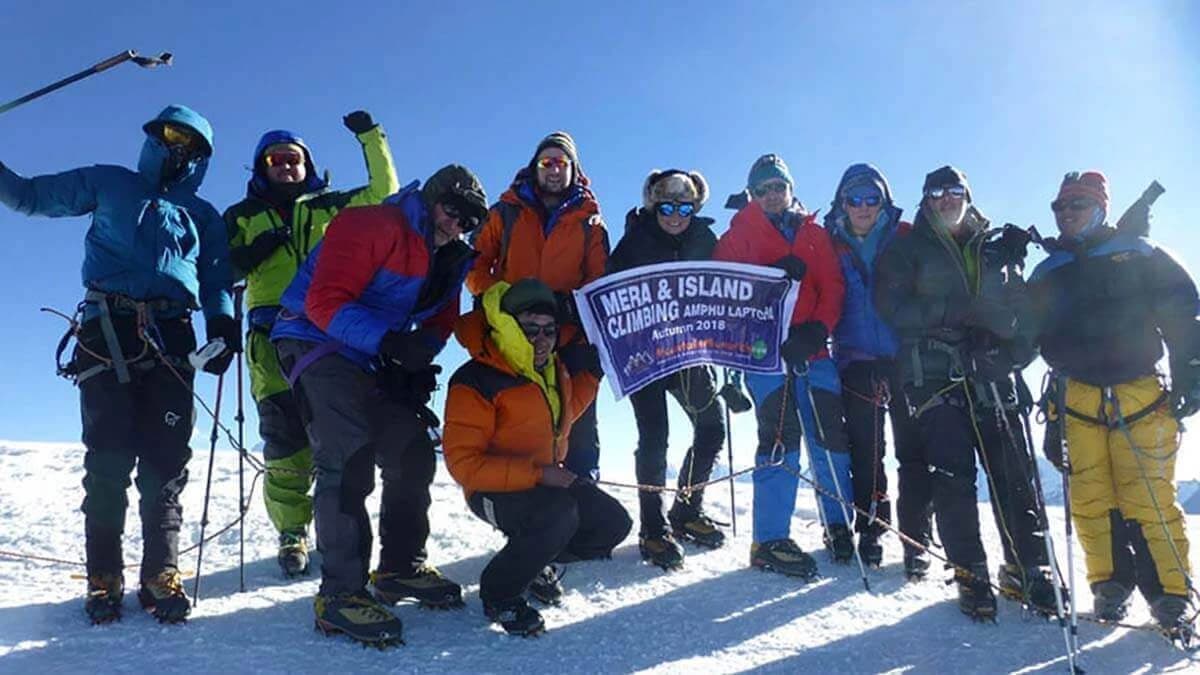
Once at the top, the magnificent sights reward you. Mount Everest, Kanchenjunga, Cho Oyu, Makalu, Nuptse, and Chamlang Himal on your nose tip. We descend to high camp and head north to Kongma Dingma en route to Amphu Pass.

  • Scale the top, a physically demanding climb.
  • Catch the majestic mountainous panorama from the top.
Day 17-18

Leaving Kongme Dingma, the trail climbs along the Yak pastures. See the magnificent view of Chamlang and Baruntse Peak en route to Seto Pokhari. We spend a night at Seto Pokhari. Leaving Seto Pokhari, we hike over the upper flunk to Amphu Lapcha base camp. Enjoy the majestic sight of Mount Everest as you continue climbing along the glacial lakes toward Hunku Pokhari. A short hike brings you to Amphu Lapcha Base Camp South.

  • Climb through the remote glacial pond of Seto Pokhari and Hunku Pokhari.
  • Catch the majestic sights of Mount Everest, Baruntse, and Chamlang Himal.
Day 19

We begin traversing the snowy path leading to Amphu Lapcha Pass. Next, you will access the Upper Hunku Valley, always covered with snow. After an hour walk, you will finally arrive at Amphu Lapcha Pass. Continue trekking along the glaciated path and head down to Imja Glacier. A few hours of descent along the Amphu Lapcha Glacier brings you to Imja Tsho Lake, just beside Imja Glacier. From here, you will descend along the rocky moraine toward Island Peak Base Camp.

  • Climb the highest and remotest pass linking Makalu to the Everest region.
  • Enjoy the beautiful glaciers of Lhotse Shar, Amphu Lapcha, and Imja.
Day 20

Today is a rest day at Island Peak Base Camp. You can spend this day preparing for the upcoming climb. Summiting Island Peak is technically more challenging than Mera Peak. Enjoy a short hike around Imja Glacier and walk down to Imja Tsho Lake. Overnight in Island Peak Base Camp.

Day 21

The most awaited day is here. It begins early, as you wake up at around 2 a.m. We have our breakfast and prepare to make the final summit. Carry the necessary gear and equipment for the climb. In the meantime, your Sherpa crew will prepare the ropes. The journey begins with a slow climb through snow and a few crevasses.

We follow a steep ridge line towards the exposed traverse. The final ascent takes you along the vertical section. We use fixed ropes and crampons on such steep parts. Once at the top, there is a majestic view of the surrounding peaks of Amadablam, Lhotse, and Makalu.

  • Summit is the most popular trekking peak in Nepal, Island Peak.
  • Catch the beautiful sights of Ama Dablam, Makalu, and Lhotse Shar glacier from the top.
Day 22-24

We descend to Lukla via Pangboche and Namche. This makes a big circuit from Makalu to the Everest region in one go. We walk along the Imja and Dudh Koshi Khola. We have time to visit Pangbohe and Tengboche monasteries.

Retrace your path and continue climbing the Chhukung glacier towards Dudh Koshi Valley. A short descent along the glaciated way brings you to the Sherpa village of Dingboche. From here, you will continue climbing down towards Imja Khola. Then, cross the river and continue climbing uphill towards Pangboche. A short descent overlooking the beautiful Ama Dablam peak brings you to Tengboche village via Debuche. Enjoy some time exploring the century-old Tengboche Monastery. From here, the trail drops downstream along the Dudh Koshi River towards Namche Bazaar.

Bid farewell to the beautiful view of Kongde Ri Peak as you descend toward Monjo village. Exit Sagarmatha National Park at Monjo and continue to descend to Lukla via Phakding village.

  • Enjoy trekking the famous Everest Base Camp Trail.
  • Visit the most popular Pangboche and Tengboche Monastery.
  • Explore Namche Bazaar, the so-called capital of the Khumbu region.
Day 25-26

Bid farewell to Lukla as you board the flight to Kathmandu. Upon arrival, we drive to the hotel. Overnight in Kathmandu. Next day flight back home

  • Experience a thrilling flight from Lukla to Kathmandu.
  • Enjoy the beautiful aerial tour of Kathmandu Valley.
  • Spend quality time in Kathmandu, enjoying souvenir shopping and massages.
  • We customize the airport transfer for your onward flight.

This crafted and curated itinerary combines the climbing of Mera and Island Peaks. The twin peaks are climbed with a remote and challenging pass of Amphu Laptcha in the Everest region of Nepal.

Route Map

route map of Mera and Island Peaks

Altitude Chart

altitude elevation of Mera and Island Peaks climbing routes

Cost Details

Included

  • Airport transfers on both international and domestic flights.
  • Standard Hotel on Twin Share with Breakfast.
  • Group Welcome dinner
  • Half-day cultural city tour with heritage site fees.
  • Kathmandu Lukla Kathmandu ( Ramechhap) flight.
  • Full board meals: Breakfast, Lunch, and Dinner
  • Climbing permits for both Island and Mera Peaks
  • Special climbing training course at base camp.
  • Tea house and camping are applicable on a trip.
  • All personal and group climbing gear, including the climbing boots.
  • Company warm gear for free use, like a sleeping bag and down jacket,
  • Camping gear, including member and crew tents while climbing
  • Supplementary Oxygen cylinder with required medicine
  • Medially trained and experienced guides and crew with required equipment and insurance.
  • Satellite Phone in case of emergency
  • Complimentary Trek Duffle bag and trekking map
  • Peak Climbing certificates
  • Makalu and Everest National Park entry fees.
  • Trekking permits and all government taxes, etc.

Excluded

  • Nepal Visa fees and your travel insurance of any kind,
  • International Airfare
  • All Drinks and main meals in cities.
  • Beverage drinks on the trek
  • Tips and a list of personal expenses like hot showers, battery charges, Wi-Fi, etc.

Dates & Availability

Select a Departure Month
Apr 2026
Oct 2026
Start DateApril 04, 2026
End DateApril 29, 2026
StatusGuaranteed
PriceUS$3990
Start DateApril 18, 2026
End DateMay 13, 2026
StatusAvailable
PriceUS$3990

Additional Info

When to go for a combined expedition to Mera Peak and Island Peak?

Spring, from March to May, and autumn, from September to November, feature the most favorable Himalayan weather, moderate temperatures, excellent visibility, and, most importantly, dry routes without rain and snow. Therefore, they are taken as the ultimate best times for trekking and climbing journeys to the Himalayas, including for hiking and conquering the twin peaks of Everest, Mera Peak, and Island Peak in a single trip.

In winter (December to February,) the trails are often blanketed by heavy snow, and snowfall can obscure the sight. In the upper Himalayas, especially at night, the temperature goes below the freezing point. Likewise, summer, also called monsoon season in Nepal, typically spanning from June to August, brings heavy rainfall and added logistical challenges due to potentially muddy and slippery trekking trails; hence, it is not recommended for journeying.

Accommodation and Food Safety: Comfort and Care in the Himalayas

On this remarkable combined climbing trip to Mera and Island, trekkers and climbers get to enjoy the combination of cozy teahouse stays while trekking and, after reaching base camp, under the stars while staying in camps during the climbing portion. When you are with a team of Mountain Monarchs, we plan your meals carefully to keep you energized and safe for the trip. Breakfast, lunch, and dinner are expect full board meals once the journey begins.

Meals offered by teahouses along the trekking route to Mera and Island Peak are hearty and hygienic, and if opting for Dal-Bhat-Tarkari, they are also budget-friendly. At Base Camps, our skilled cooks prepare nutritious meals tailored to sustain you through the demanding expedition. If you have any requirements, do inform us while booking. Otherwise, teahouses and tent camps ensure you have a comfortable place to stay and a warm belly.

Mera and Island Peak Climbing Expedition Difficulty Level

The combined climbing expedition to Mera Peak with Island Peak overall is considered moderate to challenging, a destination not to be missed for novices seeking incredible adventure in the first Himalayan gateway. Mera Peak (6,476 m) is higher, and Island Peak is technical; expect a balanced adventure that tests endurance, adaptability, and basic climbing skills. Wiser are those who listen to their body and take a break when needed.

On rapid ascents, a lower presence of oxygen in thin air means you may suffer from altitude sickness, also called acute mountain sickness (AMS). It can affect anyone regardless of one’s age, experience, and physical fitness level on the Mera Peak and Island Peak climbing odyssey. If not taken care of on time, fatal conditions like HACE and HAPE can occur; therefore, we insist you choose an itinerary with buffer days for proper acclimatization.

Physical and mental preparation for high-altitude treks and climbs to Mera Peak and Island Peak

Preparation is key to successful Himalayan voyages, including combined Nepal high-altitude trekking and climbing to Mera Peak with Island Peak, especially if you are embarking as a beginner. To get yourself ready for long trekking days (6-8 hours), high altitudes, unpredictable Himalayan weather, remote trails, rugged terrain, and glacier crossings, core building, stamina, and flexibility are a must, and so is mental conditioning.

Cardiovascular exercises like swimming, running, and cycling should begin at least a month before the official trip departure date. Stair climbing, lunges, planks, and squats are used to strengthen the muscles. For flexibility, include yoga sessions, consider hiking local trails with a backpack that mimics the Mera and Island Peak trekking conditions for altitude adaptability, and set your expectations realistically for a better endeavor of the journey.

Why hire a mountain guide for the Mera and Island Peak Expedition?

For climbing in Nepal, including obtaining climbing permits, it is a must that you are accompanied by a well-trained and licensed mountain guide. It is so that you have a hassle-free experience from start to end, stay safe on the trail, and head to responsible tourism that strictly sticks to giving back to the community that has preserved the heaven-like Himalayan lands for you to escape all modern problems and conquer boastful adventures.

The Himalayan guide takes care of all essential logistics for you, other than navigating the tough Himalayan terrain. Locals are well aware of the pros and cons and keep you aware of the potential risks, if any, including sharing the safety tips. Also acting as a cultural, linguistic, and environmental ambassador, you have a genuine cultural experience and interaction. In an emergency, they are immediate responders. Hire them now at Mountain Monarch.