Everest Base Camp: Journey of a Lifetime
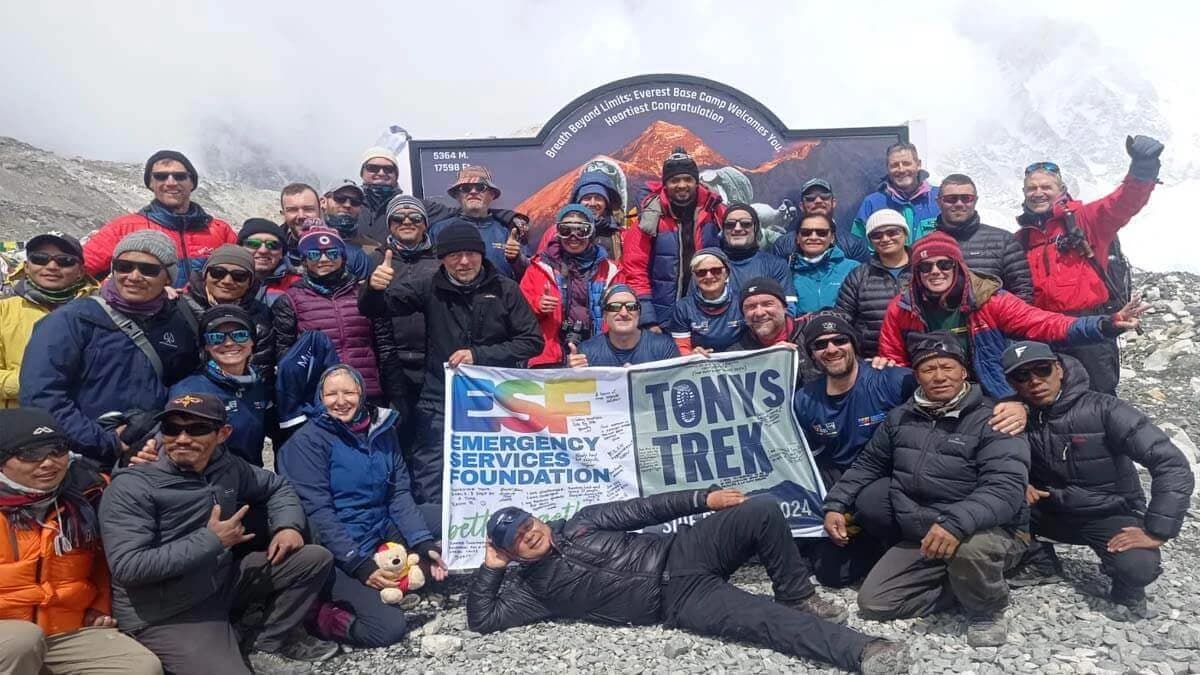
The Everest Base Camp Trek is an adventure of a lifetime that unlocks the majesty of the Himalayas. This trek to Everest Base Camp offers the best perspective on the magnificence of Mount Everest, encompassing authentic Sherpa culture, stunning landscapes, and the legendary Khumbu Valley. This Mount Everest Base Camp Trek in Nepal is about 140 km (86 miles) from Lukla to Base Camp and back. This EBC journey generally takes 12 days of hiking and 16 days in total, including arrival and departure from Kathmandu. Normally, walking is about five to eight hours every day on your journey to the Base Camp of Everest at 5,364 m/17,598 ft in Nepal. Your medically trained trek guide and Sherpa accompany you, motivating you and helping you maintain your own slow, steady pace. This slow, steady walking pace has been proven to be the best way to achieve proper acclimatization and mitigate the symptoms of acute mountain sickness at high altitude.
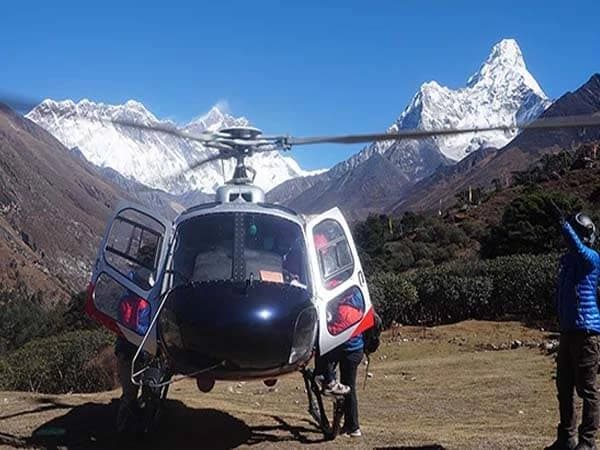
This Everest Base Camp trek is not just a high-altitude voyage; it is also a fascinating journey of a lifetime. This EBC Trek officially commences with an adventurous mountain flight to the most thrilling airport, Tenzing-Hillary Airport, a short runway in the remote Himalayas at high altitude. Then, the Everest Base Camp Trek gradually progresses through the traditional Sherpa villages dotted among the lush forests of oak, pine, and rhododendron in the Sagarmatha National Park. This is home to a wide array of flora and fauna, including rare species of red pandas, Himalayan Thar, black bears, and snow leopards.
How is the Trekking Itinerary to Everest Base Camp?
The Everest Base Camp Trek 16 Days is a moderately challenging Himalayan odyssey through the rugged, diverse terrain of Nepal's Khumbu region. This is the same EBC route that was once traversed by Sir Edmund Hillary and Tenzing Norgay to ascend the top of the world, Mount Everest (8,848 m), and set a historical record by successfully reaching it on May 29, 1953. The trekking route from Lukla to Everest Base Camp and vice versa features steep ascents and descents, as well as flat stretches.
Our Everest Base Camp trek actually starts on day 3 with a flight to Lukla (2860m/9383ft), followed by a gradual descent to Phakding (2610m/8563ft) for an overnight stay at a local teahouse. We often call this a practice day for your hike to the Khumbu Valley in Nepal. The next day, we ascend to Namche Bazaar at 3440 m, crossing the infamous high suspension bridge, a rewarding walk with the first-ever glimpse of Mount Everest. In this bustling, horseshoe-shaped natural amphitheater of Namche Bazaar, you will spend two nights acclimatizing. We hike high in the day and sleep at the same elevation as part of our acclimatization.
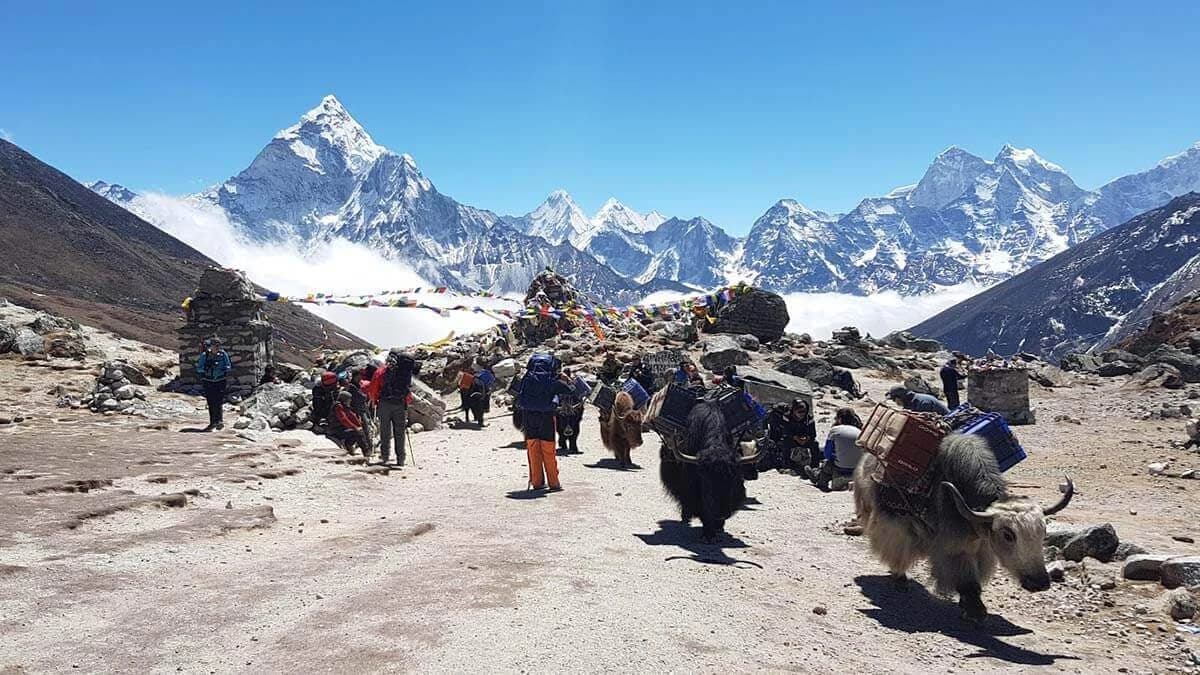
From Namche, we have crafted our Everest Base Camp trek itinerary to follow a less-trodden, distinct route rather than the classic EBC route. We hike gradually to Monla, about 3973 meters, at a junction of the Dudh Koshi and Imja Khola. Here we normally have lunch, enjoying the best view of the famous peaks of Ama Dablam (6812 m), Kangtega (6782 m), and Thamserku (6608m), against the backdrop of the well-worshipped Tengboche monastery. From this scenic photographic spot, descend to the Dudh Koshi River and then ascend to Phortse village at 3800 meters for the night stay. This is a hidden gem, still a farming village in the Everest region, offering striking vistas of Cho Oyu at 8188 meters, the sixth-highest mountain on Earth. Regular or classic trekkers on the EBC route simply do not see this majestic Cho Oyu peak during their entire journey.
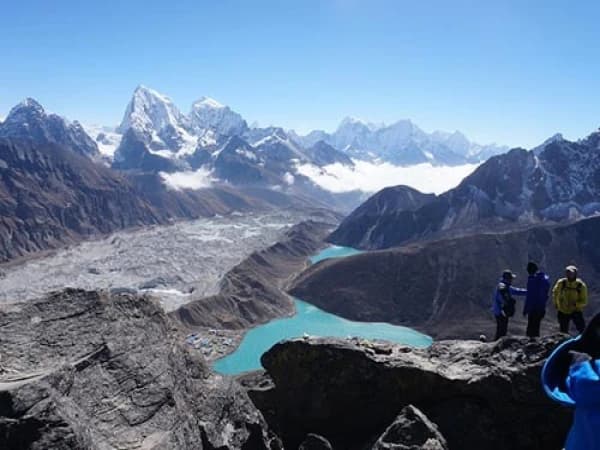
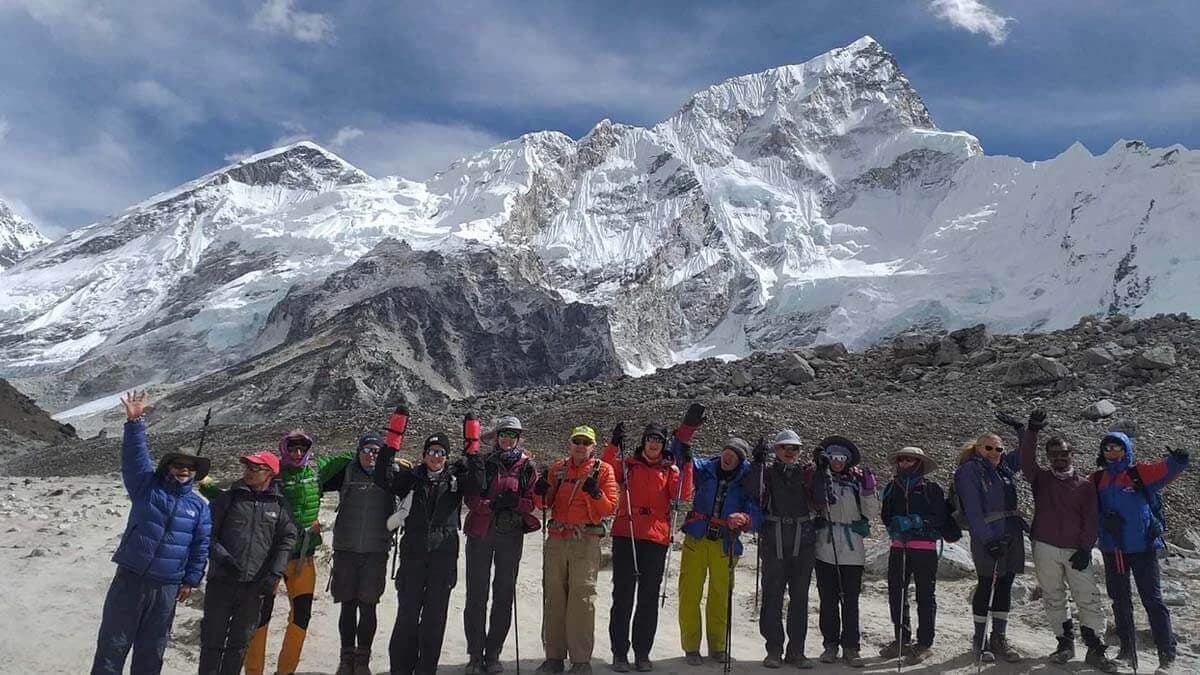
Following our off-the-beaten-path Everest Base Camp route, we head to Dingboche at 4350 meters; this trail offers a more gradual adaptation to altitude and better exploration. Dingboche is a well-known Himalayan settlement where we have two nights again, with our acclimation day hike before we head to the alpine region. After having 2 nights at Namche and Dingboche and a slow and less-trodden crafted itinerary of the Everest Base Camp trek, we head to Gorak Shep via Lobuche. As the ascent continues, the vegetation becomes sparser in the thinner air, especially around Lobuche and Gorak Shep, where high altitude, rugged terrain, and steep ascents and descents increase the challenge. This last settlement of Gorak Shep, close to the base camp, is our launch point for hiking to the base camp of Mount Everest and climbing to the famous Kalapathar. It is a viewpoint at 5545 m/18192 ft to savor the close-up vista of mighty Everest (8848.86m), Lhotse (8516m), Nuptse (7861m), Pumori (7161m), Changtse (7543m), and the notorious Khumbu Glacier and Icefall. On our return, we descend via the diverse route from Tengboche to Namche, then to Lukla, ending our 12 days of strenuous walking on our Everest Base Camp Trek in Nepal.
How is our itinerary different than the Classic EBC?
We have a different approach to the Everest Base Camp trekking route, adding a small circuit midway between Namche and Dingboche. We used to organize our treks to Everest Base Camp via Namche, Tengboche, Dingboche, and then Base Camp, and return the same way. We realized after several treks that we could have taken a better route, as the Khumbu region has much more to see, exploring the quiet trails, viewpoints, and hidden gems.
Thus, our company owner and tour leader, Pradip Limbu, who still leads the trek at least once a year, has passionately designed this less-trodden and diverse 16 days itinerary to the base camp of Mount Everest. Our EBC trek itinerary makes a small circuit midway along the base camp route. We hike from Namche to Phortse village, with a trail that passes through Mongla Dadha (3875m). What astonishing views of Thamserku and Khangtega from the top of Mongla Dadha! It aligns with our “Trek High, Sleep Low” acclimatization strategy as you descend to Phortse Village. We saw fewer people on this route, which gave us the opportunity to see wild animals like the musk deer, Himalayan thar, and Impeyan Pheasant along the way to Everest Base Camp.
After our overnight stay at the hidden gem of Phortse Village, following the less-trodden trail, we will reach Dingboche on our way to the base camp. On the return, we go through Tengboche, visiting the largest monastery in the Khumbu Valley. This way, you not only explore the highlights of classic EBC trek attractions but also get to explore less visited routes and villages, and see mountains that other trekkers simply miss in the same time duration booked on the same Everest Base Camp trek
Everest Base Camp Trek Difficulty and Who Can Join it?
Trekking to the Everest Base Camp in Nepal is one of the most enthralling challenges one can commit to in their lifetime. It is a moderate to strenuous, worldwide-popular walking adventure to the base camp of Mount Everest at an altitude of 5,364 m. Based on the itinerary, you will walk 5 to 8 hours a day and reach the high elevation of 5,545 m at Kala Patthar, where the oxygen level is about 50% less than at sea level. When you trek with a reputed local travel and trekking agency like Mountain Monarch, the hike is steady, self-paced, and multi-day without requiring ropes or technical climbing skills.
Though it is suitable for most people with average fitness, the Everest Base Camp Trekking route must be taken with respect and proper training, and is not recommended for pregnant women or those with heart issues. We recommend about two months of trek preparation, including aerobic exercises such as walking, cycling, jogging, stair climbing, or Tai Chi.
Why Everest Base Camp Trek with Mountain Monarch?
Mountain Monarch has been leading treks to Everest Base Camp for the last 25 years. Safety and a great adventure experience are always at the top of the agenda. 99% of trekkers who join us for the Everest Base Camp trek complete it safely and have a once-in-a-lifetime experience.
Experienced Guide and Oxygen on Trek:
Our guides who lead your trek to Everest Base Camp receive Medical and Leadership training on mountain safety, first aid, and responsible trekking practices. They are trained and licensed through the Kathmandu Environmental Education Project (KEEP) and Nepal Academy of Tourism and Hotel Management (NATHM) in Kathmandu. All of our guides, including Nima Nuru Sherpa, Ram Kaji Tamang, CP Rai, and Sachit Rai, are permanent and have decades of experience leading treks. While our carefully planned itineraries are designed to support gradual acclimatization, every Everest Base Camp Trip carries emergency oxygen and medical kits. These are not optional extras; rather, they are part of the standards we have developed over decades of leading treks, including the Mount Everest Base Camp trek in Nepal. We closely monitor the weather forecast and update our guide leading your trip to Everest Base Camp in Nepal.
Full Board Meals and Drinking Water:
We provide full-board meals throughout the trek so you do not have to think about nutrition each day. By taking care of your meals, you can focus on what is actually important: walking through the Himalayas, enjoying the mountain villages, and sharing stories with your group every evening. Besides full-board meals, we provide enough filtered drinking water to keep you well hydrated; ultimately, it safeguards the fragile Himalayan environment by avoiding plastic-bottled water.
Less-Trodden and Different Route:
Having conducted this Everest Base Camp Trek for decades, we have customized our EBC trek itinerary to differ from the classic EBC itinerary. From Namche, we hike up via the less-trodden, longer route through Phortse Village to Dingboche, then return down via Tengboche to Namche after the Everest Base Camp hike. With this small circle in the middle of the EBC trek route, you will be exploring more regions, villages, and mountains while getting acclimated in a better way. Our itinerary allows enough rest days, with 2 nights at Namche and Dingboche before heading to the Base Camp of Mt. Everest.
Trekking Gear We Provide:
Our Founder and MD, Pradip, who leads trekking journeys at least once a year, says, “Quality equipment makes a difference in the mountains, but waiting to buy it should not hinder your opportunity to explore places while you are in shape.” That is why we provide our trekkers with clean, thoroughly inspected duffle bags, warm down jackets, sleeping bags, liners, and rain ponchos. Buying all this trek gear can take up a good amount of your savings. The money you save can be spent to create lasting memories – whether that is extending your travels in Nepal or simply making your dream journey to Everest Base Camp more affordable.
What we have Learned after Guiding Hundreds of Trekkers through EBC for the last 25 Years
The Everest Base Camp trek is a unique experience because you not only see nature’s beauty and the cultural heritage present at one of the highest altitudes, but you also peek into your own psyche. Trekkers come with their own expectations and preparation; some have shared that they initially thought they could not do it. As you push through one step at a time, things that looked impossible slowly become possible. The body, although fit, cannot sustain itself at this altitude without a strong mind. Most companies recommend that their guests train their bodies but omit the most important aspect: “the mind”. We urge you to understand that in the Himalayas, time feels different; the pace of life is much slower compared. You can expect delays, changes in the weather, and difficult food choices, among many, but if you accept this before starting the Everest Base Camp trek, it becomes much better, and you can tackle these things easily
We have noticed that guests who take things slowly and walk calmly enjoy the trail and succeed at the trek more often than the guests who are in a rush. We need you to understand that even if you book the trip with a friend or in a group, once we walk, it becomes a solo journey – every individual has their own pace, and disturbing it by either competing or pushing harder when it is not required will ruin the experience and, in some cases, your health and mental well-being. As our senior guide, who has led hundreds of Everest Base Camp treks, C.P. Rai says, “Going slow is the fastest way to reach the destination.” You do not have to worry about being left behind, because our guides are great at gauging your walking pace and will gladly walk with you slowly while the rest follow the lead guide.
We strongly encourage our guests to go vegetarian while trekking because doing so reduces the risk of illness and is easier to digest at higher altitudes. We often recommend carbohydrate-rich food above 3000 meters, which provides steady energy for trekking day after day. We also saw that our guests have always loved coffee and usually ask for it in the Himalayas too, but we want you to know that drinking more than a cup can be troublesome. We had one such case where our guest drank a few cups of coffee every day at high altitude, which disturbed his sleep, caused dehydration, slowed his pace, and led him to believe he was experiencing acute mountain sickness, which negatively affected his trek. Although he completed his Everest base camp trek, we had to keep him in Dingboche for 3 days to monitor his condition. Coffee is not off limits on the trail, but moderation is key. A cup is perfectly fine for most trekkers, but as you gain altitude, we recommend prioritizing pure drinking water to stay hydrated and well-rested.
Our Duty toward Responsible Adventure Travel
Every year more than 60,000 people come to the Khumbu Valley, of whom about 400–500 try to summit Everest. An article named “Everest: A high–altitude garbage dump,” published on May 9, 2024, by scholars of geoscience and mountain geography, Suzanne O'Connell and Alton C Byers, claims that Sagarmatha National Park generates 4.6 tons of solid waste per day during peak seasons. Plastic is a huge problem in the Himalayas.
Staying hydrated in the Himalayas is not optional, and it is key to trekking safely. Drinking water should not be an expense, but as we gain altitude, the cost of boiled water increases, and by the time we reach Lobuche, a single liter of boiled water can cost around NPR 800. Many trekkers end up buying bottled water simply because it is cheaper; unfortunately, that convenience comes at an environmental cost, adding thousands of plastic bottles to mountain trails every season.
We choose a different approach. Throughout your trek to Everest Base Camp in Nepal, we provide filtered drinking water and full-board meals. We carry the Katadyn filtered device with us to purify the drinking water on the trek. More importantly, it reduces unnecessary plastic waste in one of the most fragile mountain environments and helps conserve resources for local people and their generations to come.
The Story of our Guides that Lead your Everest Base Camp Trek
The Himalayas are more than a destination for our guides; they are their home for generations. Our guides like Nima Sarki Sherpa, Nima Nuru Sherpa, Mingma Sherpa and Chetten Sherpa were born and raised in the Khumbu Valley, where their families have lived for generations. Their ancestors were among the Sherpa communities whose forebears migrated from Kham in Eastern Tibet centuries ago, establishing lives in this high mountain valley through animal husbandry, trade and agriculture.
Over the years, our guides have led countless treks, stood on mountain summits, and safely guided people from around the world into the vastness of the Himalayas. Their technical experience is invaluable, but what makes them exceptional cannot be measured by the number of expeditions they have conquered. Once the trekking season ends, they do not leave the mountains. They return to their homes and their families. When we asked our climbing guide Chetten Sherpa if he wanted to shift to Kathmandu, he said” I rent a room there, but it is too noisy in Kathmandu, and my landlord will not allow chickens on their property.” Every trail, monastery, bridge, and village is part of a landscape they have known since childhood.
They know when the weather is about to change, which teahouse has been run by the same family for generations, where local traditions are still practiced, and the stories that never appear on a map. When you trek the Everest Base Camp with Mountain Monarch, you are not simply being led through the Himalayas; rather, you are actually exploring them alongside the people who have always belonged here.
What makes the Everest Trekking Trail Landscape so Unique?
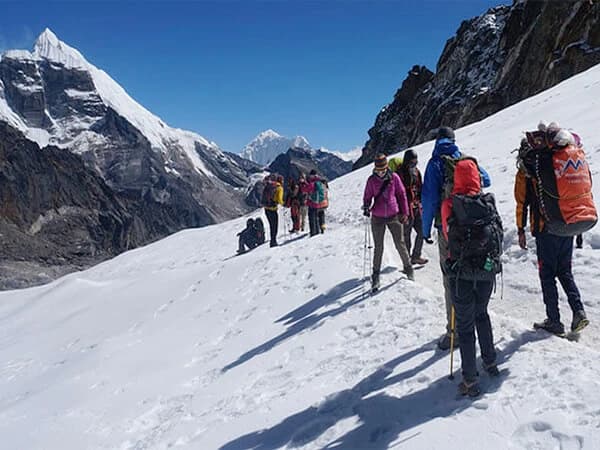
The Everest Base Camp Trekking route traverses the majestic Himalayan scenery of Sagarmatha National Park. Each day, sojourners experience nature's grandeur in a completely different world of the Everest Himalayas, moving through beautiful, dense forests of oak, pine, and rhododendron to rocky terrain. An ideal trip for even beginners with good physical fitness, this Everest Base Camp Trekking Trail leads to Everest Base Camp, offering dramatic views of the Khumbu Glacier and Khumbu Icefall. It is worth taking the time to look at these formations up close and contemplate the immense forces of nature that gave rise to them.
Between 30 and 50 million years ago, the Indian tectonic plate slid beneath the Asian plate, causing the Asian plate to be pushed upward. In some places, this caused the plate to crumple and fold, and in others, intact monolithic slabs of rock were pushed to form the Himalayas. When you reach the base camp, different layers of rocks are visible. The summit of Everest is composed of relatively pure limestone with grey inter- leaved sandstone areas. These limestone areas are part of the 320-million-year-old bed of the Tethys Sea. Remarkably, here at the highest points on earth, one can find remnants of marine fossils
Mount Everest captivates the hearts of trekkers from around the world, and the vibrant culture of diverse ethnic communities, especially the Sherpas, adds much to the cultural heritage. Strong Tibetan Buddhist influence can be found along the route, dotted with several Mani Walls, monasteries, and Gompas, including Tengboche and Pangboche Monasteries, which are usually adorned with prayer flags; the region is rich in distinctive ways of life, dialects, and cultural attributes. Fused with the natural beauty of the Everest Trekking Region, it has resulted in a never-before-seen unique landscape.
How is the Everest Region Changing and Best Time for Everest Base Camp Trek in 2026 and 2027?
We all face the impacts of global warming today, but have you ever considered how this might affect your plans to book a trip to Everest Base Camp? A review documented by the Chinese Academy of Sciences, published in Earth Science Reviews (2021), reports a significant warming of approximately 0.33 degrees Celsius per decade from 1961 to 2018, with projections indicating continued warming until 2099, particularly in winter. Studies claim that the South Col Glacier has lost half its mass since the 1990s and has shrunk glacier areas by 13% in the Sagarmatha National Park.
We in the industry have also noticed a shift in weather patterns as we trek every season. For the last 5 years, we have seen that our monsoon, which usually begins in June, is now irregular. Our director, Subash Rai, who has been guiding for the last 30 years, says, “Our treks in December two decades ago were colder and snowier; the skies used to be grey and cloudy, but it’s been about a decade now that the weather in December feels like it’s October and February feels like the new December.” We now recommend our guests book their treks from early October to the end of December in the autumn and from March to May in the spring season. Trekking in December allows trekkers to bypass some traffic in the mountains and enjoy better views of the Himalayas than in other seasons.
We offer fixed departure dates for individuals, groups of friends, and families joining the 16-day Nepal Everest Base Camp Trekking, ensuring you can book for spring and autumn 2026 and 2027, so you can book online and be part of an amazing Himalayan trip. We are the first choice of trekkers for the safe and unforgettable adventure experience of a lifetime, and joining our regular Mount Everest Base Camp trek. But if you are seeking something more challenging that tests your physical and mental strength, you can always extend your visit to the Everest Three Passes Trek and Everest Circuit Trek to Island Peak Climbing.
Trekkers’ Experience on their Adventure Trip to EBC
Trekkers' experiences speak to their adventure and to our motto in organizing a safe and great adventure trip. Here are some of our trekker comments about their trek experience to Everest Base Camp on different individual travel plat forms, including Trip Advisor:
“Mountain Monarchs is absolutely a top-notch company if you want to tour, trek, or climb in Nepal. They catered to our every need. Our group consisted of 12 trekkers ranging in age from 12 to 65+. All of us trekked to Everest Base Camp. The Mountain Monarch team paid close attention to our health and wellness and instantly provided attention and care if they felt someone was struggling. The accommodations were as expected, and the food was delicious. They exceeded my expectations.” By Sunshine in Oct 2024
“First-class company and a first-class experience - My wife and I have recently completed the EBC trek with Mountain Monarch, and it was from start to finish a fantastic and extremely well-organized trip. From the moment you land till you leave, there is always someone available. The trek and the acclimatization schedule were excellent and well planned. In fact, the route taken on the way up was a little different from the more normal route so as to avoid some of the crowds and get a more authentic experience. The tea houses were excellent and reflect the thought the company puts into selecting where you stay, so that no one in the entire group got any sort of gastro problems. In addition, at all meals there was an open menu so you could order whatever you felt like, unlike other groups we saw in some of the teahouses who had no choice and had predetermined meals.” By Tony D in 2018.
"Recently did the EBC trek with Mountain Monarch from Sept 24th to Oct 11. Absolutely brilliant experience! It was just as I expected but even greater. Our team of guides and Sherpas were wonderful, and we always felt safe and in good hands. The food and lodges were very good as well; they even seemed to get better as we went higher up towards EBC." By Jodien Steve in 2017.