Annapurna Sanctuary Trek

Finest 2 week Trek to Annapurna Sanctuary
based on 16 reviews
Annapurna Sanctuary Trek
Annapurna sanctuary trekking
Annapurna sanctuary hike
Trip Photos
At a Glance
Duration14 Days
Trip GradeModerate Plus
i
Maximum Altitude4200 m
Best TimeMar-May, Sept-Dec

Annapurna Sanctuary Trek: Two Weeks in Nepal

The Annapurna Sanctuary Trek is two weeks of trekking through one of the most stunning landscapes on the planet in the sky-high Himalaya of Nepal. Also known as the Annapurna Base Camp Trek, it stands second to none in scenery, cultural immersion, and natural beauty among hiking trails worldwide. It is a moderate trek that reaches 4,120 meters over 9 days and 130 km, with 5 to 8 hours of daily hiking, taking you to the Sanctuary of the Annapurna massif. This southern Annapurna Base Camp is known as the Annapurna Sanctuary due to its amphitheater-like setting and abundant, excellent mountain scenery of the Annapurna massif. In contrast, the northern base camp is the actual launching pad for the expedition to the Annapurna peaks.

The Annapurna Sanctuary trek is achievable for anyone with good physical fitness. However, this is not for those with weak knees and ankles or heart or lung issues. Our Annapurna Sanctuary trek crew comprises guides and porters to support you on the trails. We carry a medical kit and a supplementary oxygen cylinder as a safety backup while on the trek. Our experienced, medically trained trek guide leads your trek to Annapurna Base Camp and helps you choose safe foods. We hike the longer route to the Annapurna Sanctuary via Poon Hill and encourage you to walk at your own slow pace to ensure proper acclimatization as you go higher. With proper safety backup and walking alongside an experienced guide, almost 100% of trekkers who booked with us for this trek completed the journey safely with a big smile.

Trekking in Annapurna Sanctuary involves walking up and down through remote villages with terraced farms and alpine forests, with rugged terrain, so be prepared to ascend and descend on stone steps and well-trodden hiking trails, both mentally and physically. The unpredictable Himalayan weather sometimes makes the trek more difficult. As you move along the trekking trails, passing by and spending nights at the traditional villages, you will meet and relish the warm hospitality of locals. You will also encounter numerous Buddhist Mani stones set against Hindu temple shrines; you will soon realize the Annapurna Sanctuary Hike is more than just mountains and mountain scenery. Actually, this Annapurna Sanctuary trek is the most popular Himalayan odyssey in Nepal, rivaling the Everest Base Camp Trek in the realm of the tallest mountain on Earth, Mount Everest (8,848 m).

14 Days Annapurna Sanctuary Trek Itinerary and Cost

Our Annapurna Sanctuary itinerary is crafted with additional days of walking to the base camp of Annapurna via Poon Hill for more exploration, which minimizes the risk of Acute Mountain Sickness (AMS) on this trek. This 14 day Annapurna trekking itinerary begins with your arrival at the TIA (Tribhuvan International Airport), Kathmandu, Nepal. On the first day, you will be briefed on the upcoming plan upon arrival. On the morning of the second day, we organize a guided group Sightseeing Tour to learn about local culture and customs, while the afternoon is for checking out gear and preparing for the trek. The third day of the Annapurna Sanctuary Trek commences with a drive to Pokhara for an overnight stay, yet another tourist hub of Nepal after Kathmandu.

After spending a night at a hotel in Pokhara, on the fourth day, you would make it to Birethanti, the gateway to the Annapurna Himalayas and its various trekking routes, including the Annapurna Dhaulagiri Trek. From Birethanti, the trekking trail is pleasing along the Burundi River to Hile and is a gradual ascent until Ulleri. On the fifth day of our hiking itinerary for the Annapurna Base Camp, you will reach one of the major highlights of the Annapurna Himalayas of Nepal, Ghorepani and Poon Hill at 3210 m. This vantage point offers a panoramic view of the Annapurna and Dhaulagiri ranges, including three of the eight-thousand-meter peaks of Mt. Manaslu, Annapurna, and Dhaulagiri, and the eye-catching Fishtail peak in the center. The sixth, seventh, and eighth days lead you to the base camp of iconic Mount Machhapuchhre (Fishtail). The ninth day is the day of your dream as you push through rugged terrain with potentially icy and snowy conditions to the Annapurna Base Camp at an altitude of 4,130 m above sea level. Three days of descent to get back to Pokhara via Jhino Danda with a diverse route.

As the pristine air embraces your cheeks and you find yourself surrounded by the Annapurna Himalayas, perched high in the sky, and green valleys below, the sense of achievement is immense as you step onto Annapurna Base Camp. Once at the sanctum of the Annapurna massif, trekkers can anticipate a diverse landscape serving as eye candy, guarded by sky-towering mountain giants like Machhapuchhre (Fishtail), Hiunchuli, and others, as well as the Annapurna Himalayas (Annapurna I, Annapurna II, Annapurna III, Annapurna Fang, and Annapurna IV). The transformation that comes with this journey is for those seeking to connect with their roots in nature and the Himalayas, which is the greatest grandeur of nature.

Furthermore, at Mountain Monarch, you can get a customized itinerary tailored to your needs, preferences, and requirements. Extended hike days, added side trips, and a change in mode of transportation from drive to flight mean an increase in the total package cost, ensuring you get the best value. If you are planning something extraordinary with your family, friends, or yourself in 2027 and 2028. In that case, the Himalayan Odyssey to Annapurna Sanctuary is worth every shot. With Mountain Monarch, it is not only enjoyable but also secure, legitimate, and eco-friendly, and you are in the hands of professionals who have your back 24/7 while you are en route.

What are the common Challenges of the Annapurna Sanctuary Trek?

Yes, you are right. The Annapurna Sanctuary Trek, concluding at the Annapurna Base Camp, is a dream-come-true adventure for trekkers around the globe. A trekker's haven where one must overcome challenges along the way, including steep ascents and descents over several stone steps. These stone steps can be hard on your knees and legs during your trek to Annapurna Base Camp. The trail can be uneven, rocky, and slippery in some sections, especially during the winter and monsoon seasons. The Himalayan weather also undergoes rapid changes, from sunny days to foggy or snowy conditions within a few hours, significantly increasing the difficulty. The teahouse accommodation on this Annapurna Sanctuary Trek is also basic and limited, and it often gets crowded during the peak seasons.

There are limited food options and basic hygiene standards in teahouse kitchens, so it is recommended that you stick to properly cooked vegetarian meals. Acute Mountain Sickness can be an issue above 3500 meters; thus, stay hydrated and go slow on longer walks to allow proper acclimatization. Trekking with an experienced guide and a reliable company that provides proper safety backup is the best way to experience a memorable journey to the Annapurna Sanctuary.

How to Prepare for the Annapurna Sanctuary Adventure?

The more prepared you are, the merrier the trip. So, physical and mental preparedness is essential for enjoying the adventure hike to the Annapurna Sanctuary. It is best to start preparing at least one or two months before the trip. Focus on cardio, strength, and endurance physical fitness, such as walking, jogging, cycling, or simple cardio exercise. Squats and stretching training focus on the hamstrings, quads, calves, and hip flexors, which will help you walk on steep ups and downs with a backpack.

Finding a building or hill for stairs, or a hill to climb up and down for 30 minutes with a loaded backpack, would be an ideal way to prepare for the trek. Trekking at high altitudes over rugged terrain, from river valleys to rocky moraines and alpine terrace fields, in unpredictable conditions can be mentally challenging. Be prepared for basic facilities in the mountains and stay positive to conquer the unforeseen tough challenges of an adventure. Break in your trekking boots to avoid discomfort or blisters during the hike.

Food Means Something Different in the Mountains

We provide our guests with full-board meals; you can order enough food to feel satisfied after a long day of walking. We do not want anyone finishing a 6-8 hour trek on a half-empty stomach because they are worried about the cost of another plate of food, as meal prices are skyrocketing each season. Many of the ingredients and supplies used in the teahouse up in the mountains must be brought in from the valley, sometimes carried along the trail by people whose work makes life and tourism in these communities possible.

Our request is simple – order what you need, eat well, and do not waste. For the people who grow, carry, prepare, and cook that food, it represents much more than what we see on a plate. It represents time, effort, and resources that have traveled a long way to reach the mountains. It is a small thing, but we believe that by doing so, our guests can respect the communities that make the trek possible.

Our Different Approach to Water and Waste on Annapurna Sanctuary

Recent data indicate that the Annapurna Conservation Area Project (ACAP) collects approximately 32,00 kilograms of waste in the region over a nine-month period; the waste mainly consists of plastic wrappers, bottles, cans, and other synthetic materials. These persist in the ecosystem for decades, disrupting natural habitats and contributing to long-term climate effects.

One of the simplest ways we try to reduce waste on our treks is also one that costs us money. Rather than asking our guests to purchase bottled mineral water along the trail, Mountain Monarch provides filtered drinking water for the entire trek to Annapurna Sanctuary to help safeguard the fragile Himalayan environment.

Bottled water can be cheaper and more convenient for trekkers, but this comes with a cost that is not always visible to the person carrying the bottle. Someone must transport it into the mountains, and eventually that bottle must be returned, or it usually becomes part of the waste problem along the trail. For us, this is not an environmental policy but a choice we have made about how we want to operate in the mountains.

Our Guide Notes from The Annapurna Sanctuary Trail

Annapurna Sanctuary is often described as a moderate trek, but “moderate” does not mean the same thing for everyone. Some trekkers find the altitude challenging, as most of our guests either come from lower altitudes or sea level; others find the long stone steps harder. Some younger trekkers struggle with the descent, while older trekkers manage surprisingly well by maintaining a slower, more consistent pace. We have also learned that age and fitness do not always predict how someone will experience the trail.

In 2024, we had a family join us for the Annapurna Sanctuary Trek, which was led by Chandra Prakash Rai, whom we still remember. The group included a 75-year-old grandmother, her two children, their spouses, and two grandchildren who were just five and seven years old. We could not approach the trek as a standard itinerary. Our priority was to make the trail manageable for the older trekker, so we adjusted the route to reduce some of the steeper climbs and give her proper progression.

The younger children surprised us. They handled much of the trek remarkably well, although there were sections where our crew members supported them when they became tired. What surprised us the most was that the grandmother completed the trek. She did not rush; she walked at her own pace and rested when she needed to. And she made it to Annapurna Base Camp. Interestingly, it was her children, who were in their late thirties and considerably younger, who found the descent difficult. The endless stone steps around the Annapurna Sanctuary Trek section were hard on their legs.

It reminded us of something we have learned many times on the trail: you cannot always judge someone’s ability to complete a trek by their age. Our experienced guide and company owner, Subash Rai, rightly says, “The mountains do not reward the people who walk the fastest; they reward patience, preparation, and knowing when to slow down.”

Trekkers’ Experience on their Annapurna Base Camp Trek

The experience speaks for itself and reflects our commitment to ensuring a great adventure trip in Nepal, including the Annapurna Sanctuary Trek.

The BEST decision for my Himalayan adventure.

“This was my once in a lifetime trek to see the glory of the Himalaya up close. I put my trust in Mountain Monarch, and they delivered in every way. Our lead guide, Ngima (Tibetan Sherpa), was OUTSTANDING in every way. The route was wisely chosen (we experienced no altitude sickness). Our porters were awesome. The experience was unforgettable. I cannot say enough good things, top to bottom, about my satisfaction.” By Gerald K from USA in April 2026

Once in a lifetime experience!

“We had the most incredible experience on our 14 day trek to Base Camp return. Our guide CP along with Silar and the rest of the crew all went above and beyond to make sure we had everything we needed, enjoyed ourselves and educated us as much as they could along the way. Our guides made sure we acclimatized properly and took our time so we did not get sick. 'The whole experience was perfect and I could not recommend MM more!” By Shad, Sydney, Australia in 2017

Plan Your Trip to Annapurna Sanctuary Trek in Spring or Autumn of 2026and 2027

The Annapurna Sanctuary Trek is a Himalayan odyssey in Nepal that does not exceed an elevation of 4200 m; hence, it is safe to say the Annapurna Base Camp Trekking Trail is a mid-altitude Himalayan route that can be run all year round. At Mountain Monarch, we offer many Annapurna Sanctuary Hike departure dates for solo and group trekkers in spring and autumn 2026 and 2027. With proper packing, preparation, and guidance from local expert teams, most trekking trails in the Annapurna Himalayas of Nepal are accessible year-round; March to May and September to December are the best times for a trek to the Annapurna Sanctuary. We customize the private trip for you as per your requirements and time. We organize a winter trek to Annapurna Sanctuary every year. One of them is the Christmas and New Year trek to Annapurna Base Camp. Of course, it is a unique way of celebrating a festival amid the snow-capped mountains. Do not miss this opportunity and join us now!.

Annapurna Sanctuary Trek Itinerary

Expand all
Day 1-2

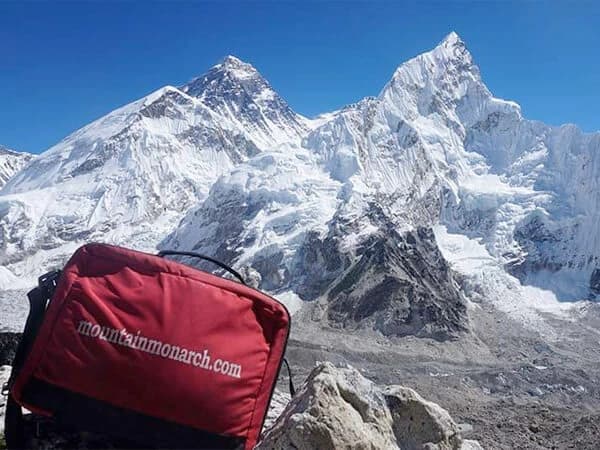
Check out the Mountain Monarch clipboard when you arrive at Kathmandu airport for the transfer to your hotel. Upon arrival, there will be an information and Welcome dinner with a cultural program. The following day, there will be a guided city tour and trek gear-checking.

Day 03

We have a private vehicle for the 6-hour drive to Pokhara along the Trishili and Marsayndi rivers. You have time to explore this lake city of Pokhara and get the last-minute gear before you head to the Annapurna sanctuary trekking journey.


Day 4-5

It is a short drive to Birethanty, the trek starting point. We hike gradually on the Bhurungdi River to Hile. Then, a steep climb to Ulleri village, where you will stay overnight at the tea house. The following day, hike to Ghorepani (2840 m). It is a small town with excellent views of snowy peaks nearby. The following day excursion to Poon Hill (3220 m) viewpoint for 180 panoramic mountain views.

Day 6-8

Enjoy the stunning panorama while hiking at Macchapuchhare base camp. The towering Annapurna South (7219 m) and Fishtail (6993 m) dominate the region. On our route to Machhapuchare base camp at 3703 m, we experience geological variations, from fresh greenery to arid nature.

Day 09

Annapurna base camp is the final destination of our trek. Your slow and steady ascending is the critical factor to overcome at altitude. We stayed at a teahouse in the shadow of Annapurna South and Hiunchuli. Beautiful mountains surround this sanctuary. Annapurna I, Fang, Singa Chuli, Dome Peak, 10th Peak, Raksi Peak, Machhapuchhare, Gandharva Chuli, Gangapurna, etc.

Day 10-12

The sunrise on stunning peaks is simply an incomparable vista from Annapurna Sanctuary. We retrace the trail back to Nayapua via Bamboo and Jhinodanda. It is quite a change to be dropped down low and into a warmer climate. We take a short drive back to Pokhara where you have time to explore this lake city.

Day 13-14

We drive back to Kathmandu for 6 to 7 hours, enjoying the scenic view of the diverse landscape. Stay a night at a hotel in Kathmandu. The next day, we customize the airport transfer for the onward flight.

Route Map

Trek Map of Annapurna Sanctuary

Altitude Chart

altitude chart of Annapurna sanctuary trek route

Cost Details

Included

  • anAirport arrival and departure transfers.
  • Standard Hotel in Kathmandu and Pokhara is on a twin-share BB plan.
  • Tea house accommodation while on the trek.
  • Group welcome dinner as listed in the itinerary.
  • A half-day guided city tour with heritage entrance fees.
  • Kathmandu Pokhara Kathmandu transportation
  • Full board meals Breakfast, Lunch, and Dinner on a trek
  • Medial trained trek guide with medical kit
  • Trek porter and crew with required gear and proper insurance
  • Free use of trek gear like a sleeping bag, warm jacket, rain poncho, etc.
  • Complementary trek duffle bag, T-shirt, and trek map.
  • Trekking permit and Annapurna conservation entry fees, etc.

Excluded

  • Nepal Visa fees
  • International Airfare
  • Your Travel Insurance
  • Drinks and main meals in cities.
  • Beverage drinks on the trek
  • Tips and Items of a personal nature, like postage and laundry on trek

Dates & Availability

Select a Departure Month
Sep 2026
Oct 2026
Nov 2026
Dec 2026
Mar 2027
Apr 2027
May 2027
Sep 2027
Oct 2027
Nov 2027
Dec 2027
Start DateSeptember 13, 2026
End DateSeptember 26, 2026
StatusAvailable
PriceUS$1390
Start DateSeptember 27, 2026
End DateOctober 10, 2026
StatusGuaranteed
PriceUS$1390

Additional Info

Which are the best Annapurna Viewpoints?

The Annapurna Sanctuary Trek in general is moderately difficult Himalayan trekking, but some sections can be both physically and mentally demanding, especially while you are closer to the Annapurna Base Camp. Situated at an altitude of 4,130 m, it is a glacial basin amidst the mountain giants like Annapurna I (8,091 m), Machhapuchhre (6,993 m), Hiunchuli (6,441 m), and Gangapurna (7,455 m); hence, it rewards trekkers immensely with the best view of the mountains, serving as the ultimate viewpoint to see Mount Annapurna. Once at the natural amphitheater of Sanctuary, you will be amazed by 360-degree parades of stunning peaks like Annapurna, Machhapuchhre, Hiunchuli, Gangapurna, Tharpu, and Singhu Chuli.

Do not miss the incomparable, magical mountain vista when illuminated by the golden light of sunset and sunrise. Another viewpoint on the way to Annapurna Sanctuary is Poon Hill at 3,210 m. Poon Hill offers an unforgettable sunrise view over majestic mountains. Sunrise over the Annapurna and Dhaulagiri ranges, with Machapuchare and Manaslu Peak on the horizon, is breathtaking and makes for a worthwhile side acclimatization hike as you embark on the marvelous Annapurna Sanctuary Trekking Trail.

Personal and Warm Gear on a Two-Week Adventure to Base Camp with Poon Hill

Smart packing with appropriate gear is key to a successful Himalayan expedition, and when you are with a Mountain Monarch, you do not have to worry at all. In addition to giving you insight into what to pack, we provide a warm sleeping bag with a fleece liner and warm jackets to keep you cozy in the freezing temperatures. We also provide a complimentary trek duffle bag to keep your trek gear, which a porter will carry for you while on the Annapurna Sanctuary adventure.

In addition to the warm gear we provide for the trip, you need some personal gear for the hike. Such gear includes trekking pants, thermal base layers, fleece jackets, waterproof shells, woolen hats, gloves, a buff, sunglasses, sun cream, headlamps, a sturdy backpack, and trekking boots.

When is the Best Time to Hike the Annapurna Sanctuary with Poon Hill? Can you do winter Trekking in December to the Annapurna Base Camp?

Timing is everything in the Himalayas, as weather is fickle and can change in the blink of an eye. Therefore, you must understand when you are traveling and what the pros and cons of high-altitude traversing are during that period, as the best timing can significantly enhance your experience. That is why, if you are looking for the best months to do and commence the Annapurna Sanctuary Trek, you might want to consider spring and autumn. These are the post-monsoon and pre-monsoon seasons, both offering stable weather, clear skies, and ideal conditions for hiking and trekking.

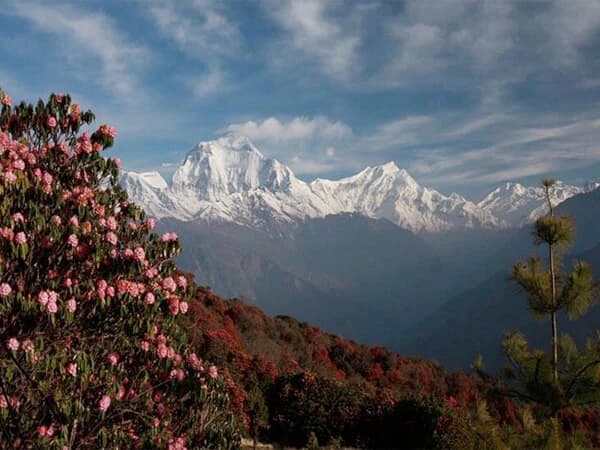
Spring (March to May) is particularly suitable for nature lovers, when the entire Annapurna Forest comes alive with fresh blooms of various rhododendron species (the national flower of Nepal), mild weather, and crystal-clear views of the surroundings. Similarly, autumn, from September to November, is best known for excellent visibility and dry, moderate temperatures, and it coincides with two of the major Nepalese festivals, Dashain and Tihar, which bring Nepalese together and strengthen the heart more than ever. In addition, this Annapurna Sanctuary is feasible even during winter (December to February); however, expect heavy snowfall causing avalanches and alterations on the trekking trail in some sections, more specifically when you approach the base camp of Annapurna.

Though days in December are mostly sunny, the chances of temperatures falling below freezing are high. To capture the incredible beauty of Annapurna in winter, one should be well-equipped with winter gear and mentally prepared to confront the worst of the chill. Due to the weather pattern getting slightly behind, probably by a month, Annapurna Sanctuary Trekking in December is a great time to do the hiking adventure in Annapurna

Do you need to book accommodation in advance during the Annapurna Sanctuary Trekking?

Generally, the primary accommodation along the Annapurna Base Camp Trekking Trail consists of teahouses, lodges, and guesthouses run by local Himalayan residents that provide day-to-day places to rest, stay overnight, and have essential meals, including breakfast, lunch, and dinner. The rooms and bathrooms are shared, and each room includes a twin bed, mattress, pillow, and blankets. At higher altitudes, the blankets provided by the teahouse might not be enough for colder nights; that is why we provide a good sleeping bag for you. Booking these accommodations in advance is almost mandatory, especially during the peak season of autumn and spring. This region has very few lodges due to the ACAP (Annapurna Conservation Area Project) policy, which prioritizes environmental concerns.

A single supplement is sometimes not available on this hike due to the limited number of teahouses. We usually ensure that your stay is in private rooms with two separate beds and a shared restroom with sit-down toilets. Lodges are at their best, offering a cozy experience and a typical local environment. You have a variety of food choices, from continental and Chinese to local. Nepali Dal Bhat, Momo, pasta, thukpa, pancakes, noodles, or vegetable soups, etc. We provide filtered drinking water and suggest you bring iodine water purification tablets.

How to leave a positive impact en route for the trek to Annapurna Sanctuary?

With the recent upgrade in roads, teahouses, and lodges connecting to and along the Annapurna Sanctuary Trekking Trail, the hike to Annapurna Sanctuary is now a teahouse-style Himalayan voyage that includes spending nights in the family-run teahouses in the charming villages of Himalayan locals, mostly Gurung and Magar, in harmony with various ethnic groups. Living in thatch-roofed houses with narrow terraces, each has a valuable contribution to the rich tapestry of Nepalese culture. Therefore, during the Himalayan trip to Annapurna Sanctuary, with Annapurna Base Camp serving as the prime highlight of the journey, be ready to meet local people, gain insight into the Himalayan way of living, and immerse yourself in authentic cultures and traditions.

Learn some simple Nepalese words to interact with locals; at the least, you could greet them with Namaste. It is a great way to bring a smile to their face and open their heart to you. While we say so, you must remain neutral toward local culture, customs, and traditions that may be entirely different from yours. Engage with locals respectfully and be extra mindful when visiting ancient temples, monasteries, and other cultural monuments. There could be restrictions on what you can click on your camera and what you cannot include, such as people who might not want to be captured in photographs, and that is where hiring local guides and porters becomes more than worth it as a companion. They will keep you informed about Himalayan social norms and values, including along the way to the Annapurna Base Camp. When you follow their lead, it is safe to say you are a responsible traveler, minimizing your carbon footprint and potential cultural gaps.

Why take a dip in the Jhinu Danda of the Annapurna Himalayas?

The 14 Days Annapurna Sanctuary Trek itinerary includes stopping by one of the famous tiny yet scenic mountain settlements of the Annapurna Trekking Region called Jhinu Danda, with a natural hot spring that is believed to possess therapeutic properties. Locals believe that a dip into this hot spring can cure skin ailments. The mineral-rich, lukewarm water from the Himalayas can soothe your body aches and joint pain, and it's a perfect place to relax your tired muscles after several days of walking to reach the Annapurna Base Camp and later return to the Pokhara Valley.

Located along the banks of the Modi Khola River at an elevation of 1,780 m above sea level, it offers scenic views and an awe-inspiring Himalayan backdrop, letting you let loose after an epic Annapurna Sanctuary Himalayan Odyssey. Take a dip in warm water, close your eyes, and reminisce about the journey. You will not be able to help but connect with serene nature one more time as the physical exhaustion slowly leaves you. Feel fresh and unwind in the unparalleled beauty of the Annapurna region. Amid the dense, vibrant forest of oak, rhododendron, and pine, the hot spring at Jhinu Danda is a perfect way to conclude your trip to Annapurna Sanctuary, which local pilgrims generally believe brings good luck and positivity in life.

Do you get to encounter snow leopards on the way to the Annapurna Sanctuary?

Yes, as the Annapurna Sanctuary Hike goes through the Annapurna Conservation Area, designated to protect the fragile Himalayan ecosystem, you may encounter a rare snow leopard on your lucky day. This Annapurna Conservation Area, spread over 7,629 square kilometers in the lap of the Annapurna Himalayas, is Nepal's largest protected area and is home to rare Himalayan wildlife such as red pandas, Himalayan Thar, Musk Deer, Black Bears, and snow leopards. This Annapurna Sanctuary hiking trip starts from the lowlands of Pokhara (820m) to the high alpine of Annapurna Base Camp (4120m).

The forests of bamboo, rhododendron, and oak dominate the trekking trail up to Chomrong at an elevation of 2200 meters. Further up to the Sanctuary, you will pass the alpine types of flora, mostly shrubs and grasses. Throughout the journey, keep your eyes open for birds such as eagles, pheasants, and the Himalayan monal. Wild animals like langur monkeys can mimic your movements, and you will not want to interact with them, but observe from a distance. The transitions from tropical lowlands to alpine high-altitude landscapes featuring dense rhododendron and bamboo forests with thundering waterfalls and scenic terraced farmlands are noticeable, making it an epic adventure of a lifetime to experience diverse climatic zones through lush subtropical forests to the crisp alpine air in a single trip.

Internet, Recharging Electronic Devices, and Hot Showers in the Annapurna Trekking Region

Modern amenities like the internet, Wi-Fi, charging electronic devices, and hot showers are still a privilege in such a geographical condition where even day-to-day necessities have to be transported from larger cities like Kathmandu and Pokhara. Yet, Annapurna Trekking Himalayas of Nepal ensures you have almost the entire journey for an additional cost. Internet connectivity can be spotty at higher altitudes in the more remote parts of the Himalayas; for a better experience, it is best to buy local SIM cards like Ncell or NTC and comprehensive data packages.

Electricity and solar power are available in almost all teahouses along the Annapurna Sanctuary Trekking route, so you can recharge electronic devices when you stop for a break or stay the night. To ensure your devices have reliable power, consider packing high-capacity power banks and spare batteries for your lights when you begin trekking. Hot showers are available, and taking them at the lower elevation up to Ghorepani and Chomrong is recommended. It is better not to shower above 3000 meters due to the unpredictable weather conditions at higher elevations.