
Trip Overview
The Mount Everest Expedition is the journey to conquer the ultimate high-altitude mountaineering endeavor, the highest mountain range in the world, Sagarmatha in Nepal/Chomolungma in Tibet, and the English name Mount Everest (8,848.86 m above sea level). First successfully ascended by Sir Edmund Hillary and Tenzing Norgay Sherpa on May 29, 1953, Mount Everest is the ultimate symbol of adventure and human determination.
And the Mount Everest climbing itinerary of 60 days via the South Col route, following in the footsteps of the legendary climbers, is designed so that the Everest expedition success rate is high. One of the greatest feats a mountaineer can undertake, it is why, before attempting to climb Mount Everest, one must have experience conquering 6,000 m and 7,000 m peaks, such as Mera Peak Climbing, Island Peak Climbing, and the Baruntse Expedition.
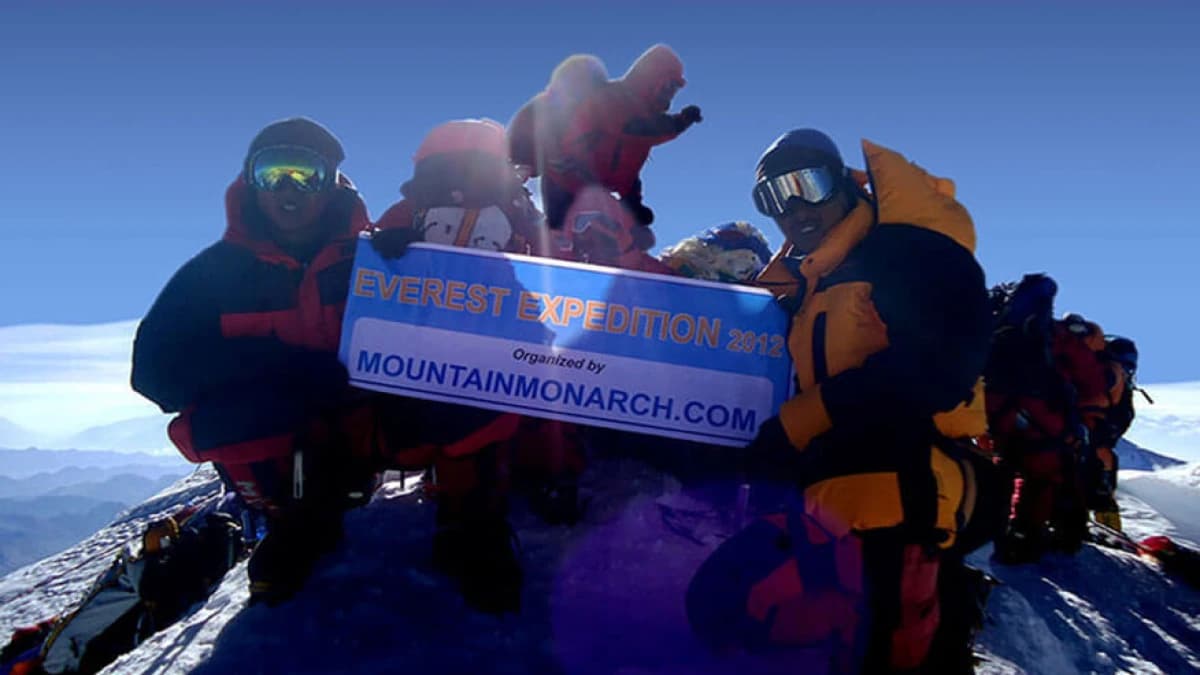
Located within the Everest trekking and climbing regions, climbing these may help in better conditioning, or you may choose your local climbing routes. Either way, climbing Everest is recommended only to seasoned climbers and daredevils with unwavering dedication and preparation. With our remarkable 100% success rate, 6 climbers and 6 Sherpas standing triumphant on the summit, we strive to make your expedition hassle-free.
To reach the dream destinations of every adventurer, our Everest Expedition cost, including for the years 2026 and 2027, includes well-experienced Sherpa guides and essential climbing gear and equipment. 1 porter per climber is so you get to conserve energy during high-altitude trek days and utilize it to its full potential during the actual Mount Everest climbing phases. Bookings are now open for 2027 and 2028; reserve your seat.
What to expect during the Mount Everest Expedition?
While the climbing Everest journey typically begins like any other typical Everest trek and climb in Nepal, such as the Everest Base Camp Trek, Gokyo Lakes Trek, Everest Three Passes Trek, Everest Circuit Trek, or Everest High Passes and Peaks Trek, with a mountain flight to Lukla, it is not beginner-friendly and is technical as well. Several days of 6-8 hours daily trekking to reach Everest Base Camp (EBC), and then the real challenges begin.
From accommodation in teahouses to tent camps, meals from home-cooked to prepared by Nepalese staff, and trails snowy throughout the year, before you attempt the Mount Everest Summit, proper acclimatization is non-negotiable. Therefore, multiple rotations between Base Camp and higher camps: Camp I, Camp II, Camp III, and Camp IV are so your body is well adapted to extreme altitude and harsh conditions.
Trekking through the iconic Khumbu Valley of Nepal
It is also so that your ascent and introduction to the High Himalayas of Nepal, especially when you are attempting to conquer the top of the world, Mount Everest, a part of the Mahalangur Himal range, is gradual; at first, you trek through the legendary Khumbu Valley. Up to Everest Base Camp is a non-technical trek, though it can be physically demanding and requires a good level of physical fitness. If prepared well, it is doable even for beginners.
The Everest Base Camp Trekking Trail winds through the lush forests, suspension bridges, and Sherpa villages, often featuring mani walls, prayer wheels, Gompas, and monasteries draped with prayer flags. While the vegetation and human settlement may get sparse and the trails rugged and challenging as you move closer and closer to Everest Base Camp (EBC) to begin climbing, the constant views of several snow-capped mountain ranges are inspiring.
The best of the Sagarmatha National Park: diversity at its peak
As you know, the tallest point of Mount Everest falls completely in Nepal and is within the Sagarmatha National Park, one of the natural UNESCO World Heritage Sites in the country. Spread over an area of 1,148 square kilometers/443 square kilometers, the park is home to over 90 Himalayan peaks, including two extra peaks measuring 8,000 m above sea level: Lhotse (8,516 m) and Cho Oyu (8,188 m), beside Mount Everest (8,848.86 m).
Monjo, at an altitude of 2,845 m, is the official gateway to the park area. The fun twist here is that to complete the round Mount Everest climbing journey, as you dive deeper into the Sagarmatha National Park, you get to experience all it has to offer. From lush green valleys to rugged Himalayan landscape dotted with mountains and glaciers, you will not miss any. If luck favours, you may even get to spot the rare and majestic snow leopard.
How is Life in Everest and Everest Base Camp?
Up until trekkers and climbers reach Everest Base Camp, on the first phase of the climbing Mount Everest journey, you will stay at the teahouses, lodges, and guest houses along the trekking route, such as in Lukla, Phakding, Namche Bazaar, Tengboche, Dingboche, Lobuche, Gorak Shep, and finally EBC. The majority of these villages are inhabited by Sherpas and hence provide you a window into their local culture, customs, and traditions.
While we strive to provide you with the premium services whenever available, the bliss lies in you eating and sharing stone-roofed houses of the Sherpas, most of whom are still engaged in agriculture and animal husbandry for a living, deeply connected to nature and the Himalayas. Also called the Tigers of Snow for their inhuman-like climbing and adaptation skills in the high Himalayan region, you will be part of this life during the Mount Everest expedition.
Why are Everest trails above 8,000 m called the death zone?
From Everest Base Camp to conquer the Mount Everest Summit, trekkers and climbers slowly progress through Camp I, Camp II, Camp III, Camp IV, and the death zone. These are technical, and the most challenging part is the death zone. In the sections 8,000 m above sea level, the level of oxygen drops significantly, it is extremely cold regardless of the season, and high-quality climbing gear and equipment become non-negotiable.
Here, 2-3 hours is the maximum time a human body can sustain without an oxygen supplement, and even with oxygen, after 16-18 hours, the body deteriorates rapidly, organs begin to fail, and brain function diminishes. Therefore, prolonged stays are to be avoided as much as you can. The unpredictability of weather increases with the increase in high altitude, ruggedness, and remoteness; it is the most technical part of a climbing trip to Mount Everest.
Himalayan Panoramas from the top of Mount Everest
Imagine conquering the highest mountain range on the earth; just the imagination is capable of providing you with a sense of adrenaline rushes like never before. It is just like that, indescribable in words alone. From the top of the Mount Everest summit, a vast sea of snow-capped giants like Lhotse, Makalu, Cho Oyu, and Nuptse stretched across Nepal and Tibet, appearing just below, offering you an unforgettable sight and experience.
So do the deep valleys in the distance and silence. Added to the shimmering Khumbu glaciers, the entire experience is humbling, for sure. The grandeur of nature intensifies; combined with the thin air, intense sunlight, and complete stillness, all the push and pulls you had to make become rewarding. Adventurers often describe the Mount Everest Expedition as a life-changing journey. From the views to the culture, everything is top-notch.
Requirements for Joining the Everest Expedition: Who can do this trip?
The key to the most successful Himalayan trekking and climbing is that you never underestimate its challenges, especially when you are opting for none other than the tallest mountain in the world, Mount Everest, also called Sagarmatha (above the sky) and Chomolungma (the mother goddess of the world) in Tibet. For your safety and well-being, here are some of the must-meet requirements:
- You must have significant mountaineering experience, including successful ascents of 6,000 m and 7,000 m peaks.
- Prior exposure to 8,000-meter peaks in the Himalayas is highly recommended, as it prepares you for the extreme altitude and technical challenges of Everest.
- Technical climbing skills, such as using crampons on steep ice and snow slopes, are critical for navigating the demanding terrain along the traditional South Col Everest climbing route.
- The Everest expedition is designed for experienced climbers ready to take on the ultimate challenge of standing atop the world's highest peak, so make sure, besides physical preparation, you have made up your mind about what the majestic Himalayas hold for you, etc.
Fully equipped for Everest, from gear and logistics to communication
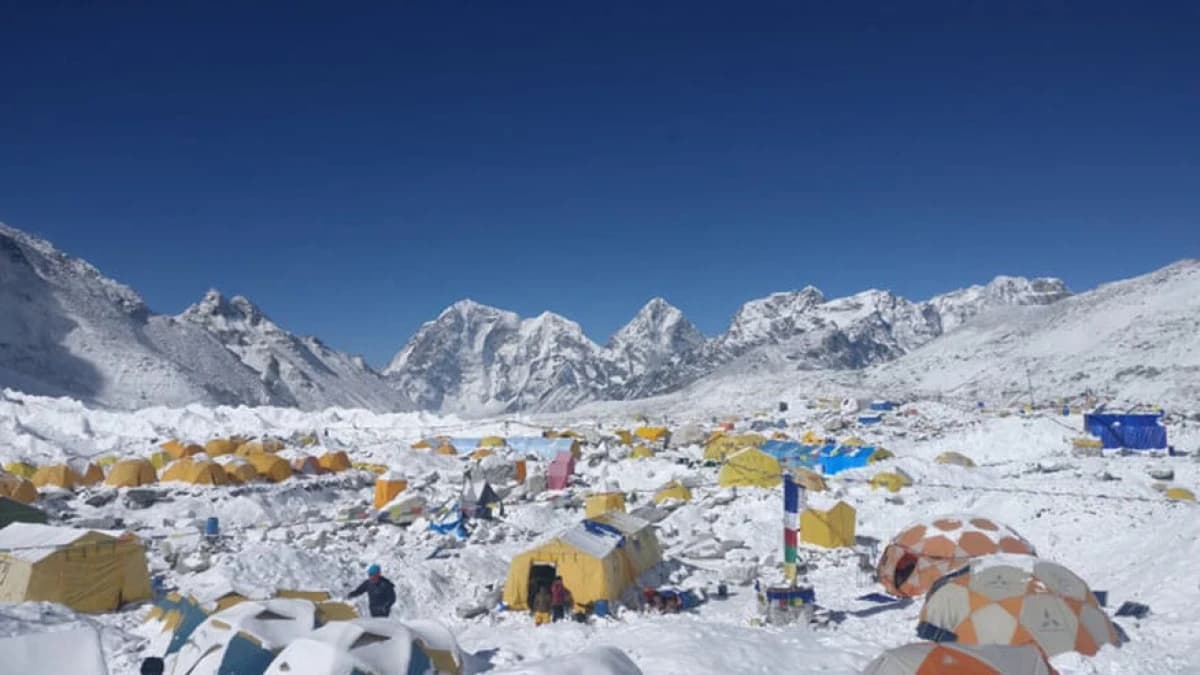
As mentioned before, technical climbing gear and equipment are non-negotiable while you are on the way to climb Mount Everest in Nepal. From Everest Base Camp onwards, you will not find teahouses, lodges, or guest houses. They are replaced by camps to take care of your basic needs, like meals and lodging. A strong and reliable support system is essential, and much to your delight, we are local-based with at least two decades of experience.
We provide you with all the necessary solo and group climbing gear and equipment, including tents, solar lighting, dining facilities, oxygen systems, regulators, masks, climbing ropes, crampons, gaiters, internet access, and satellite phones at base camps for better communication and connectivity. With a well-trained and experienced Sherpa team, we also monitor the weather closely so your attempt is at the most favorable conditions, increasing the success rate.
South Col Route Strategy, Best Everest Climbing Itinerary, and Cost
The 60 days for the Mount Everest Expedition itinerary begin with your arrival in Kathmandu, Nepal. Two extra days for preparation so that you do not miss any of the climbing gear and equipment behind; on the fourth day, you will finally enter the Everest Climbing and Trekking region with a mountain flight to Lukla from Kathmandu. Until you arrive at Everest Base Camp, you will follow the classic Everest Base Camp Hiking Trail.
Thereafter, days 15-54 are dedicated to the Mount Everest climbing purpose. Rest when needed, climb high, and sleep low for proper acclimatization. Our Everest Expedition Itinerary of 60 days hence involves strategic acclimatization hikes to Camps 2 and 3, during which you will repeatedly navigate the challenging Khumbu Icefall. Experienced Sherpas, in addition to navigating the tough terrain, also manage tents to rest in and hygienic food.
On the optimal weather conditions day, is when you will head for the summit push from Camp 4 at South Col, also called the launching point for the Everest summit attempt. Our 1:1 climber-to-Sherpa ratio ensures you receive personalized attention and have enhanced safety during the ascent and descent. It provides a suitable ambience for Mount Everest trekking and climbing with confidence and security, hence it is called the best route and itinerary.
While our Everest Expedition Cost covers all the essential trekking, climbing, and government fees, meals, lodging, tents, high-altitude crew members, Sherpa mountain guides, and oxygen for emergency purposes, it ensures the best possible comfort even in extreme conditions, full equipment, and zero compromise on safety. Considering all of it, the Everest climbing cost, including for the years 2027 and 2028, is reasonable.
To conquer the ultimate adventure, bookings are open for spring and autumn 2027 and 2028
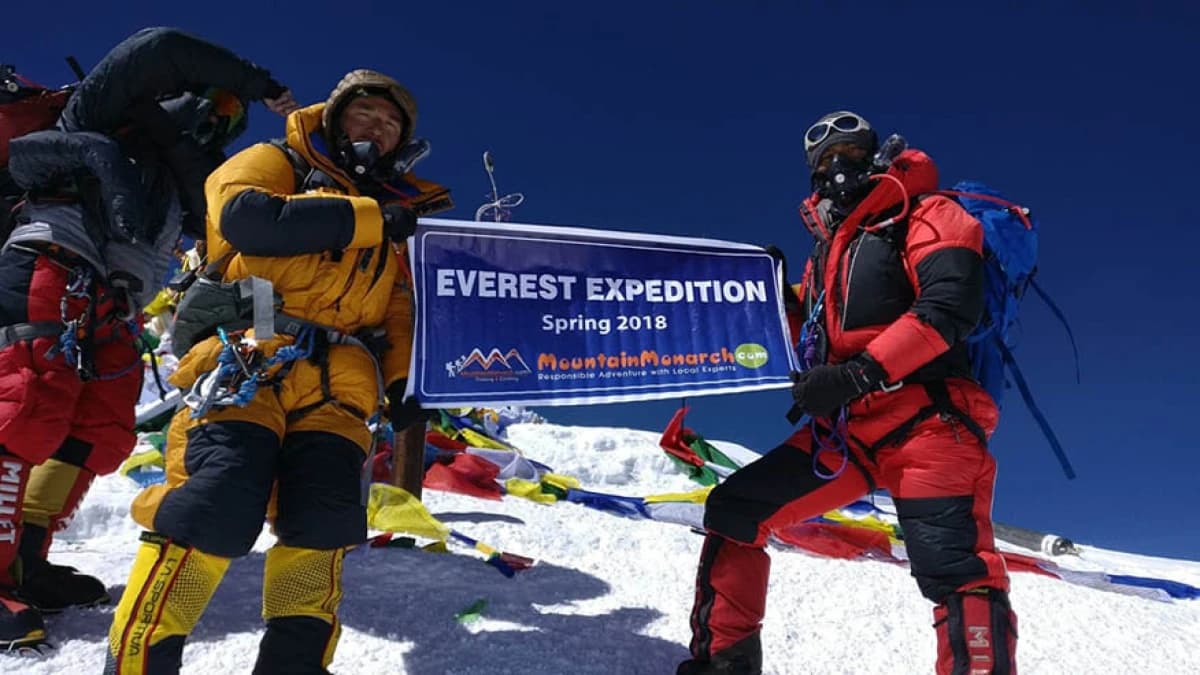
Following our 100% Mount Everest summit success rate in the year 2018, and now with further improved infrastructures in the Khumbu trekking and climbing region of Nepal, added years of experience, and eagerness to show you and create a convenient environment for you to conquer the pinnacle of high-altitude mountaineering, bookings are now open for spring and autumn 2027 and 2028.
It is because these times of the year come with the most favorable, stable, and also easier logistics management in comparison to other seasons that we can offer you fixed departures. Join a group, go solo, or go private; we respect your personal choices and preferences. With limited spots available, secure your place now and take the first step toward making history on the roof of the world! Reserve your spot today!


