Everest Base Camp Trek

Ultimate Journey to stand next to Mt. Everest
based on 43 reviews
Everest Base Camp Trek
Mount Everest base camp trekking
Trek to Everest base camp
Trip Photos
At a Glance
Duration16 Days
Trip GradeStrenuous
i
Maximum Altitude5,545m at Kala Patthar
Best TimeSept - May

Everest Base Camp: Journey of a Lifetime

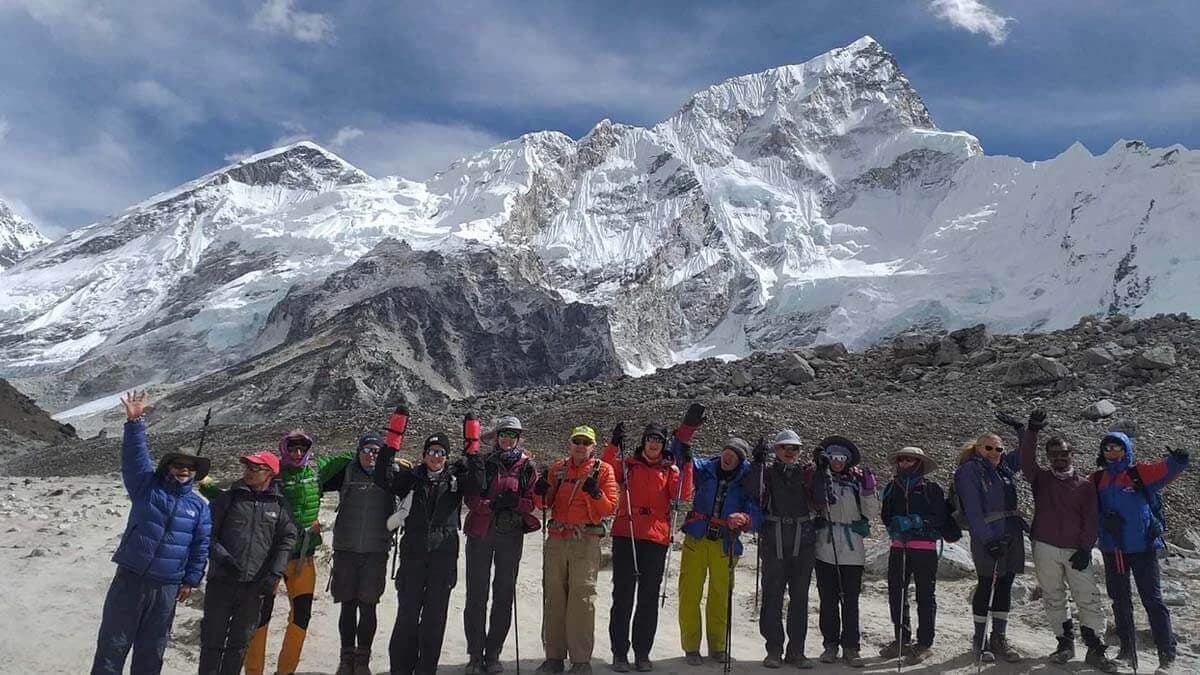
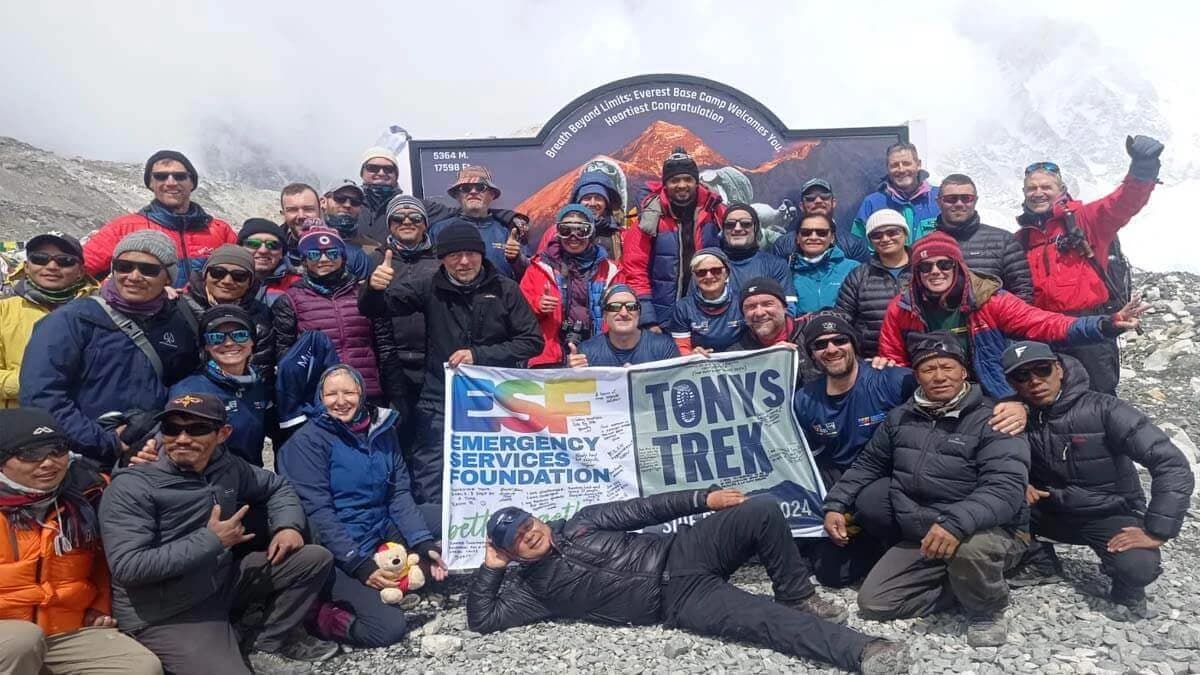
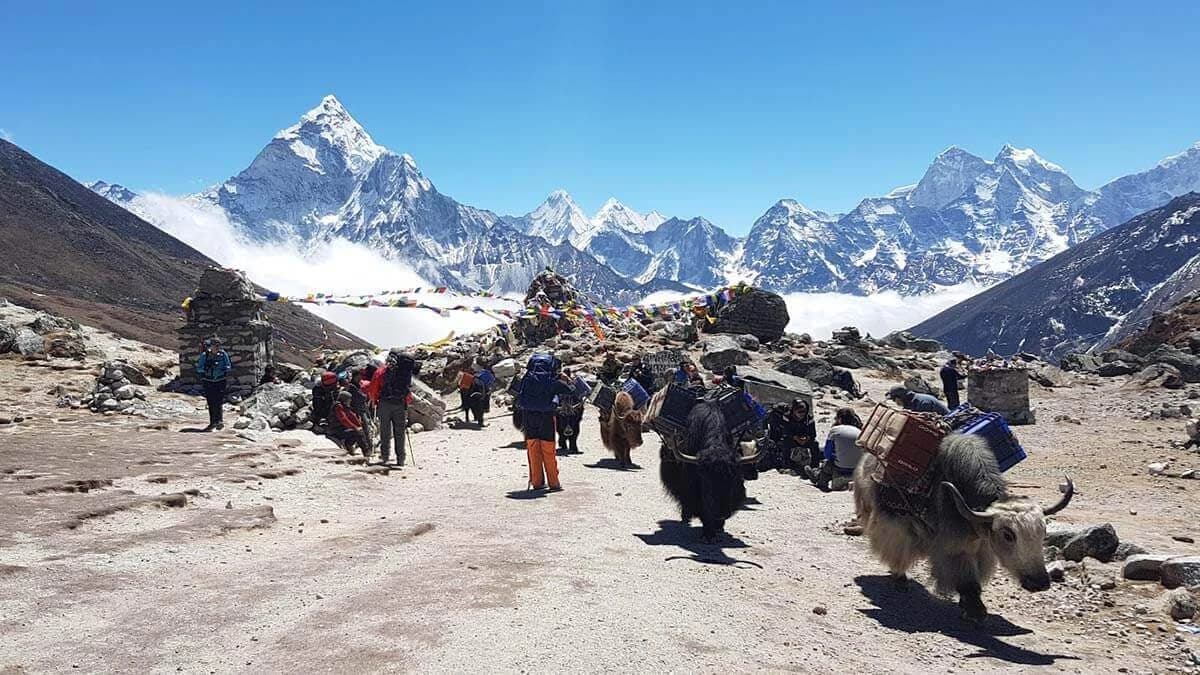
The Everest Base Camp Trek is an adventure of a lifetime that unlocks the majesty of the Himalayas with every step as you move closer to the highest peak on Earth at its base camp, Everest Base Camp (5,364 m/17,598 ft) above sea level on the southern face in Nepal. It is not just a high-altitude trek; it is also a fascinating journey to discover the best perspective of the magnificence of Mount Everest, encompassing genuine Sherpa culture, stunning landscapes, and the legendary Khumbu Valley.

The 16-Day Everest Base Camp Trek officially commences with an adventurous mountain flight to the world’s most thrilling airport, Tenzing-Hillary Airport, due to its short runway in the remote Himalayas at high altitude. Then, the Everest Base Camp Trekking gradually progresses through the traditional Sherpa villages dotted between lush forests of oak, pine, and rhododendron of the Sagarmatha National Park, which is home to a wide array of flora and fauna, including rare species of red pandas, Himalayan Thar, black bears, and snow leopards.

Why Everest Base Camp Trek with Mountain Monarch?

Mountain Monarch has been leading treks to Everest Base Camp for the last 25 years. Safety and a great adventure experience are always at the top of the agenda.

Experienced Guide and Oxygen on Trek: Our guides who lead your trek receive Medical and Leadership training through the Kathmandu Environmental Education Project (KEEP), equipping them with mountain safety, first aid, and responsible trekking practices. While our carefully planned itineraries are designed to support gradual acclimatization, every Everest Base Camp Trip carries emergency oxygen. These aren’t optional extras; rather, they are part of the standards we have developed through decades of leading treks.

Full Board Meals and Drinking Water: We provide full-board meals throughout the trek because proper nutrition should not be something you have to think about each day. By taking care of your meals, you can focus on what is actually important: walking through the Himalayas, enjoying the mountain villages, and sharing stories with your group every evening. Besides full-board meals, we provide enough filtered drinking water to keep you well hydrated; ultimately, it safeguards the fragile Himalayan environment by avoiding plastic-bottled water.

Less Trodden and Different Route: Having conducted this Everest Base Camp Trek for over decades, we have customized our EBC trek itinerary differently from the classic itinerary. From Namche, we hike up via the Less-trodden and longer route via Phortse Village to Dingboche, and then we return down via Tengboche to Namche. With this small circle in the middle of the EBC trek route, you will be exploring more regions, villages, and mountains while getting acclimated in a better way. Our itinerary allows enough rest days, with 2 nights at Namche and Dingboche before heading to the Base Camp of Mt. Everest.

Trekking Gear we Provide: Our Founder and MD, Pradip, who leads trekking journeys at least once a year, says, “Quality equipment makes a difference in the mountains, but waiting to buy it should not hinder your opportunity to explore places while you are in shape.” That is why we provide our trekkers with clean, thoroughly inspected duffle bags, warm down jackets, sleeping bags, liners, and rain ponchos. Buying all this trek gear can take up a good amount of your savings. The money you save can be spent to create lasting memories – whether that is extending your travels in Nepal or simply making your dream journey more affordable.

Trekkers Experience on their Adventure Trip to EBC 

Trekkers' experiences and their recommendations speak to their adventure experience and our motto to organize a safe and great adventure trip to Everest Base Camp. Here are some of our trekker comments about their trek experience to Everest Base Camp on different individual travel platforms, including Trip Advisor:

“Mountain Monarchs is absolutely a top-notch company if you want to tour, trek, or climb in Nepal. They catered to our every need. Our group consisted of 12 trekkers ranging in age from 12 to 65+. All of us trekked to Everest Base Camp. The Mountain Monarch team paid close attention to our health and wellness and instantly provided attention and care if they felt someone was struggling. The accommodations were as expected, and the food was delicious. They exceeded my expectations.” By Sunshine in Oct 2024

“First-class company and a first-class experience - My wife and I have recently completed the EBC trek with Mountain Monarch, and it was from start to finish a fantastic and extremely well-organized trip. From the moment you land till you leave, there is always someone available. The trek and the acclimatization schedule were excellent and well planned. In fact, the route taken on the way up was a little different from the more normal route so as to avoid some of the crowds and get a more authentic experience. The tea houses were excellent and reflect the thought the company puts into selecting where you stay, so that no one in the entire group got any sort of gastro problems. In addition, at all meals there was an open menu so you could order whatever you felt like, unlike other groups we saw in some of the teahouses who had no choice and had predetermined meals.” By Tony D in 2018. 

"Recently did the EBC trek with Mountain Monarch from Sept 24th to Oct 11. Absolutely brilliant experience! It was just as I expected but even greater. Our team of guides and Sherpas were wonderful, and we always felt safe and in good hands. The food and lodges were very good as well; they even seemed to get better as we went higher up towards EBC." By Jodien Steve in 2017.

What we have learned after Guiding Hundreds of Trekkers through EBC for the last 25 Years

The Everest Base Camp trek is a unique experience because you not only see nature’s beauty or the cultural heritage present at one of the planet’s highest altitudes, but you also peek into your own psyche. What we mean is the trek comes with its own set of hardships, but over the years our guests have told us they initially thought they couldn’t do it; as you push through one step at a time, things that looked impossible slowly become possible. The body, although fit, cannot sustain at this altitude without a strong mind. Most companies recommend their guests train their physique but leave out the most important aspect: “the mind”. We urge you to understand that in the Himalayas, time feels different; the pace of life is much slower compared to the West. You can expect delays, changes in the weather, and difficult food choices, among many other things, but if you accept this before starting the trek, it becomes much better, and you can tackle these things easily.

We have noticed that guests who take things slowly and walk calmly enjoy the trail and succeed at the trek more often than the guests who are in a rush. We need you to understand that even if you book the trip with a friend or in a group, once we walk, it becomes a solo journey – every individual has their own pace, and disturbing it by either competing or pushing harder when it’s not required will ruin the experience and, in some cases, your health and mental wellbeing. As our senior guide C.P Rai says, “Going slow is the fastest way to reach the destination.” You do not have to worry that you will be left behind because our guides are great at understanding people’s walking pace and will gladly walk with you slowly while the rest go with the lead guide in front.

We strongly encourage our guests to go vegetarian while they trek because doing so reduces the risk of illness and is easier for digestion at higher altitudes. We often recommend carbohydrate-rich food above 3000 meters, which provides steady energy for trekking day after day. We also saw that our guests have always loved coffee and usually ask for it in the Himalayas too, but we want you to know that drinking more than a cup can be troublesome. We had one such case where our guest drank a few cups of coffee every day at high altitude, which disturbed his sleep and caused dehydration, affected his pace, and made him believe he was going through acute mountain sickness, which negatively affected his trek. Although he completed his trek, we had to keep him in Dingboche for 3 days to monitor his condition. Coffee is not off limits on the trail, but moderation is key. A cup is perfectly fine for most trekkers, but as you gain altitude, we recommend prioritizing pure drinking water to stay hydrated and well rested.

How is the Trekking Itinerary to Everest Base Camp?

The Everest Base Camp Trek 16 Days is a moderately challenging Himalayan odyssey through the rugged and diverse topography of the Khumbu region of Nepal, which was once traversed by Sir Edmund Hillary and Tenzing Norgay to ascend the top of the world, Mount Everest (8,848 m), and made a historical record by successfully reaching it on May 29, 1953. The trekking route is characterized by steep ascents, descents, and flat stretches from Lukla to Everest Base Camp and vice versa, which gradually descend to Phakding (2,160 m) at first before climbing uphill to Namche Bazaar (3,440 m), rewarding you with the first-ever peek of Mount Everest.

In the bustling Sherpa hum, acting as the natural amphitheater, you will spend two nights acclimatizing to appreciate the cultural melting pot as you get to meet adventurers from various parts of the earth and prepare for the journey ahead. From Namche, trekkers embark on terrain in the lap of the rugged and lush hills, both guarded by the Everest Himalayas, along the trail passing through local cultural and spiritual landmarks like Tengboche Monastery, Dingboche, Lobuche, and Gorak Shep. As the ascent continues, the vegetation gets sparse with the thinner air, especially around Everest Base Camp and Kala Patthar, where high altitude in rugged terrain and steep ascents and descents increase the toughness.

With a bit of fitness, you will be able to walk over some high suspension bridges spanning roaring torrents, tread uneven, unfamiliar trails, and master steep gradients to the famously known Everest Base Camp and then up to the viewpoint called Kala Patthar. In general, there are different hiking routes to the base camp diverging from Namche Bazaar, and this one is the most popular and regular one via Tengboche, Dingboche, Lobuche, Gorak Shep, and Everest Base Camp. Another Everest trekking route is the longer one via Gokyo Lake and Cho La Pass to Lobuche, joining the classic route

How is our itinerary different for the Everest Base Camp trek?

We have a different approach on the Everest Base Camp trekking route, making a small circuit in the middle of the route from Namche to Dingboche and back. We used to organize our treks to Everest Base Camp via Namche to Tengboche and then to Dingboche. After reaching the base camp, we would come back to Lukla, the same way. We realized after several treks that we could have done a better route, as the Khumbu region has a lot more to see, whether it’s the quiet trails, small villages, or hidden view spots.

We came up with a better itinerary and now hike from Namche to Phortse village, which has a trail that leads through Mongla Dadha (3900m). We see astonishing views of Thamserku and Khangtega from the top of Mongla Dadha. It goes well with our idea of “Trek High, Sleep Low” as you descend to Phortse Village. We saw fewer people on this route, which gave us the opportunity to see some wild animals like the musk deer, Himalayan thar, and Impeyan Pheasant.

After our overnight stay in Phortse Village, we will reach Dingboche the next day and continue our way to the Everest Base Camp, but while returning, we go through Tengboche, visiting the largest monastery in the Khumbu Valley. This way you see the main attractions but also get to explore villages and routes that other trekkers do not see.

Our Duty toward Responsible Adventure Travel

Every year more than 60,000 people come to the Khumbu Valley, of whom about 400–500 try to summit Everest. An article named “Everest: A high–altitude garbage dump,” published on May 9, 2024, by scholars of geoscience and mountain geography, Suzanne Oconnell and Alton C Byers, claims that Sagarmatha National Park generates 4.6 tons of solid waste per day during peak seasons. Plastic is a huge problem in the Himalayas.

Staying hydrated in the Himalayas isn’t optional, and it is key to trekking safely. Drinking water should not be an expense, but as we gain altitude, the cost of boiled water increases, and by the time we reach Lobuche, a single liter of boiled water can cost around NPR 800. Many trekkers end up buying bottled water simply because it’s cheaper; unfortunately, that convenience comes at an environmental cost, adding thousands of plastic bottles to mountain trails every season.

We choose a different approach. Throughout your trek, we provide filtered drinking water as a part of your journey. We carry the Katadyn filtered device with us to purify the drinking water throughout the whole trek. More importantly, it helps reduce the unnecessary plastic waste in one of the most fragile mountain environments and helps save the resources of local people who live there their whole lives.

The Story of our Guides that lead your Everest Base Camp Treks

The Himalayas are more than a destination for our guides; they are their home for generations. Our guides like Nima Sarki Sherpa, Nima Nuru Sherpa, Mingma Sherpa and Chetten Sherpa were born and raised in the Khumbu Valley, where their families have lived for generations. Their ancestors were among the Sherpa communities whose forebears migrated from Kham in Eastern Tibet centuries ago, establishing lives in this high mountain valley through animal husbandry, trade and agriculture.

Over the years, our guides have led countless treks, stood on mountain summits and safely guided people from around the world through the Khumbu’s peaks. Their technical experience is invaluable, but what makes them exceptional cannot be measured by the number of expeditions they have conquered. Once the trekking season ends, they do not leave the mountains. They return to their homes and their families. When we asked our climbing guide Chetten Sherpa if he wanted to shift to Kathmandu, he said” I rent a room there, but it is too noisy in Kathmandu, and my landlord will not allow chickens on their property.” Every trail, monastery, bridge, and village is part of a landscape they have known since childhood.

They know when the weather is about to change or which teahouse has been run by the same family for generations, where local traditions are still being practiced, and the stories that never appear on a map. When you trek with Mountain Monarch, you are not simply being led through the Himalayas. You are actually exploring them alongside the people who have always belonged here.

What makes the Everest Trekking Trail landscape so unique?

The Everest Base Camp Trekking route traverses the majestic Himalaya scenery of Sagarmatha National Park, where each day, sojourners experience nature's grandeur in a completely different world of the Everest Himalayas, moving through beautiful thick forests of oak, pine, and rhododendrons to rocky terrain. An ideal trip for even beginners with good physical fitness, this Everest Base Camp Trekking Trail leads to the Everest Base Camp, offering the dramatic Khumbu Glacier and Khumbu Icefall. It is worth taking the time to look at these formations up close, and to contemplate the immense forces of nature that gave rise to their formation.

Between 30 and 50 million years ago, the Indian tectonic plate slid under the Asian plate, causing it to be pushed upwards. In places, this caused crumpling and folding of the plate, and in others, intact monolithic slabs of rock were pushed to form the Himalayas. When you reach the base camp, different layers of rocks are visible. The summit of Everest is composed of relatively pure limestone with grey inter- leaved sandstone areas. These limestone areas are part of the 320-million-year-old bed of the Tethys Sea. Remarkably, here at the highest points on earth, one can find remnants of marine fossils

Mount Everest captivates the hearts of trekkers from various parts of the world, where the vibrant culture of mixed ethnic communities, especially that of Sherpas, adds much to the cultural heritage. Strong Tibetan Buddhist influence can be found along the route, dotted with several Mani Walls, monasteries, and Gompas, including Tengboche and Pangboche Monastery, usually adorned with prayer flags; they are rich in distinctive ways of life, dialects, and cultural attributes. Fused with the natural beauty of the Everest Trekking Region, it has resulted in a never-before-seen unique landscape.

Culture, Monastery and Sherpa Hospitality on the Journey to Everest

The Everest Base Camp trek is not only about the enormous mountaineering and mountain views but also a very deep cultural and spiritual voyage in the Himalayas that is rich in culture, spirituality, and warmth of the people called the "Sherpas," who are the people generally known as the guardians of the Himalaya and are deep-rooted in Tibetan Buddhism. They live in typical roofed houses made of stone adorned with colorful prayer flags, Mani stones inscribed with sacred chants, and Chorten symbolizing peace along the trail.

Trekkers can visit historic monasteries at Namche, Pangboche, and Tengboche, the largest in the region, which offer stunning views of the Ama Dablam and Everest. This Tengboche monastery hosts the vibrant Mani Rimdu festival in November in serenity, giving rise to an abundance of spiritual energy. Therefore, during the trek to Everest Base Camp in 2026/27, anticipate a transformative holiday experience like never before in the Nepalese Himalayas at the foot of the top of the world, Mount Everest.

Be open-minded and aware of actions that may be culturally inappropriate. Always trek with guides who know their way around the patches, people, and ancient culture; otherwise, they fill a linguistic gap as cultural ambassadors, meaning they make a real connection between the locals, you, and the Himalayas. Also, sample local cuisines and try to coordinate your time of visit with some of the largest festivals in Nepal. The biggest are Dashain, Tihar, and Mani Rimdu in Everest, which usually fall during the months of autumn.

Get ready for the journey of a lifetime with the Everest Base Camp Trek

The trekking journey to the Everest Base Camp is a classic Himalayan voyage that unfolds the mystery of the Everest Himalayas in 16 days, where adventure kicks off with an ascent to Namche Bazaar, the famous Sherpa capital. Lying at an impressive height of 3,440 m above sea level, you will spend two nights here soaking in the splendid cultural and natural beauty of the Everest Himalayas while your body adapts to the high altitude, and the phenomenon is called acclimatization. We carry supplementary Oxygen for safety on this trek to the base camp of mt. Everest.

This process is not just precautionary against acute mountain sickness (AMS) or altitude sickness but rather an impetus for a resounding safe yet thrilling Himalayan odyssey. Our specially created trekking itinerary to Everest Base Camp takes you across the mesmerizing Khumbu Valleys through beautiful little villages so that at least some time is left to explore, mingle with fellow trekkers, and enjoy the mind-boggling scenery in the virgin world around. To complete a spectacular holiday, this must be added to the bucket list: Everest Base Camp Trek in Spring or Autumn of 2026/2027.

What can you expect during the final push and return journey to Everest Base Camp?

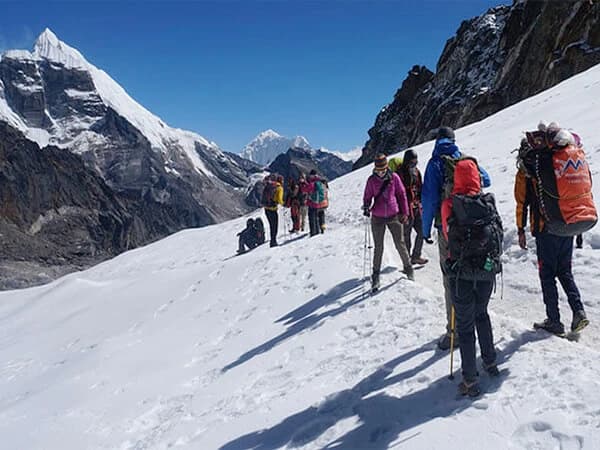
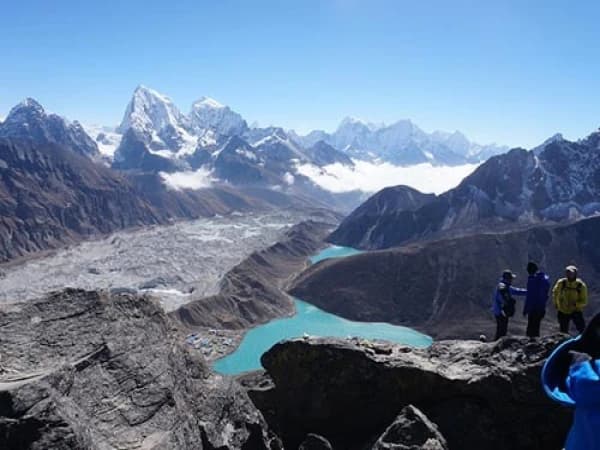
With your body ready, mindset, and packed well, you will head towards Lobuche from Dingboche and then to Gorak Shep, eventually leading to Everest Base Camp at an elevation of 5,364 m above sea level. This Everest Base Camp trip is ideal for all ages, experience levels, and budget levels. But if you are seeking something more challenging that tests your physical and mental strength, you can always extend your visit to the Everest Three Passes Trek and Everest Circuit Trek via Gokyo Lakes and Cho La Pass.

Nevertheless, the Everest Base Camp Trekking is a golden chance to reach the base of the highest peak on Earth. If your hike is in the spring or autumn, taken as the peak trekking and climbing season in Nepal, you can expect to meet courageous mountaineers and climbers stationed at base camp or below to conquer the peak itself, leaving you astounded. But wait, there is more! While you are on the way, Kala Patthar at 5,545 m above sea level is a different league in itself. Sunrise over the Himalayas and sunset while the sun hides behind the gigantic mountain ranges are particularly famous here to witness the golden rays of sunlight illuminate Everest and the iconic Khumbu Icefall and Glaciers.

Serving as one of the best viewpoints to see Mount Everest at its fullest glory, here is also the highest elevation you will arrive at during the Everest Base Camp Trekking Himalayan voyage. As you make your way back to Lukla to end this amazing hike to Everest Base Camp, you will still be left with a lot to explore. From ornately decorated monasteries in Pangboche and Tengboche to legendary landmarks, it's time to let yourself be all in the rich cultural and natural tapestry of the Everest Region.

What is the cost of a trip to Everest Base Camp (EBC)?

The Everest Base Camp Full Package Trek 2026 and 2027 costs can vary based on the length of the trek, the type of food and accommodation, and the services you are opting for, including the time of year. Usually, due to high demand, spring and autumn treks to Everest Base Camp tend to get slightly costlier than during the monsoon/summer or winter. At Mountain Monarch, we provide an all-inclusive Everest Base Camp adventure package that covers everything essential for a successful, hassle-free experience.

From hotel accommodation to the teahouse, our Everest Base Camp Trek Cost includes full meals on the hike, essential permits, a domestic flight to and from Lukla, private and local transportation, and reliable service from trek guides and porters. Not to mention, we also supply essential adventure gear such as sleeping bags, fleece jackets, and duffle bags, free of charge. In addition, this Everest Base Camp trip with us is not without a medically trained guide and support crew with supplementary oxygen as well as a wilderness first aid kit to provide immediate help in need and ensure your journey and peace of mind.

Everest Base Camp Trek Difficulty and Who Can Join it?

Trekking to the Everest Base Camp is one of the most enthralling challenges one can commit to in their lifetime. It is a moderate to strenuous, worldwide popular walking adventure to the base camp of Mount Everest at an altitude of 5,364 m. Based on the itinerary, you will walk 5 to 8 hours a day and reach the high elevation of 5,545 m at Kala Patthar, where the oxygen level is about 50% less than at sea level. When you trek with a reputed local travel and trekking agency like Mountain Monarch, the hike is steady, self-paced, and multi-day without requiring ropes or technical climbing skills.

Though it is suitable for most people with average fitness, the Everest Base Camp Trekking route must be taken with respect and proper training, and is not recommended for pregnant women or those with heart issues. However, it is always best to prepare for more pernicious altitude-related emergencies, such as altitude sickness, with good preparation procedures, and perhaps even a positive attitude towards a successful ascent to the Everest Base Camp.

How is the Everest Region Changing and Best Time for Everest Base Camp Trek in 2026 and 2027?

We all face the impacts of global warming today, but have you ever considered how this might affect your plans to book a trip to Everest Base Camp? A review documented by the Chinese Academy of Sciences, published in Earth Science-Reviews (2021), reports a significant warming of approximately 0.33 degrees Celsius per decade from 1961 to 2018, with projections indicating continued warming until 2099, particularly in winter. Studies claim that the South Col Glacier has lost half its mass since the 1990s and has shrunk glacier areas by 13% in the Sagarmatha National Park.

We in the industry have also noticed a shift in weather patterns as we trek every season. For the last 5 years, we have seen that our monsoon, which usually begins in June, is now irregular. Our director, Subash Rai, who has been guiding for the last 30 years, says, “Our treks in December two decades ago were colder and snowier; the skies used to be grey and cloudy, but it’s been about a decade now that the weather in December feels like it’s October and February feels like the new December.”  We now recommend our guests book their treks from early October to the end of December in the autumn and from March to May in the spring season. Trekking in December allows trekkers to bypass some traffic in the mountains and enjoy better views of the Himalayas than in other seasons.

We offer fixed departure dates for individuals, groups of friends, and families joining the 16-day Nepal Everest Base Camp Trekking, ensuring you can book for spring and autumn 2026 and 2027, so you can book online and be part of an amazing Himalayan trip. We are the first choice of trekkers for the safe and unforgettable adventure experience of a lifetime, and joining our regular Mount Everest Base Camp trek. All nationalities who understand English can join our regular trekking group adventure trip to EBC.

How is the Safety Backup and Supplementary Oxygen for the Everest Base Camp Hike?

The Everest Base Camp Hike is a unique trek to the Himalayas that comes with its own set of hardships and rewards. But at Mountain Monarch, your safety is our utmost priority, and below is how we ensure a secure, seamless, and immersive trekking experience to the base camp of Mount Everest in Nepal:

  • Medically Trained Guides and Supplementary Oxygen on Trek: Each trek from Mountain Monarch is led by guides with medical training for high-altitude regions, who are well equipped with oxygen supplies and essential medications.
  • Sufficient Trek Crew: Our team is well-staffed to deal with any unexpected situations that may arise on trips. They are well aware of unforeseen circumstances and are ready to help 24/7.
  • Slow and Steady Approach: Our itinerary lets you maintain your pace without rushing the step and encourages you throughout the trip. It is good for acclimatization and reduces the risk of altitude sickness that can occur to anyone ascending rapidly, regardless of age, fitness level, and experience.
  • Weather Preparedness: We closely monitor the changing weather of the Himalayas and its conditions for your safety and make up-to-date, informed decisions during the trek so you do not have to worry about anything burdening you on your hike to Everest Base Camp.

Everest Base Camp Trek Itinerary

Expand all
Day 1-2

When you arrive at Kathmandu Airport, our team will transfer you to the hotel. We will then have a welcome dinner, where you can enjoy local cuisine and meet fellow trekkers. The next day, we will explore historic sites in Kathmandu on a guided tour. We will have a trek briefing and gear check before starting the Everest Base Camp trek.

Day 3-5

Our journey begins with a scenic flight to Lukla at 2840 meters. Usually, we take off from Ramechhap Airport during peak season. It avoids the considerable air traffic in Kathmandu airport and bad weather. From Lukla, we trek for about 3 hours to Phakding along the Dudhu Koshi gorge. Continuing, we head to Namche Bazaar at 3440 meters. We hike slowly and steadily, allowing the body to acclimatize gradually. Your guide will ensure safe meals and a private twin-bed room. We have set up the acclimation rest day at Namche. We hike up and sleep at the same elevation.

Day 6-8

We take a less-traveled route to Everest Base Camp via Phortse village. A ridge walk on Mong-La offers spectacular mountain views. It provides picturesque views of Cho Oyu, an 8000-meter peak bordering Tibet. The next day, we continued to Dingboche. This less-trodden high trail offers outstanding views of vast mountains and deep valleys. Wildlife like musk deer and mountain goats might make an appearance. We have another acclimatization day at Dingboche with the panoramic profile of Island Peak, Amadablam, and Makalu.

Day 9-10

Away from the tree line, a graduatio ascent is recommended. Today, after leaving Dingboche, we ascended to Lobuche at 4,940 meters. The next day, we climbed to Gorak Shep at 5,288 meters. This is the last tea house before Everest Base Camp. The trail offers gradual climbs with stunning views of Pumari, Lingtren, Nuptse, and Everest. We climb to Everest Base Camp and see the Khumbu Ice Fall. It is a challenging but rewarding journey.

Day 11

Today, you will climb Kalapathar, which is the best and closest vantage point. It offers sensational Himalayan vistas and is so close to Mt. Everest. It is a tough climb, but the views are worth it. Afterward, we trek to Pheriche or Pangboche for an overnight stay. Of course, we will have a night of better sleep at lower elevations.

Day 12-14

We retrace our steps to Lukla via a different route. We pass by Pangboche and Tyangboche Monastery. Along the way, you might spot musk deer, mountain goats, and Pheasants. We will celebrate our journey in Lukla by dancing, dining, and tipping.

Day 15-16

We will take an exciting flight back to Kathmandu. We will drive to the hotel, and you will have free time to relax or explore the city. We customize airport transfers to end memorable Everest Base Camp trek.

The guideline details the day-by-day itinerary of the Everest base camp trek. It covers the elevation, walking hours, and daily activities. On the way to the base camp, we explored less-trodden regions.

Route Map

Trek map of Everest base camp

Altitude Chart

elevation of Everest base camp trekking route

Cost Details

Included

  • Airport transfer on both international and domestic flights.
  • Standard Hotel is on a twin share basis with breakfast as per the itinerary.
  • Standard tea house on twin share private room on a trek
  • Standard meals: Breakfast, Lunch, and Dinner on a hike.
  • Group Welcome dinner with the Nepali cultural program
  • Guided half-day city tour with entrance permit as listed on the trip plan.
  • Kathmandu (Ramechhap) Lukla Kathmandu (Ramechhap) flight with airport transfer.
  • Safety backup: Oxygen and First Aid Medical kit
  • Medical-trained Trek guide and crew with required gear and proper insurance
  • Trek gear: a sleeping bag, warm jackets, and a rain poncho as required.
  • Complimentary Trek duffle bag, T-shirt, and Trek map
  • Sagarmatha National Park fees, Local Khumbu VDC permits, etc.

Excluded

  • Nepal entry Visa fees.
  • International Airfare and any of your Travel Insurance.
  • All drinks and main meals in cities
  • Beverage Drinks on the trek
  • Tips and Items of a personal nature like Wi-Fi, a hot shower, laundry, etc.

Dates & Availability

Select a Departure Month
Sep 2026
Oct 2026
Nov 2026
Dec 2026
Mar 2027
Apr 2027
May 2027
Sep 2027
Oct 2027
Nov 2027
Dec 2027
Start DateSeptember 19, 2026
End DateOctober 04, 2026
StatusGuaranteed
PriceUS$1950
Start DateSeptember 26, 2026
End DateOctober 11, 2026
StatusAvailable
PriceUS$1950

Additional Info

When is the Best Time for the 16-day Everest Base Camp Trip? Winter Trip to Everest Base Camp Tips

The best times for an Everest Base Camp hike are the spring (March to mid-June) and autumn (September to November). Both of these seasons offer moderate temperatures, stable Himalayan weather, and dry trekking trail conditions where spring brings the forests back to life with colorful blooms of rhododendrons and other wildflowers teeming with various wildlife.

Similarly, though the night can get colder in the Upper Himalayas, autumn exhibits a unique cultural beauty coinciding with two major Nepalese festivals: Dashain and Tihar. Mani Ridum is celebrated for 19 days in Tengboche Monastery, the largest monastery in the entire Everest Trekking Region. In addition, trekking to the Everest Base Camp in December is becoming widely popular.

Though December is in winter, it offers sunny days to witness the tantalizing vista of stunning Himalayan wonder. However, you must be clothed in layers as the temperature at night can go below freezing point, and trekking days are shorter, requiring adequate preparation. There will be only a few trekkers on the Everest Trekking Trail during this season, making December one of the best months and a popular time to visit Everest Base Camp.

Walking distance, pace, and duration of Everest Base Camp Hike

The total Mount Everest Base Camp Trek is about 140 km or 86 miles from Lukla, the trek starting point to Base Camp and back. It generally takes 12 days to reach Everest Base Camp from Lukla and back and 16 days in total, including arrival and departure dates. This Everest Base Camp Trekking 16 Days itinerary is our well-designed route that allows enough time to acclimate, take a slow walk, and ample natural and cultural exploration.

Every day you will cover five to eight hours of distance for the Everest Base Camp Trip with the crew to support each trekker. We will adjust the plan as per your need, preference, and requirements if any and needed so you make the fullest of the alpine ramble. We are there to keep you motivated, and maintain your pace slow and steady, which are proven to be good for proper acclimatization and mitigate the symptoms of acute mountain sickness in high altitude.

How are food, accommodation, and drinking water during the trek to the Everest Trekking Region?

There are numerous family-run tea houses to stay at on the route to Everest Base Camp. You will stay in a private twin bedroom with common washrooms on a shared basis in the same building. In recent years, most toilets have been upgraded to western-style sit-on types and offer a basis for their facilities but are cozy and authentic. They offer you day-to-day meals and boil water to refill at some additional cost, including two drinking water bottles with a 1-liter capacity each. You can also opt to buy plastic mineral water on the Everest Trekking Trail at these tea houses, but they are not eco-friendly, and hence not recommended.

Furthermore, there are dining halls in almost each tea house, which is like a social gathering place where all trekkers and guides can come together, chat, play cards, have meals together, and share tales of adventure. If pre-informed, we at Mountain Monarch arrange the room only for you, but sharing rooms and trekking in a group is the best inexpensive form of Everest Base Camp tea house trekking. Every teahouse on Everest base camp trekking routes has a cook to prepare the hygienic meals, and our trek guide will be there to advise on selecting the food and ensuring it is safe.

Along the way, you can find a wide variety of menus in the teahouse en route to Everest. For the best and safest vegetarian meal options, they are second to none, including dal-bhat, chow mein, pasta, noodle soup, macaroni, fried rice with veg or egg, or dishes made of group potatoes, which are common dishes for meals on the Everest trek. As per drinking water on 12 Days Hiking to Everest Base Camp it is good to refill lukewarm water or consume spring water only after processing and purifying with iodine water purification tablets or Steripen.

What are Everest Base Camp Trip Permits and Lukla Flight?

To join the 16 Days Everest Base Camp Hiking, which is under the Sagarmatha National Park, one of the UNESCO World Nature Heritage Sites in Nepal, you will require two specific permits called the Sagaramatha National Park Permit and a Khumbu Pasanga Lhamnu Rural Municipality Permit for smoother and hassle-free access and a journey to the Everest Himalayas culminating at Everest Base Camp (5,364 m).

Here's how we handle all trekking logistics and permits for you. We will acquire and manage all essential logistics and permits to enter the Everest Region in Nepal so you can entirely focus on your adventure without any administrative worries and concerns about basic needs from food to accommodation. While flights to Luka are subject to air traffic conditions at Kathmandu airport and Himalayan weather, to avoid being delayed during the peak trekking seasons, we often arrange flights from Ramchehhap.

It helps to ensure a smoother mountain flight to Lukla while minimizing the chances of flight delays and cancellations. With our dedicated adventure enthusiasts with years of collective experience in successfully operating and organizing Himalayan trips, you can rest assured as we take care of all necessary arrangements for you. This allows you to save your energy and fully concentrate on your trek to Everest Base Camp in the breathtaking Himalayas!

What is Lukla's Flight Alternative in Case of Bad Weather?

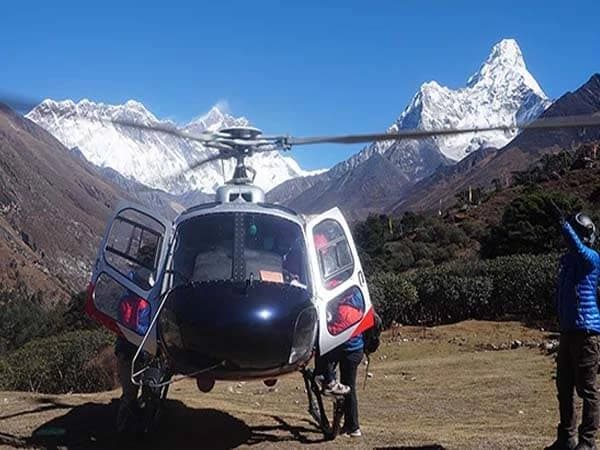
Lukla is the gateway to the Everest region’s trekking routes. The flight to Lukla depends on weather conditions; thus, there is likely to be a delay in getting to Lukla to start the journey. Due to its limited capacity, the Kathmandu airport usually gets busy during the season. To avoid traffic congestion and flight delays, you can take a 4-hour drive to Ramechhap and take the flight to Lukla. There is no such air traffic from Ramechhap airport, and the plane gets to Lukla on the same day. In case of bad weather, for the regular plane to fly, there is an option to have a chartered helicopter ride at an extra cost. Alternatively, you can take a full day-long drive to Surke, close to Lukla.

How to prepare and gear for your Nepal adventure trip to Everest Base Camp?

Preparing for the Everest Base Camp Trek is crucial for an enjoyable experience. As most reasonably fit individuals can complete this trek to the Everest Base Camp in Nepal, here is a concise guide to getting ready. We recommend the following activities to prepare for this 16-day Everest base camp trip:

  • Physical Fitness: Aim for 3 to 4 weeks of training. Individuals regardless of age and experience level with average physical fitness can complete the journey.
  • Aerobics: Engage in walking, cycling, jogging, swimming, or Tai Chi.
  • Stair Climbing: Incorporate stairs to strengthen your legs.
  • Practice Hiking: Train on steep, uneven terrain to mimic trekking conditions. Increase the intensity of hiking with a backpack like in the trekking routes to the Everest Himalayas of Nepal.
  • Mental Preparation: Build mental toughness to face challenges and maintain a positive mindset. Additionally, it is good to practice mindfulness and yoga for clarity of mind.
  • Weather Awareness: Prepare for unpredictable weather by training in various conditions.
  • Gear Familiarization: Get comfortable with your trekking gear and practice with a loaded backpack.

As per the gear selection, it largely depends on the time you choose for your hike to Everest Base Camp. Typically, autumn and winter get colder than the spring seasons. Regardless of the time of adventure, you must have a good sleeping bag and a warm jacket. Mountain Monarch looks after this warm gear for you. We also provide a complementary trek duffle bag to keep your gear in, which the porter will carry for you. Besides the company-provided warm gear, you should bring some personal clothing. Such gear includes the trek day pack, t-shirts, thermal base layers, fleece jackets, lightweight hiking trousers, wind and waterproof Jackets, gloves, woolen hat, sunglasses, sun cream, woolen hat, headlamp, drinking water bottle, and, of course, well broken in trekking boots.

How is the Acclimatisation Rest Day and Spare Day plan on the Everest Base Camp Trek Route?

On the hiking journey to the Everest Base Camp in Nepal, an acclimatization day, otherwise also called a rest day, is crucial so your body can adapt thoroughly to the alpine Himalayan surroundings with a low presence of oxygen and minimize physical exertion. With the two-night stay at Namche and Dingboche during the Everest Base Camp (EBC) Trek itinerary from Mountain Monarch, we make sure you get ample time to explore the area, acclimatize well to the high altitude, and also take a necessary break in need. During this period, you will hike to higher elevations and sleep at the same elevation from which you begin trekking.

On acclimatization spare days at Namche Bazaar, you will hike some of the high-altitude viewpoints and landmarks around the town, including the headquarters of Sagarmatha National Park and Sagarmatha Next, to witness the work of mountain waste to art and products, the Everest View Hotel, or the hidden settlement of Khumjung Valley. While from Dingboche, you will head forward to climb higher hills in proximity, such as Nagarjun Hill. These acclimatization days make sure you are now ready for high-altitude challenges and the final push to the Everest Base Camp, which, in addition, also provides flexibility just in case the weather to fly to Lukla during this trekking to reach the base camp of Mt. Everest gets bad.

Our Everest Base Camp itinerary, built with an extra day, aids a lot to provide you with much-needed peace of mind, a memorable journey without feeling rushed, and adequate time to lose yourself in the tranquil Everest Himalayas. In addition, as Namche and Dingboche are some of the larger villages of the Everest Trekking Region of Nepal, you can find better services of recharging batteries, Wi-Fi, and hot showers at some additional cost, including private rooms if requested.

These modern amenities are privileges at such a greater altitude and can get limited based on the remoteness and height of the area you are traversing, especially around Everest Base Camp and Kala Patthar. Therefore, it is good to carry a high-voltage power bank, buy a local SIM card and data package that suits you the most for better connectivity, and keep expectations realistic for a smoother and more authentic trekking experience.

Do you need travel insurance for a 16 Days Everest Base Camp (EBC) Hike?

Yes, though not mandatory, it is always better to have comprehensive high-altitude coverage and helicopter evacuation travel insurance for Everest Base Camp Trekking in Nepal. It is an additional element that helps you to have peace of mind in unknown terrain along with our government-licensed high altitude and medically trained guide with proper safety backup to lead the curated itinerary to Everest base camp.

The rugged terrain, high altitude, unpredictable weather, and physical conditions sometimes require outside assistance; therefore, you must have travel insurance to be safe on your adventure journey to the Himalayas. Make sure the policy you have purchased covers you from trip cancellations, delays, loss or theft of goods, medical expenses, and healthcare along with emergency helicopter evacuation costs up to 5,500 m.

Risk of Common Sickness and Safety Measures on EBC

Thousands of trekkers come to Nepal each year and complete the Everest region hiking. Ultimately, some return with a bad trekking experience and mountain ailments. Common ailments and health issues are stomach upset, food poisoning, and altitude sickness. Regarding precautions for all these ailments and health issues, your trek guide will update you on preventive measures and recommend hygienic vegetarian food. Acute Mountain Sickness (AMS) occurs when trekkers' bodies fail to adapt to the thin air while on ascent. Slow and steady walking, rehydration, and taking Diamox can minimize the risk of AMS.

Our trek guides also maintain a slow and steady walking pace to avoid the risk of altitude sickness. We have basic medicine with us to deal with common ailments when trekking. We ensure a medically trained trek guide to lead your journey to the base camp of Mt. Everest. We have supplementary oxygen and a wilderness medical kit for any adverse situation on the route. Our trek guides, including the AMS, are competent in dealing with any problematic situation.

Everest Base Camp Trekking Guide and Company to Travel with

A hassle-free and safe journey to the base camp of Mt. Everest is the key factor in your hike to Everest. Traveling with a reliable guide and company can ease the adventure holiday. Our guides have a guiding license from the Nepali government and have done wilderness first aid training. Above all, they are competent and have been working with us for over a decade. Mountain Monarch will look after all trip logistics, from hotels to trek permit Lukla flight and local transportation. We ensure proper safety with oxygen and a medical kit on your journey to base camp.

Can we customize the private EBC Hike Itinerary?

Yes, you can modify the Mount Everest Base Camp Trek at a time convenient to you and your fitness level. Mountain Monarch has always been unbeaten in customizing treks based on your physical fitness and time available. Let us know your preferences, requirements, and time constraints now. We offer solo, group, private, and family trips to the Everest Base Camp, including for the years 2026 and 2027, with supplementary Oxygen on trek for safety. If you like, you can extend the trek days with side treks to several notable landmarks of the Everest Trekking Region, such as Gokyo Lake, Cho La Pass, and Renjo La Pass, or combine them in one the Everest Three Pass Trek.