Everest Base Camp Trekking for Seniors or Family with Kids - 20 Days

Everest Base Camp Trekking in Nepal
Trip Photos
At a Glance
Duration20 Days
Trip GradeModerate
i
Maximum Altitude5,545 m - 5,644 m
Best TimeSpring (March - May) and autumn (Sep - Nov).

Trip Overview 

The Everest Base Camp Trekking for seniors or families with kids is a specially designed Everest Himalayan trip to arrive at the base of Mt. Everest (8,848.86 m), prioritizing flexibility and safety. The Everest Base Camp Trek itinerary for seniors or families with kids is 20 days, with shorter walking hours and 4 more days than following the standard Everest Base Camp Trek of 16 days so that you get more time for both acclimatisation and exploration.

The Everest Base Camp Trekking for seniors or families with kids package is for those eager to explore the infamous Khumbu Valley with their loved ones who may not meet the pace and fitness of the young adults and general trekkers during the classic Everest Base Camp Himalayan trek. A must-add to your bucket list now, including for the years 2026 and 2027, for seniors and kids who dream of leaving a historic footprint with family.

Deep inside the Sagarmatha National Park, one of the UNESCO World Heritage Sites in Nepal, known for diverse flora, fauna, and ethnic communities, including Sherpas. All the Everest Base Camp Trek highlights are guaranteed: incredible mountain views, dramatic mountain landscapes, authetic cultural, golden hour sunrise view from Kala Patthar after you stand at the base of Mt. Everest, while the approach is more kid- and senior-friendly.

While our Everest Base Camp Family Trekking Cost with seniors or kids includes full board meals (breakfast, lunch, and dinner); tea; coffee; filtered drinking water; and comfortable teahouse accommodation during the trek days, we promise you a hassle-free Himalayan trip from start to end. Join our fixed departures during peak trekking season from March to May and September to October, or plan another time; we are here for you 24/7. 

What to expect during the 20 days Everest Base Camp hike for seniors or families with kids?

Unlike other popular Everest treks in Nepal such as the Everest Three Passes Trek, the Everest Circuit Trek, and the Gokyo Lakes Trek, including the typical Everest Base Camp hiking journey, the Everest Base Camp Trek itinerary of 20 days for seniors or families with kids is associated with a relaxed pace. That means you have more time to relish the awe-inspiring mountain views, Himalayan culture, and beautifully diverse nature.

You walk from the subtropical forests to the alpine grasslands with occasional crossings of suspension bridges, cascading waterfalls, and glacier rivers, following the well-established trekking trail, often busy during the peak trekking seasons of spring and autumn. Overall, it promises you a rewarding Himalayan family vacation, especially when you get enough time to adapt to the Himalayan air, surroundings, and high altitude. 

How does the Everest Base Camp hiking journey for seniors or families with kids begin?

The Everest Base Camp Hike, meant for seniors or families with kids, typically starts with an adventurous mountain flight to Lukla from Kathmandu, like other high-altitude treks and climbs in the Everest region of Nepal, such as the Mera Peak climb, Island Peak climb, and Lobuche East Peak climb. What makes it thrilling to fly over is Lukla Airport (2,845 m), formally known as Tenzing Hillary Airport, which is one of the most dangerous airports in the world.

Located amidst the rocky hills, high altitude, and a short runway, no wonder many consider reaching here an adventure in itself, especially when you are treated to mind-blowing aerial views of the skyscraper mountain peaks, lush valleys, and traditional mountain villages below on a clear-weather day. As per the 20-day itinerary, the 3rd day is when you board the flight to Lukla. Brace yourself for beautiful scenery and moments of adrenaline rushes.

Why do people spend two days at Namche Bazaar during the Everest Base Camp trekking?

Many of you might be well aware that the Everest Base Camp Trek is one of the most popular teahouse treks in Nepal that includes staying at teahouses in between the mountain villages, opened and managed by Himalayan locals, most of whom are Sherpas. In Lukla, Phakding, Manjo, Namche Bazaar, Khumjung, Phortse, Dingboche, and Lobuche, you get to observe life in the Himalayas from inside, which is totally fascinating.

Among them, Namche Bazaar is especially noted. Other than being one of the ancient salt trading routes and still one of the hustling and bustling towns dominated by Sherpas, its location near the iconic Hotel Everest View, Kongde, and Kumjung with the open views of Everest make it perfect to stop for acclimatization. So at least two days are recommended here, at first, and then in Dingboche, during the EBC hike for seniors and families with kids.

Is the Everest Base Camp Trek suitable for wildlife spotting?

Yes, as the Everest Base Camp Trek is part of the larger Sagarmatha National Park, which further is home to iconic Himalayan trekking and climbing routes like the Everest Three Passes Trek, Everest Circuit Trek, and also the Mount Everest Expedition, you do have an opportunity to come across various wildlife, including some species that are listed as endangered across the globe, like the red panda, Himalayan tahr, and Himalayan monal (the national bird of Nepal). 

If luck favors you, you may also come across the majestic snow leopard and Himalayan black bear, especially when you spend a longer time inside the Everest region following the 20 days Everest Base Camp Trekking Itinerary for seniors and families with kids. In fact, it could be a golden chance for kids to spot a wide range of wildlife in their natural habitat beyond the textbooks and increase their knowledge with long-lasting impressions. 

What makes Everest Base Camp an iconic trek destination in Nepal?

There are hardly any adventurous souls who would not like to be at the top of the highest mountain peak on earth. While not everyone can reach the summit of Everest, there is an equally rewarding experience waiting for you, and it is the Everest Base Camp for you. Located at an altitude of 5,364 m above sea level, it is the closest you can get to the majestic Mt. Everest (8,848.86 m) after the summit point itself. 

You can reach here with your families, including seniors and kids, and the Everest Base Camp Trekking for Seniors or Family with Kids package ensures you. Make it yours now! Reserve your seat. Stand at the center of sky-towering, snow-capped peaks, glaciers, and dramatic mountain landscapes and embrace what the brave aspirant climbers and mountaineers are preparing for: an ultimate Everest summit experience, life-changing memories guaranteed!

Which mountain peaks are visible from Kala Patthar? 

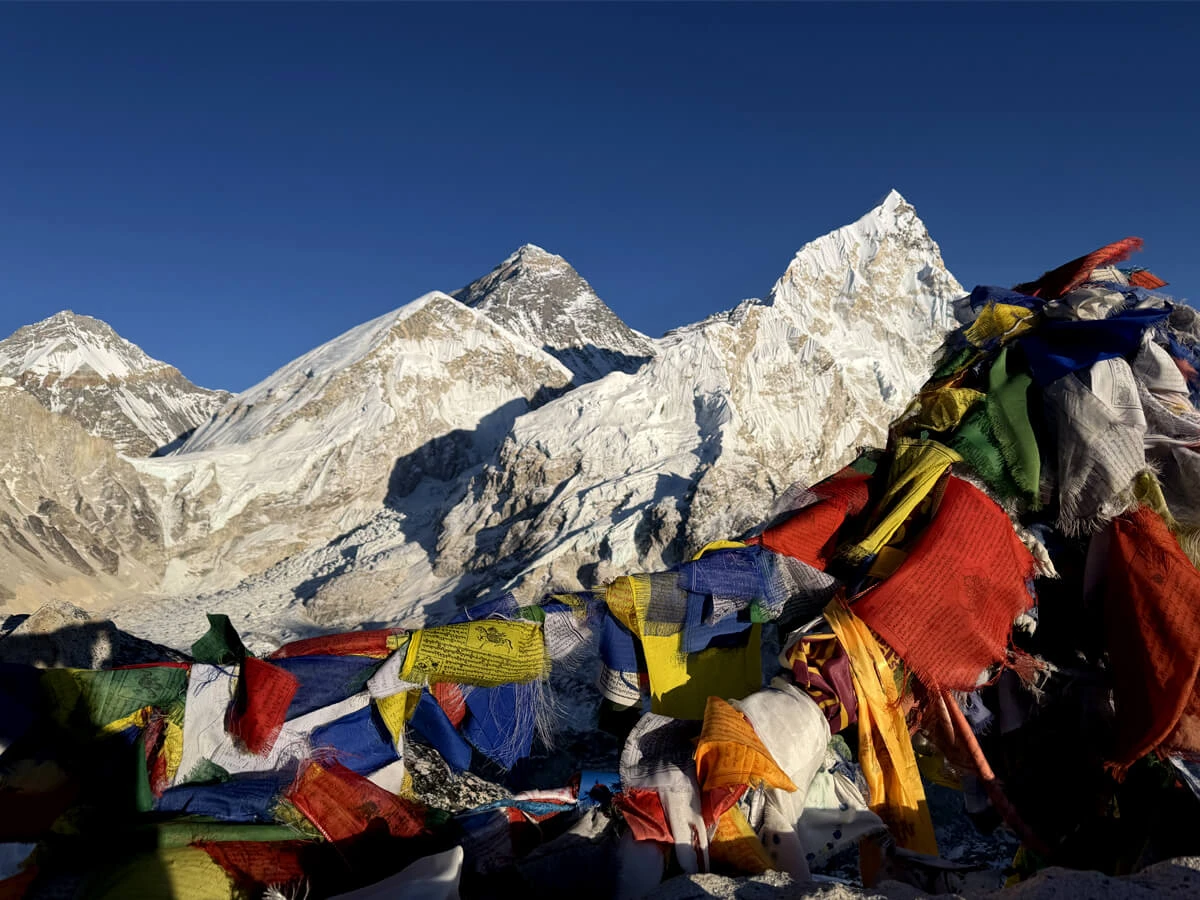
While the Everest Base Camp is the closest you can be to Mt. Everest, the point with the closest-up views is from Kala Patthar. Perched 5,545 m - 5, 6444 m above sea level, higher than the EBC itself, on clear weather days, it provides you with 360-degree full views of the surrounding peaks, including Nuptse, Lhotse, and Pumori; other than Mt. Everest itself, it is especially scenic during sunrise and sunset, hence also referred to as the ultimate Everest viewpoint.

Imagine living this moment with your families without missing seniors and kids with our 20 days Everest Base Camp Trek Itinerary for seniors or families with kids. It feels surreal, right? In ancient times, climbers climbed to observe the weather for Everest Expeditions; now it is a photography haven where serenity prevails, capturing the true grandeur of the Everest Himalayas. Watch shimmering glaciers and other than whitewashed mountain peaks. 

The Best Everest Base Camp Trek Itinerary for seniors or  family with kids of 20 Days cost and Itinerary for 2026 and 2027

The Everest Base Camp Hiking itinerary of 20 days for seniors or family with kids starts with your arrival in Kathmandu, Nepal, while the trip officially begins on the 3rd day with an adventurous mountain flight to Lukla and trek to Phakding after trip preparation and UNESCO World Heritage Sites Sightseeing on the 2nd day. From Phakding, trekkers gradually ascend through the villages of Monjo and Namche Bazaar. 

An extra acclimatization day at Namche Bazaar, and thereafter, you pursue the comparatively less trodden Everest Base Camp hiking route, stopping at villages like Khumjung, Phortse, and Dingboche, with a rest day at Dingboche also marking the beginning of the alpine zone. From Dingboche, then you move forward to Lobuche, Gorak Shep, and finally to Everest Base Camp, returning to Gorak Shep and, the next early morning, to the iconic Kala Patthar Viewpoint.

Like, this is how the Everest Base Camp Trekking for seniors or families with kids concludes before you begin to retrace the route, descending via Lobuche, Tengboche, Namche, Phakding, and Lukla, and fly back to Kathmandu. The 20 days Everest Base Camp Trek itinerary for seniors or families with kids is specially crafted with the motto "one step at a time," proper acclimatization to avoid altitude sickness, and minimal space for rushing.

Hence, it is taken as the best Everest Base Camp hike itinerary for families who want to include aged members and children, including for the years 2026 and 2027. Bookings are now open at Mountain Monarch. One of the leading travel, trek, and expedition companies in Nepal with more than two decades of experience, get the best Everest Base Camp Trekking Cost for seniors or families with kids with guaranteed premium services whenever available! 

Why do the Everest Base Camp Family Trek with seniors or kids with Mountain Monarch?

Among thousands of trekking agencies in Nepal, what provides Mountain Monarch an edge is our utmost priority to your safety and comfort while you are journeying in the Himalayas of Nepal, including when booking the Everest Base Camp Trekking for seniors or families with kids. Along with a medically trained trekking Sherpa crew, including 1 porter per trekker, ensure you have proper safety backup with an oxygen cylinder and a comprehensive medical kit.

We not only provide the essential trekking gear and equipment such as a sleeping bag, warm jackets, a rain poncho, duffle bag, T-shirt, and trek map but also adjust the itinerary as per your walking pace, physical fitness, and area of interest. It means yes, the last price of the Everest Base Camp Trekking Cost for seniors or families with kids can also vary, and at Mountain Monarch, it's transparent without any hidden cost policy. 

In addition to this, our professional guides also check the hygiene of the meals provided, and on your request, we are more than happy to upgrade the services for you, including all vegetarian to Dal Bhat for lunch and dinner. Free airport pickups and drop-offs, arrangements of domestic flights to and from Lukla, and mandatory permits like the Sagarmatha National Park Permit and the local Pasang Lhamu Rural Municipality entry permit. Fixed departures in spring and autumn.
Everest Base Camp Trekking for Seniors or Family with Kids - 20 Days Itinerary

Expand all
Day 01

Upon your arrival at the Tribhuvan International Airport (TIA), a representative from Mountain Monarch provides you with a warm welcome and, in a while, also transfers you to your hotel. You may rest in your free time in the afternoon; in the evening, you will be provided a trip briefing including essential gear and equipment, while the day ends with a welcome dinner.

Day 02

The city of the Kathmandu Valley is also the cultural melting pot of Nepal that further boasts 7 of the UNESCO World Heritage Sites, so early in the morning, you begin exploring landmarks like Pashupatinath Temple, Swayambhunath, Boudhnath, and others. It helps with getting familiar with the Himalayan air and culture of Nepal and also helps you make up your mind.

Day 03

The journey to complete the Everest Base Camp Trek with seniors or family with kids officially begins this day. Early in the morning, right after breakfast, you will fly over to Lukla from Kathmandu or Manthali, Ramchehap. In 25 - 35 minutes, with a short break here, you will trek to arrive at Phakding for the day along the bank of the Dudh Kosi River. 

Day 04

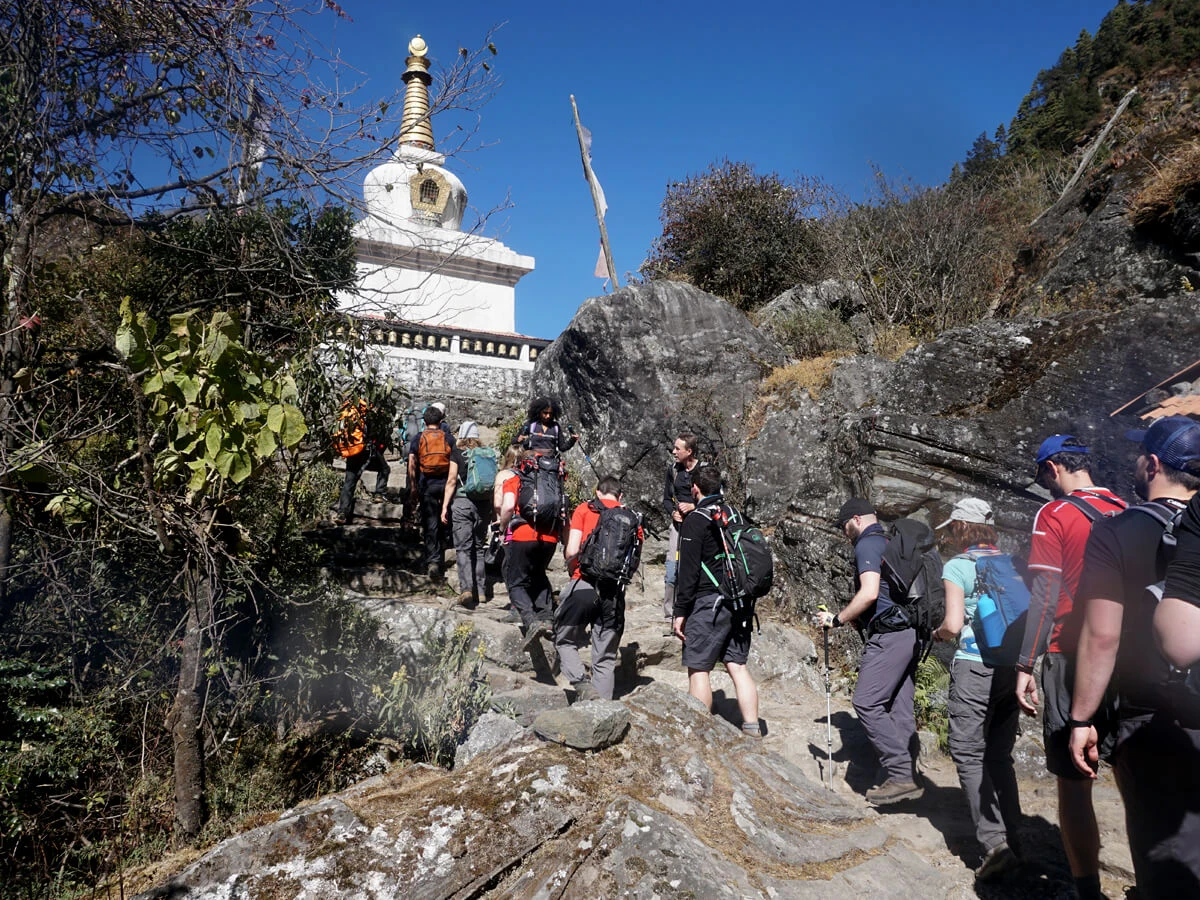
From Phakding, you trek to arrive at Monjo, which is one of the easiest and most scenic sections of the Everest Base Camp trekking trail. In general, it is a 1.5 - 2 hour walk covering 5 - 5.5 km (3 - 3.5 miles) through the small villages like Tok Tok and Benkar amidst the forests of pine, connected by several suspension bridges, adding to the thrill while you cross them.

Day 05

It is one of the significant trek days when you will make it to the famous Mount Everest village, often also referred to as the Sherpa capital, Namche Bazaar. You leave the official gateway to the Sagarmatha National Park, Monjo, behind and continue hiking along the Dudh Koshi River through Jorsalle, and in about 3 - 5 hours, you will have made it to Namche Bazaar.

Day 06

Beginning the walk from 2,800 m above sea level to reaching 3,440 m, the gain in elevation is significant, and before you go further, it is a must that your body has properly adapted to the challenging Himalayan surroundings. So it is the exploration and acclimatization day. Hike up and sleep low is the best strategy; go to Hotel Everest View or simply stroll around the village.

Day 07

Slow and steady is one of the keys to the most enjoyable Himalayan adventures, especially for seniors and kids, so you would not rush directly to Tengboche; instead, Khumjung is where you will stop for the day. From Namche Bazaar, it is only 4 - 5 km away and usually a walk of 1 - 2 hours uphill at a relaxed pace, away from the typical overcrowded EBC trekking route. 

Day 08

You continue following the less-traversed trail, which is a slightly uphill walk up to Mong La, descends to Phortse Tenga, and then again is a gradual climb to the typical Sherpa village of Phortse. The higher you go, the more the mountain views of Ama Dablam, Thamserku, Kangtega, and others open up while you cover 8 - 9 km in 4 - 5 hours. 

Day 09

On this day is when you go deeper into the alpine zone, 4,000 m above sea level. As usual, you begin walking right after the warm breakfast. 11 - 13 km long, you walk past several mountain settlements like Upper Pangboche, Somare, and Imja Valley, all of which sit in quieter locations and are full of crispier mountain air with even more impressive mountain scenery.

Day 10

Reaching Dingboche also marks one of the significant points during the Everest Base Camp Trekking journey for all, including a group of trekkers with seniors or family with kids, so before you go even higher, it is a rest day.  Best utilise it with an early morning hike to the nearby Nangkartshang hills to get a taste of the challenges that await you ahead. 

Day 11

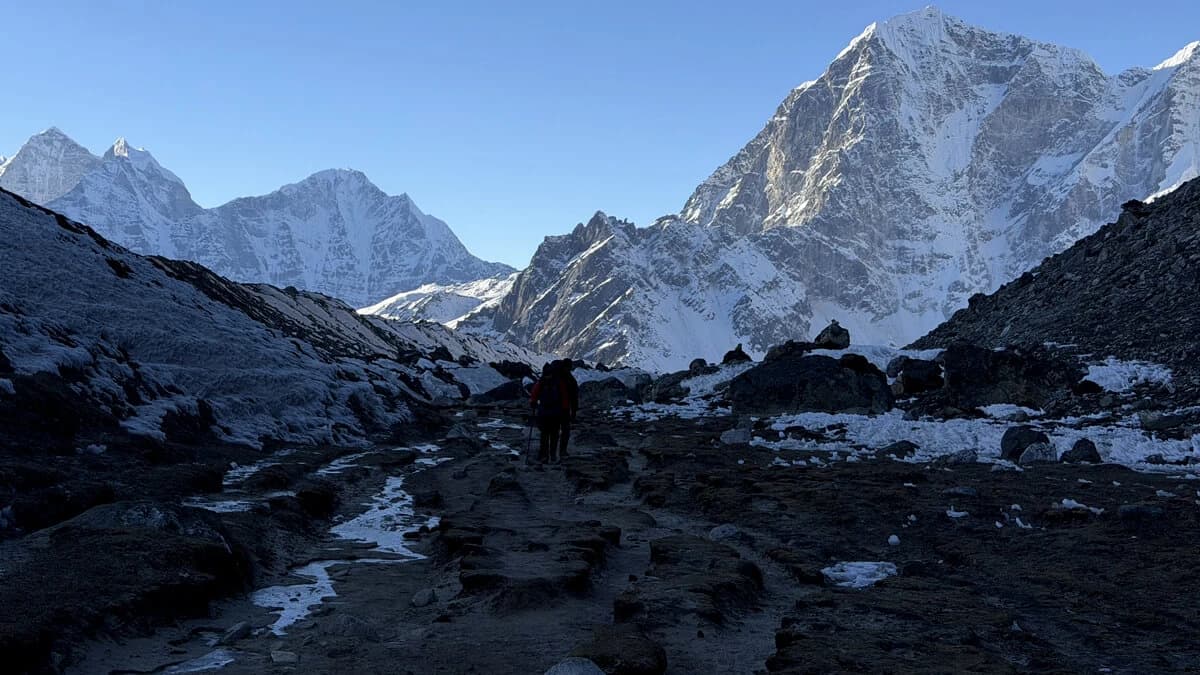
As you leave Dingboche and move forward to Lobuche, you are a step closer to the main highlight of the entire trip, Everest Base Camp, and it is a steady climb of 8 - 12 km, which typically takes 5 - 6 hours. The altitude gain is noticeable around 500 - 600 m in a day; therefore, it is a must that you maintain your pace and listen to your body.

Day 12

The day you have been waiting for is finally here: when you will arrive at the base of Mt. Everest, but even before that, you will first hike up to Gorak Shep, the last human settlement before EBC. You follow the rugged moraine of the Khumbu Glacier, then a short break, after which you attempt hiking to EBC, the closest you get to Mt. Everest after the summit point itself. 

Day 13

Higher than the EBC with the closest view of Mt. Everest, while you are in the Everest Himalayas, you would miss out on the magical sunrise Himalayan panorama from Kala Patthar. You begin hiking even before dawn, spend moments of adventure and achievement, return to Gorak Shep for lunch, and then begin retracing the route back to Lobuche. 

Day 14

After the EBC and Kala Patthar trek from Lobuche, you descend to the place with the largest Buddhist monastery in the region, Tengboche. The closer you get to Tengboche, the greener the landscapes get; it is enjoyable as it is mostly downhill and has a magnificent view of Ama Dablam. If the team feels energetic, you may go further down to Phunke Tenga.

Day 15

Back to the bustling Namche Bazaar from Tengboche, return to the lower Everest region, following the Imja River past Phungki Thanga and Kyanjuma. You may sense that the mountains are getting distant, also suggesting that you made it. 10 - 12 km of trail in 4 - 5 hours; you would have enough time to unwind around Namche Bazaar one more time.

Day 16

You are almost at the end of the Everest Base Camp hike with seniors or family with kids when you return to Phakding from Namche. Through the heart of the Khumbu region, passing through the villages of Jorsalle, Monjo, and Benkar and crossing suspension bridges over the Dudh Koshi River time and again, it is one of the most pleasing trek days.

Day 17

It is the last Everest Base Camp Trek day when you hike back to Lukla from Phakding. Explore some of the serene villages like Ghat, Chhuthawa, and Chheplung. The forested trail, it ensures you a true nature escape with a lot of memories to cherish from the Everest Base Camp Trek you just completed, worth a celebration.

Day 18

Early in the morning, you will bid your farewell to one of the most popular trekking and climbing destinations in the world, Everest, with a quick flight back to Kathmandu from Lukla. That means you would have adequate time for refreshment, rest, and also exploring the chaotic yet peaceful cities of the Kathmandu Valley, including observing the nightlife at Thamel.

Day 19

It can be counted as a contingency day in case the weather on the planned Lukla flight day does not favour you. If it went as planned, you may use this day to visit ancient temples, monasteries, and historical landmarks, and also do the last-minute souvenir shopping or try some of the famous local eateries. Let us know so we can make the essential arrangements. 

Day 20

Based on the 20 days Everest Base Camp Trek itinerary for seniors or families with kids, on this day you will board a flight to your home country or next destination. 3 hours before your flight time, we will help you with packing and also drop you off at the TIA gate. Hope you enjoy your trip with us, and see you back in Nepal for another memorable Himalayan holiday.

Cost Details

Included

  • Airport transfer on both international and domestic flights.
  • Standard Hotel is on a twin-share basis with breakfast as per the itinerary.
  • Standard tea house on twin share private room on a trek
  • Standard meals: Breakfast, Lunch, and Dinner on a hike.
  • Group Welcome dinner with a Nepali cultural program
  • Guided half-day city tour with entrance permit as listed on the trip plan.
  • Kathmandu (Ramechhap) Lukla Kathmandu (Ramechhap) flight with airport transfer.
  • Safety backup: Oxygen and First Aid Medical kit
  • Medical-trained Trek guide and crew with required gear and proper insurance
  • Trek gear: a sleeping bag, warm jackets, and a rain poncho as required.
  • Complimentary Trek duffle bag, T-shirt, and Trek map
  • Sagarmatha National Park fees, Local Khumbu VDC permits, etc.

Excluded

  • Nepal entry Visa fees.
  • International Airfare and any of your Travel Insurance.
  • All drinks and main meals in cities
  • Beverage Drinks on the trek
  • Tips and Items of a personal nature like Wi-Fi, a hot shower, laundry, etc.

Additional Info

When is the best time to do the Everest Base Camp Hiking with seniors and family with kids? 

The months of spring and autumn, from March to May and September to November, feature the most favorable weather, clear skies, moderate temperatures, and the safest trail conditions due to the minimal chances of both rain and snow, including the Everest Base Camp Trek route, especially when you are going with seniors and families with kids. Though it is manageable to go on a journey in summer and winter, it comes with extra preparation for seasonal challenges.

Heavy rainfall, leeches at 3,000 m above sea level, and extreme cold in winter with high risks of flooding, landslides, and the closing of the trails and teahouses—at some point it can get hectic to manage the logistics that seniors and kids may not be ready to face. That is why it is best that you do the Everest Base Camp Trek, including seniors and kids, in spring and autumn. You have the best high Himalayan adventure atmosphere from nature to culture. 

Food, accommodation, and facilities on the Everest Base Camp Trek with seniors and family with kids

Being one of the best teahouse treks in Nepal along the Everest Base Camp Trekking Trail, you can find a wide variety of teahouses, lodges, and guest houses providing daily food, accommodation, and available facilities such as wifi, electricity for charging electronic devices, private rooms with attached bathrooms, or others like vegetarian and lactose-free meals. An increase in altitude and remoteness means options may get limited to simple teahouses.

When booking with Mountain Monarch, we ensure you get the best available services. We are flexible with the various unique ways our clients want to explore the Himalayas. Basic, standard, or luxury, we do our best to cater to your preferences and requirements. It is advisable that you keep your expectations realistic for a more enhanced trekking experience, whether you are doing it with a group of adults or with families of seniors and children.

What is the Everest Base Camp Height? Preparation Tips

The elevation of Everest Base Camp is 5,364 m above sea level; however, it isn’t the maximum altitude gain you experience during the Himalayan trip. It is at Kala Patthar, located at around 5,545 m to 5,644 m above sea level. To reach here, you trek through diverse terrain with a mix of steep ascents, descents, and high altitudes prone to altitude sickness due to the low presence of oxygen and frequently changing weather regardless of the seasons.

Manageable for every healthy individual with a good level of physical fitness, whether beginners, children, teens, young adults, adults, or seniors, with adequate preparation. Best begin preparation at least 2 - 3 months before the official trip departure day. Include ample cardiovascular exercises such as cycling, swimming, running, and others that are meant to increase your stamina, strength, and endurance. 

How to prevent altitude sickness on the Everest Base Camp Trek Trail as seniors and kids?

It applies to all those planning to do the Everest Base Camp hiking, whether aged, young, or kids; i.e., proper acclimatisation, especially before you attempt to arrive at high-altitude landmarks. For it, also, the golden rule is to hike high and sleep low. While on the route, always listen to your body, do not rush the steps, eat healthy, and keep yourself hydrated. Consider adding ginger and garlic soup to the menu; it often works as a natural remedy.

Follow the guidance of your local mountain guide. They are the real heroes of the Himalayas and often go beyond to make your Himalayan adventure holistic, from managing the logistics to permits, and also introduce you to some of the kid- and age-friendly activities. In case of an emergency such as altitude sickness that requires immediate medical care, they are the ones who provide necessary assistance, and at Mountain Monarch, we take pride in our pro team. 

Why is travel insurance a must-have for trekking to the Everest Base Camp with a family of seniors or kids?

The least you do during the high-altitude treks and climbs in Nepal is underestimate the inherent risk it comes with, including on the Everest Base Camp hike for seniors and families with kids. In such conditions, when you know you're financially protected against unforeseen circumstances, you can trek with peace of mind, so it is strongly advised to purchase comprehensive high-altitude travel insurance, best purchased from local agents who can be held liable easily.

Make sure it covers medical bills, emergency helicopter evacuation up to 6,000 m above sea level, hospital stays, and also trip cancellation and delays. Your policy, in addition, must include lost and stolen personal belongings and trip interruptions due to natural disasters like floods and landslides and other situations beyond one’s control, such as political change. While we do not sell one, and it may not be mandatory, it ensures you stay prepared for the best and the worst.