Everest in Bloom: Everest Base Camp Trek in Spring
Everest in Bloom: Everest Base Camp Trek in Spring
Updated on February 06, 2026
Everest Base Camp trekking is a dream adventure for many. To the base of the highest mountain peak in the world, Mount Everest (8,848.86 m), Sherpa villages, incredible mountain views, and a touch of mountaineering, the journey is more than just a hike. While each season offers different, unique aspects, there is a reason why the spring trekking season in Nepal remains undisputed, including the Everest Trek in spring.
In this blog, we have made an effort to highlight what the Everest Base Camp Trekking in spring is like. Weather, trail conditions, Mount Everest views in spring, and crowds at Everest Base Camp in spring, every aspect makes the Khumbu Valley Trekking in spring stand out. It is to help you plan the perfect March, April, and May Everest Base Camp Trek, including for the years 2026 and 2027.
The classic Everest Base Camp Trek itinerary
With the key intent to make it to the Everest Base Camp (5,364 m) on the southern face of Mount Everest, locally also known as Sagarmatha in Nepal and Chomolungma in Tibet, the 16 days is the standard Everest Base Camp Trekking Itinerary handpicked by a well-experienced, trained, and professional mountain guide. This trekking route and day-to-day plan suit both novice and experienced trekkers and climbers.
Acclimatization days at Namche Bazaar and Dingboche make sure you get ample surrounding time for both adaptation to the alpine surroundings with thin air and also exploring the area to the fullest without any hassle. Deeper into the iconic Khumbu Valley within the Sagarmatha National Park, one of the natural UNESCO World Heritage Sites in Nepal, the journey tends to be more sorted in spring, and now let’s learn why and how.
When is the spring season in Nepal?
Among the four major English seasons in the world, where in Nepal there are actually six, spring typically spans from March to May, including the three months March, April, and May. These times of the year feature the most stable weather, pleasing temperatures gradually rising as winter ends, neither too hot nor too cold, and the countryside coming alive in its finest form with fresh-bloom rhododendrons and other wildflowers.
Why is spring the best time to trek to Everest Base Camp?
When spring knocks on the door of the Himalayas, ice and snow from winter loosens its grip, and the warm sun begins to awaken the high-altitude valleys, including the legendary Khumbu Valley, where the Everest Base Camp Trek and Tour progress through. Clear skies most of the time mean there’s hardly any cancellation of mountain flights to and from Lukla. Lower risks of snow and rain, and you get fully operating teahouses.
The logistical management gets a lot easier compared to trekking to Everest Base Camp in summer and winter, as often the paths get slippery due to heavy rain or snowfall, which may lead to the blockage of trails and the closing of the teahouses in the Upper Himalayas. One must be prepared for the extra seasonal demands, such as extra rain gear or adding more layers of clothing, while in spring, you can ditch most of these effortlessly.
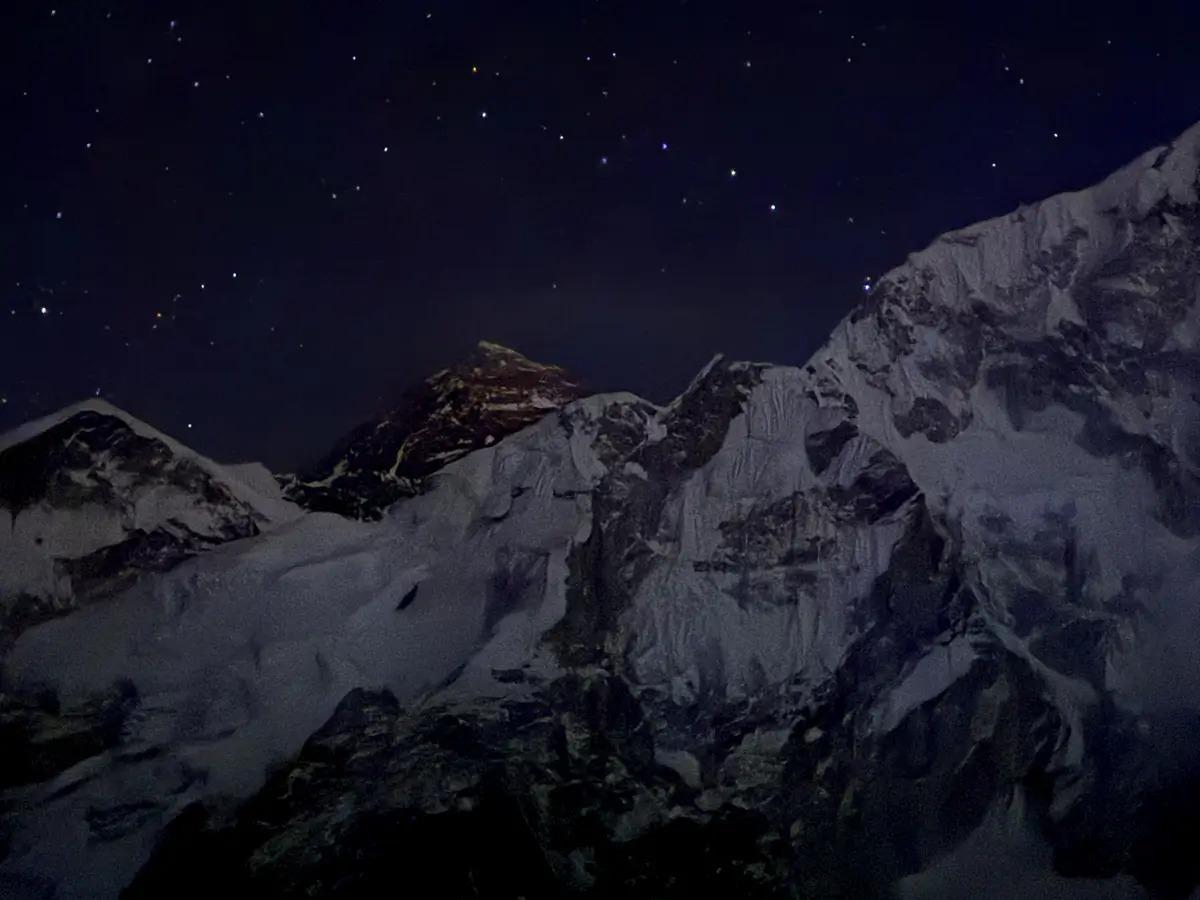
Night view during the Everest Base Camp Trek on a clear weather day
Everest Base Camp Spring Weather
While the Himalayas are known for their notoriously unpredictable weather that can go from sunny to cloudy, rainy, or stormy in the blink of an eye, including in the Everest Himalayas, where the Everest Base Camp Trek falls, it comes with the clearest Mount Everest views in spring. Clouds may roll in during the afternoon, and nights can get colder, but most of the time, skies are clear, and temperatures are mild.
At lower elevation villages such as Lukla, Phakding, and Namche Bazaar, some of the major Everest Base Camp hiking stops, daytime temperatures range from 10 to 18 degrees Celsius, and at the villages in higher elevations like Dingboche, Lobuche, and Gorak Shep, they can range from -5 to 10 degrees Celsius. Above 4,000 m, the temperature at night can drop below freezing point, so you start walking early in the morning and conclude by lunchtime.
How are the Everest Trail Conditions in the spring season?
With the beginning of the spring season in Nepal, snow covering the high-altitude trekking trails has mostly melted, including the Everest trekking route. Neither as snowy as winter nor rainy in comparison to summer, the well-defined trails remain dry. Which, as indicated, means that spring season Everest trekking is, with the reduced risk of slips, the safest, providing an ideal condition for trekkers with limited high-altitude experience.
The full roar of the glacial rivers and waterfalls adds to the preexisting dramatic scenery, from lush forests of oak, pine, and rhododendrons to an almost barren landscape without any vegetation, in sharp contrast to the snow-covered mountain peaks; a heavenly sight awaits. In addition to the budburst of various plants, including the blooming of rhododendron, also the national flower of Nepal, the Khumbu Valley appears to be a piece of heaven.
What is the wildlife can you anticipate in the Khumbu Valley Trekking in spring?
The Everest Base Camp Trek in Nepal falls within the Sagaramatha National Park. One of the UNESCO World Heritage Sites, which, along with being home to diverse ethnic communities of Nepal, is also a natural habitat for a wide range of flora and fauna. As the snow line retreats and the landscape explodes in the vibrant flowers of rhododendron and other wildflowers, the wildlife also becomes more active.
While rare, if you are extremely lucky, you may even get to see majestic beings such as snow leopards, Himalayan black bears, and a variety of birds during the hiking journey to Everest Base Camp in spring, many of which usually hibernate during winter. Himalayan Tahr (mountain goat), Danphe (Impeyan pheasant), and chirps of several others: the March, April, and May Everest Base Camp trek stands out for its greater chances for wildlife sightseeing.
Are there festivals or events on the Everest Trekking Trail in spring?
Yes, the spring season in Nepal often coincides with some of the biggest celebrations of the country and those events that are exclusively associated with the Everest region. First things first, the nation follows the Bikram Sambat Calendar, and the Nepalese New Year falls in the month of April, which is further the peak spring season. On May 29 is the world Everest Day, also the world wide famous Tenzing Hillary Everest Marathon.
In addition, Buddha Jyanati is also celebrated in spring, and while you are on the Everest Base Camp trekking route in spring, you may choose to participate in these events, or, as you are in the Everest region, locals are happy to have you there. For cultural enthusiasts, the spring trekking season in Nepal is also fruitful, where it is expected that you remain respectful to the local culture, customs, and traditions.
How are the crowds at Everest Base Camp in spring?
Spring and autumn are the peak high-altitude trekking and climbing seasons in Nepal, including for the Himalayan trip to Everest Base Camp, i.e., crowds at Everest Base Camp in spring are inevitable. Along the trekking trail, the atmosphere is lively; you can meet adventurers from across the world, making it a perfect time for individuals seeking a shared trekking experience, but this also means that teahouses fill up quickly.
Booking in advance becomes essential. The prices for accommodation and flights can be slightly higher, where Mountain Monarch, with a flight redirected from Manthali instead of Kathmandu, offers you fixed departures. However, for those who are more inclined towards a serene experience rather than a congested one, instead of the spring season Everest trekking, you may plan the Everest Base Camp Trek in winter, summer, or even autumn.
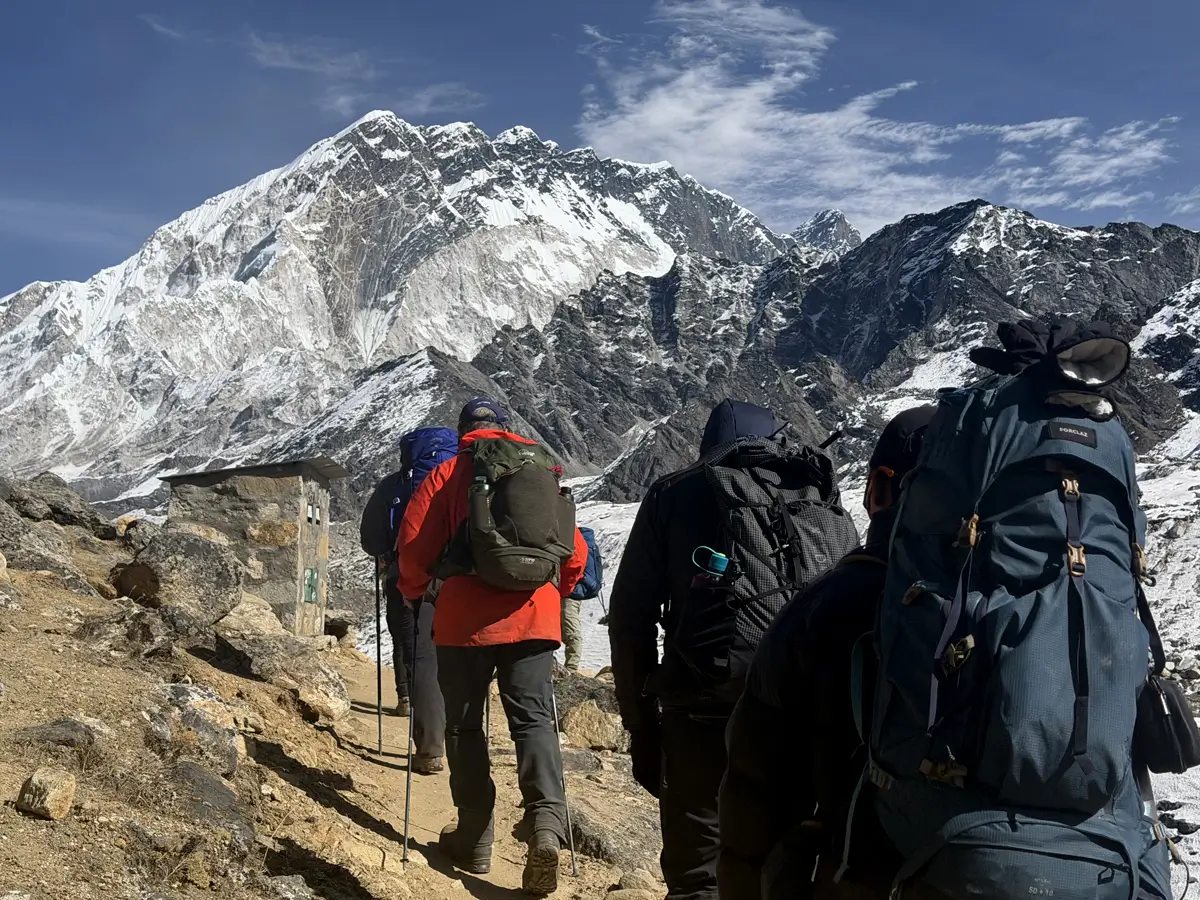
Team of Mountain Monarch on Everest Base Camp Trekking Route
Is the Everest Base Camp Trek best done in March, April, or May?
March marks the beginning of the spring trekking season in Nepal, and in comparison to April, most of the hiking trails remain quieter. The temperatures at higher altitudes can still be cool, but the skies are most of the time clear; hence, it is an ideal time for visitors looking forward to fewer crowds, even during the Khumbu Valley trekking in spring. April features further stable weather and waremer temperature.
The rhododendron forests around Namche Bazaar, Tengboche, and Dingboche burst out in the various shades of red, pink, and white. Excellent visibility with open mountain views; April, hence, is the favorite among photographers and first-time trekkers. Meanwhile, May is the warmest month and can be slightly hazy in the afternoon. Overall, in the March, April, and May Everest Base Camp Trek, the best one largely depends on your preferences.
Preparation and packing for the Everest Base Camp Trek in spring
While the trail conditions in the spring season are favorable, the high-altitude treks and climbs, including the Everest Base Camp hiking journey, are still physically demanding. The better the preparation, the easier the journey becomes, especially for first-timers. So consider beginning cardiovascular training such as running, cycling, hiking, and swimming. Leg and core strength exercises, and also activities that increase stamina, are not to be missed.
Likewise, regardless of when you have decided to go hiking to the Everest Base Camp, you must have proper gear and equipment. At night, early in the morning, and at high altitudes, it can still be cold. Stick to the Everest layering system of a moisture-soaking layer, insulated mid-layers, and water- and wind-protecting shell layers, followed by sturdy, well-broken-in trekking boots, where the package from Mountain Monarch provides both private and group gear.
Conclusion
The combination of reliable Everest Base Camp spring weather, trail conditions in the spring season, and clear skies with unobstructed Mount Everest views in spring makes the Everest Base Camp Trek in spring a journey beyond a hike. An unmatched Everest experience when every corner of the Himalayas comes alive, from colorful valleys to welcoming teahouses of Himalayan locals, without question, it is the best time to trekto Everest Base Camp (EBC).
Further, as Mountain Monarch, one of the leading trekking and climbing agencies in Nepal with more than two decades of experience in spring and autumn, offers fixed departures, including for the years 2026 and 2027, book your spot now. For group, solo, or private treks, share your preferences and enjoy our well-planned Himalayan holidays, including the Everest Base Camp Trek in winter and summer as per your request. Contact us now!
Some FAQs
Which is the best Everest viewpoint in spring?
While the Everest Base Camp at an altitude of 5,364 m above sea level is the closest you can be to Mount Everest if not on an Everest expedition, Kala Patthar, measuring around 5,644 m, is the highest point and also the one with the closest views, including in spring.
Are flights to Lukla reliable during spring?
Yes, stable Himalayan weather flights in spring and autumn are reliable most of the time, but the direct flight to Lukla from Kathmandu can be overcrowded, and higher air traffic may lead to some alterations. Therefore, Mountain Monarch books your flight from Manthali in the spring.
What are the main highlights of the spring trek to Everest?
There are several pros of spring trekking in Nepal, including the trek to the Everest Base Camp, which, in general, can be characterized by blooming rhododendron forests, more refined natural beauty with clear mountain views and skies, mild temperatures, and Sherpa culture.
Can you do the Everest trekking in spring without a guide?
No, especially after the nationwide strict ban of free individual trekkers (FITs) in Nepal since April 1st, 2023, you may choose not to join group trekking to Everest Base Camp in spring, but it is a must that you hire a professional local guide.
Why is the spring trek to Everest Base Camp (EBC) called “Trekking to Everest in Bloom”?
Everest Base Camp Hiking (EBC) in Nepal earns its name as the “Everest in Bloom” due to the flowering landscapes. Rhododendrons, magnolias, and other alpine flowers across the Khumbu Valley in the lap of towering sky hills and mountains promise an unmatched scenery.