Nepal stands out in the world for being home to some of the most iconic mountains, with 8 of the mountain ranges measuring 8,000 m above sea level, including the tallest mountain in the world, Mt. Everest (8,848.86 m). Located near it is Island Peak, which serves as one of the most popular trekking peaks in the country. Officially known as the Imja Tse Island Peak, it lies above the Imja Valley, a part of the larger Khumbu watershed and the Sagarmatha National Park.
One of the 6,000 m Nepal Mountaineering Association (NMA) trekking peaks in Nepal, Island Peak sits above the village of Chhukung in the Imja Valley. As the official climbing journey begins from here, many trekkers and climbers often refer to Chhukung as the Island Peak Base Camp, while the Island Peak summit lies closest to the southern face of Lhotse (8,516 m, the 4th tallest peak in the world) in the Everest (Khumbu) region of eastern Nepal.
Altogether within the boundaries of the Sagarmatha National Park, the standard 16 Days Island Peak climbing itinerary begins with the Everest Base Camp Trekking, facilitating adequate acclimatisation. Often with a side trip to Kala Patthar taken as the best Everest viewpoint with the closest sight of Mt. Everest after the summit itself, no wonder the Island Peak Route is noted for a best beginner-friendly combined trekking and climbing experience in Nepal.
The interesting naming of the peak “Imja Tse” or “Island Peak”
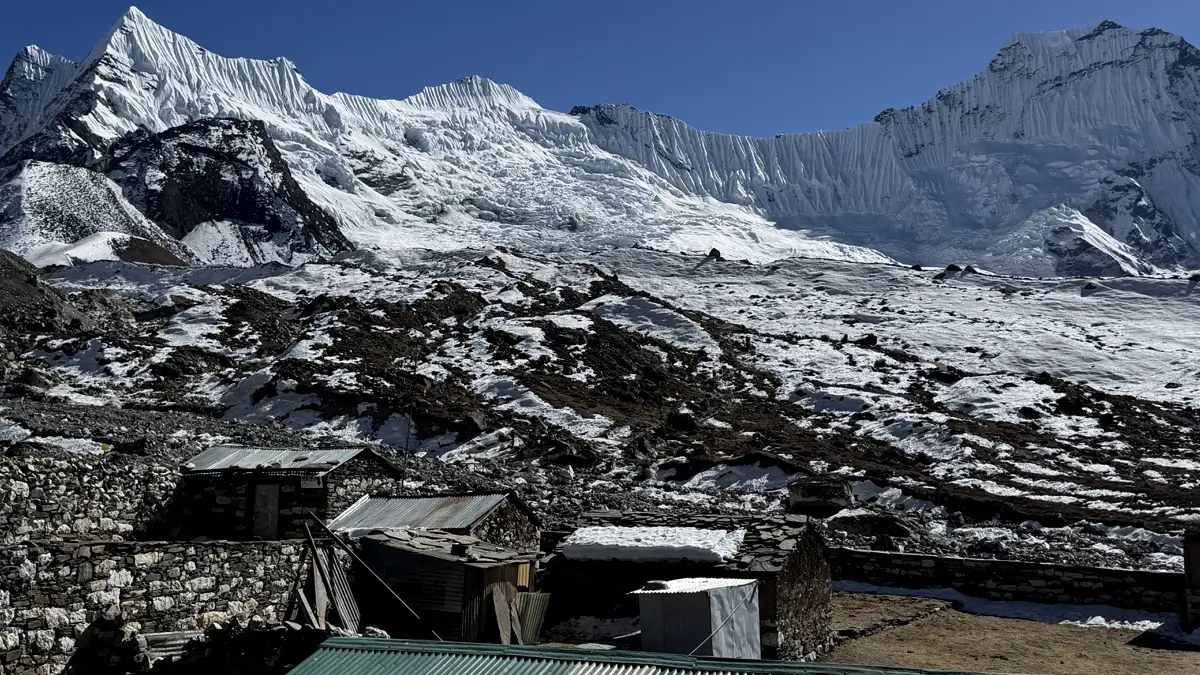
No, it is rather a mountain peak than literally an island, which also means while it may be considered the highest island peak in the world due to its height, it is not. Locally called “Imja Tse," the peak earned its name “Nepal Island Peak” in 1953, as, when observed by the Eric Shipton expedition team from Dingboche, it appeared like an island floating in the vast sea of ice, a unique, awe-inspiring sight that does excite the heart of every mountaineer.
Although it can be referred to as Island Peak Imja Tse and vice versa, unlike Everest and Manaslu, it is not technical; also, in comparison to the similar 6,000 m mountain peak that is taken into consideration for its unique pyramid-like shape, Ama Dablam (6,812 m). Instead, it ensures you an achievable challenge for anyone with a good level of physical fitness and basic climbing knowledge, making it one of the most frequently climbed trekking peaks in recent days.
What is the Height of Island Peak?
It is only reasonable that many trekkers and climbers are curious about the Island Peak elevation or the Island Peak altitude, especially when the region is feared for the Khumbu cough and the Everest death zones, which basically are 8,000 m above the terrain you journey through during the climbing of eight-thousanders like Mt. Everest, where the presence of oxygen in the air is ⅓ that at sea level and every breath feels like a blessing.
Well, well, don’t panic yet; Island Peak is not that technical. Standing at approximately 6,189 m/20,305 ft above sea level, it guarantees a rewarding thrill to every healthy and fit individual respecting high altitude and the Himalayas. I.e., it is still mandatory that you do not take altitude lightly; before you head higher, make sure your body has well adapted to the arduous mountain surroundings to prevent altitude sickness that can affect anyone regardless of experience.
Island Peak Difficulty Level: Understanding the risk
In terms of difficulty, Island Peak is graded PD+, meaning fairly as per the French Alpine system, which in technicality is moderate with one genuinely tough section: a 100-200 m fixed rope headwall at 45-50 degrees. 2B is in the category, and Class III to IV is under the UIAA scale. Up until now, there have been no records of Island Peak deaths; it is, however, a must that you have excellent fitness, be properly acclimatised, and have the right gear and equipment.
The chances are never completely zero, especially when the Island Peak Base Camp onwards; the trail can be snowy throughout the years with a high risk of frostbite. Steep ascents, descents, thin air, and, in addition, the unpredictable Himalayan weather – it sure is demanding, a perfect first climbing experience best pursued after high-altitude multi-day treks in Nepal like the Manaslu Circuit Trek, the Annapurna Circuit Trek, and the Kanchenjunga Base Camp Trek.
We set up the Base Camp Island Peak for you!
Yes, Mountain Monarch, with 4.6/5 ratings as per 51 Google reviews and 5/5 ratings as per 665 reviews on TripAdvisor, we are happy to offer you the best available premium services while on Nepal treks, tours, and adventures, including during the Island Peak climb in Khumbu. Up to Chhukung, one can choose to stay between teahouses, lodges, and guesthouses; thereafter, tenting camps are the only options left.
Doing it all by yourself while also carrying the climbing journey back to back, it can be a hassle for anyone. Then there is simply choosing service from Mountain Monarch and our professional and well-experienced team of mountain guides, porters, and Nepalese staff, including 1:1 porters, which means you will have camps set up for you. Before going higher, there is climbing training led by licensed guides, Mingma Chiri Sherpa or Ngima Sherpa, to sharpen your skills.
The Island Peak as seen from the Chhukung Village, also called the Island Peak Base Camp
Why does the Island Peak Summit Day best begin at 2 - 3 am?
Unlike other trekking and climbing days, the Island Peak Summit Day begins even before dawn and breakfast, usually at 2 - 3 am. It is so that you can make it to the summit point and return to the base camp before it gets dark and also avoid the strong afternoon winds, which are neither good for ascending nor for descending. For an enhanced Himalayan climbing trip with a high success rate, we provide you with essential gear and equipment.
Oxygen cylinder, first aid kit, and all other required personal and group climbing gear, including climbing boots to use and return after the trip is completed. Either way, during the summit day, the climbing route leads northeast with around 100 m of rugged flat paths before a steep climb. The exposed area next to the icy summit glacier, too, after crossing several crevasses, requires extra caution, while it all rewards you likewise once you make it to the top.
Are the views from Island Peak worth it?
Yes, the view from the summit point of Island Peak is totally worth it. On a clear day from the top, you have a visual retreat of Mt. Everest (8,848.86 m, the tallest mountain peak in the world), Lhotse (8,516 m, the 4th highest), Makalu (8,485 m, the 5th highest mountain range), Ama Dablam(6,812 m), Nuptse (7,861 m), Baruntse (7,129 m), and others. Further stunning during sunrise to watch the valley below come alive, it guarantees you one of a one-of-a-kind experience.
Miles away from the city and its hustle and bustle also means the amenities are limited, including the health facilities. In an emergency, helicopter evacuation to a major city is the only way out. The reason why we insist that you purchase comprehensive high-altitude travel insurance is that at its peak, the adrenaline, the sense of adventure, and the achievement side by side, an unforgettable Himalayan adventure trip is calling you. Are you ready to answer it?
How is the Island Peak trekking route?
By now you know that first you complete the Everest Base Camp Trekking with a side trip to Kala Patthar, and only when you trek to Chhukung first and then Base Camp Island Peak. The EBC Trek, being one of the most popular Himalayan treks in the world, features well-established trekking routes and teahouses to take care of your daily needs like meals, lodges, drinking water, and hygiene. You follow the well-trodden trail up until EBC (5,364 m).
Then the 2nd phase of the journey begins with a trek to Chhukung, one of the isolated villages in the Imja Valley, which remains the least visited even during the times of the year that are taken as the peak trekking and climbing seasons in Nepal: spring and autumn. From here, the facilities get extremely limited, but the genuine hospitality and authentic Sherpa culture remain as they are. Hearty meals and home-away-from-home ambience make it a warming experience.
When do you have the best Island Peak weather?
Different seasons bring different kinds of weather in the Himalayas, and that too can vary from morning to evening, including while you are on the journey to climb Island Peak in the Everest trekking and climbing region of Nepal. Though one can hardly ever predict the exact weather conditions, spring (March - May) and autumn (September -November) are found to feature the most stable conditions with the least chances of precipitation and snow.
Clear skies, excellent visibility, moderate temperatures, and the safest trekking and climbing conditions, offering fixed departures, including for the years 2026 and 2027. Join our group or plan solo and private for a more personalised experience; we can manage it for you. If requested, we can make arrangements for the climb even during summer and winter, but it is for you to be prepared for challenges like heavy rain and snow and extreme cold in winter.
Mera Peak vs Island Peak: What makes the difference?
Though Mera Peak is the tallest trekking peak in Nepal, located at an altitude of approximately 6,476 m above sea level, higher than Island Peak, it in general is considered less technical, with views of at least 5 of the world’s highest peaks – Everest, Lhotse, Makalu, Cho Oyu, and Kanchenjunga – along with other surrounding mountain ranges. Both are famous trekking peaks, and they do offer different experiences.
One is fit for an absolute beginner climber ready to start the mountaineering journey after high-altitude treks and hikes, while the other is for gaining a more practical climbing experience in the Himalayas, requiring the mandatory use of some technical gear. Or why choose when you can conquer both? Combined Mera and Island Peak climbing of 26 days; bookings are now open for 2027 and 2028. Balanced peak climbing in Nepal- do not miss this opportunity.
Conclusion
Climbing Island Peak is an exhilarating adventure that fills the gap between trekking through Sherpa villages, the varied landscapes of the Khumbu Valley, and learning technical mountaineering skills standing at the centre of some of the world’s tallest peaks. With a main intent to stand at the height of Island Peak, visualising the success with the legendary view from Island Peak, at last it ensures you a lasting impression.
When you know the Island Peak weather, the Island Peak route, the view from Island Peak, and fatalities like Island Peak deaths, you would also have a better idea of how to stay prepared for it so that you have a holistic experience from start to end. Hopefully, this helps you with what you are looking forward to knowing about Island Peak in Nepal. If you have any doubts, contact us now; we are happy to hear you out and make your dream adventure come true.