Discover the Six Sacred Beauties of Gokyo Lakes in Nepal
Discover the Six Sacred Beauties of Gokyo Lakes in Nepal
Updated on August 19, 2026
While the Everest Himalayas of Nepal are known for being home to the top of the world, Mt. Everest (8,848.86 m), the classic Everest Base Camp (EBC) Trek route, and the Mount Everest Expedition, they are also a treasure trove for those looking to explore hidden gems. Places known only to a few who value the raw Himalayan wilderness include the Gokyo Lakes in the Everest Trekking and Climbing region.
The sacred Gokyo Lakes in Everest, Nepal, sit at altitudes ranging between 4,700 m and 5,000 m above the iconic Khumbu Valley in isolation. It boasts immense serenity and are a fantastic choice to ditch the crowds on the popular high Himalayan adventure trails such as the Annapurna Base Camp Trek, the Langtang Valley Trek, and the trek to EBC itself, or embrace the mix of both. Like this, here are what makes the Gokyo Lakes must add in your bucket list.
What are the Gokyo Lakes?
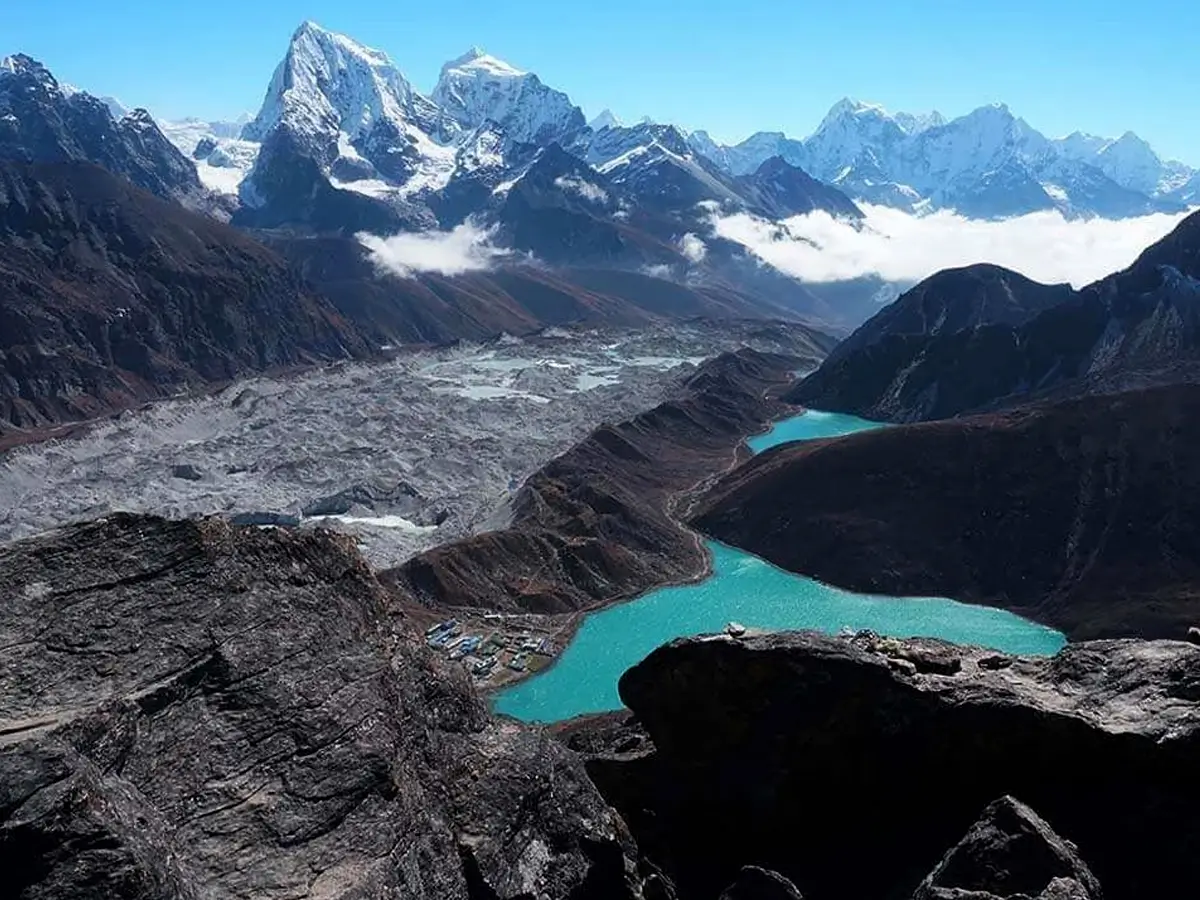
The Gokyo Lakes are a group of six Ngozumpa Glacier-fed lakes. In the shadow of some of the world’s largest mountains: Mt. Everest(8,848.86 m), Makalu (8,485 m, the 5th largest), Cho Oyu (8,188 m, the 8th highest peak), Lhotse, and others—it serves not only as the natural amphitheater but also as a landmark with greater spiritual and cultural significance. Altogether, there are 19, among them five are extremely cherished.
The sparkling shades of blue and emerald water with reflections of snow-capped mountain giants in stark contrast to barren terrain—the scenery is simply otherworldly. Added to by vibrant prayer flags, chortens (stupas), and mani walls engraved with mantras for protection, as locals believe it to be the abode of the deities looking after the region. Unveil the mystery of these sacred lakes during the Gokyo Lakes Trekking with a must-consider list.
The 1st sacred Gokyo Lake: Longponga Lake
The lake you encounter above the village of Machhermo is Longponga Lake, regarded as the first lake in the Gokyo Lake chain at an elevation of around 4,690 m above sea level. Framed by the barren slopes, rocky ridges, and glaciers in the distance, named Longponga for its long and narrow shape, it provides you with a taste of a high-altitude glacial lake. An incredible welcome keeps you excited for the journey ahead.
Especially when the lake area is dotted with alpine grasslands and grazing yaks, often rich in birdlife during the warmer months, including the peak trekking seasons in Nepal: spring and autumn. Tranquil ambiance perfect for meditation, prayer, and simply delving into the natural beauty of the Himalayas; adding to it are the numerous sacred stones believed to be left by the monks in honor of the great Buddhist spiritual leader before.
Taboche (Taujung) Tsho: The most striking lake in the Valley
Often overlooked due to the rush to reach the Gokyo Village, Taboche, also referred to as Taujung Tsho, is the second Gokyo Lake right at the center of Cholatse and Taboche. Located at an altitude of approximately 4,710 m/15,452 ft above sea level, here the contrast between the lake’s turquoise waters and rugged Himalayan terrain becomes more vivid, a paradise for photographers and mountain lovers bestowed by insider views.
Spread over an area of 18 hectares close to the Cho Oyu base camp and the Ngozumpa Glacier, hydrological studies found that it is the most stable water level among the chain of six Gokyo Lakes in the Everest Himalayas of Nepal. Mineral deposits in northern banks: you can see color-changing natural terraces throughout the day. Although not a major pilgrimage site, it is known for supporting rare bird species of ibisbill and snow pigeon and local livestock.
Gokyo Cho/ Dudh Pokhari: The heart of the Gokyo Valley
Perhaps the most famous of the Gokyo Lakes, also called Dudh Pokhari, meaning “Milk Lake," for its milk-like, soft, silver-blue glow during early morning light. Gokyo Cho, the 3rd Gokyo Lake, is the undisputed crown jewel of the Gokyo Lakes Trekking. Beside the village of Gokyo, it consists of small shrines that receive thousands of visitors each year, especially during the occasion of Janai Purnima, which often coincides with the months of autumn.
Nearby Gokyo Ri, one of the best Everest viewpoints, offers a 360-degree Himalayan panorama of the surrounding sky and towering snow-capped peaks, especially scenic during sunrise and sunset. With the combination of lake, village, and viewpoints, you have the perfect spot to stop for proper acclimatization. Early morning hiking to Gokyo Ri and, in spare time, unwinding around the shores of the glacial lakes and tiny yet beautiful mountain village.
Thonak Cho: The longest Gokyo Glacial Lake
The one with the largest surface area of 65 hectares and depths over 62 meters is Thonak Cho, the 4th Gokyo Lake among the six major ones that you come across during the Gokyo Lakes Trek in Nepal. The deepest lake in the Everest trekking and climbing region, beyond the Gokyo Village, is often overlooked, just like the 1st lake at an altitude of 4,834 m; the trail to here, hence, is also a lot quieter, revealing the enormous scale of the Ngozumpa Glacier.
About an hour's walk north from the Gokyo village, at Thonak, silence speaks louder than anything. Time seems to have stopped here, offering you ample time for self-reflection, growth, and immersion into the grandeur of Mother Nature. A sense of wilderness and solitude at its peak is added by the cultural and significant value, worth extending 2 - 3 days for visiting, as often the standard Everest Gokyo Lakes trek itinerary stops at the third lake.
Ngozumpa Tsho, the infamous Gokyo 5th Lake
Commonly identified as the 5th Gokyo Lake, Ngozumpa Tsho lies further north at the edge of the 5,000 m line closest to the Ngozumpa Glacier, which stretches about 36 km. Just beneath Makalu, Lhotse, Pumori, Baruntse, Lhotse Shar, Ama Dablam, Cho Oyu, and Everest itself are also reflected on the crystal-clear lake water; no wonder it is also taken as one of the top Everest viewpoints to experience the quieter Gokyo Valley and mountain vistas.
Specifically famous for the North Face of Everest, many argue the view from here is superior to the standard Everest Base Camp, which is abundant in raw energy. Shaped by glaciers, rock, and snow, it emphasizes the most unspoiled beauty of the Himalayas and captures the most dramatic and true wilderness of the Khumbu region. Then the further hike from here takes you to the sacred 6th lake called Gyazumpa Tsho at an elevation of 4,950 m.
One of the most sacred lakes of Nepal, Gokyo Lakes (4,700 m-5,000 m)
Where does the Gokyo Lakes Trek take place?
One of the amazing facts about the Gokyo Lakes is that they are part of the Sagarmatha National Park, one of the natural UNESCO World Heritage Sites in Nepal, along with the Chitwan National Park. It falls into the land of the landmark called the roof of the world, Mount Everest (Chomolungma in Tibet and Sagarmatha in Nepal), a high-altitude trekking and climbing paradise with a wide range of options available.
Beginner-friendly Everest treks and climbs are the Everest Panorama Trek, Mera Peak Climbing, Island Peak Climbing, and Lobuche East Peak Climbing. The Baruntse Expedition enhances your skills, and the Mount Everest Expedition is one of the ultimate tests of human strength. You are about to explore one of the best-kept secrets of Nepal’s Solukhumbu District when you book the Gokyo Lake Hikes of 16 days.
Then, while you go, you will pursue the routes as per your choice, whether to reach Gokyo Lake as part of the longer Everest Treks as a side trip or Gokyo Lakes as the sole primary destination. Either way, you head deeper into the iconic Khumbu Valley and walk through the diverse landscapes. That means distance, duration, and highest point may vary accordingly as well, but in the end you are sure to collect memories of a lifetime.
What is the altitude of Gokyo Lake?
The sacred lakes of Gokyo sit at an elevation of 4,700 m to 5,000 m (15,400-16,400 ft) above sea level. Yes, it is lower than the major Everest viewpoints and mountain peaks such as Kala Pattar (5,545 - 5,644 m), Gokyo Ri (5,357 m), Nangkartshang Peak (5,083 m), Chhukung Ri (5,357 m), Mera Peak (6,476 m), and Island Peak (6,189 m). To arrive here, you would be doing daily 5 - 7 hour walks for several days at 3,000 m above sea level.
From the point where the level of oxygen present in the air begins to drop significantly, a speedy ascent without proper acclimatization can cause anyone to suffer from the symptoms of altitude sickness, also called acute mountain sickness (AMS). Which, if not taken care of on time, can further escalate into fatal conditions like HACE and HAPE, so you must take altitude seriously and try to follow the golden rule: hike up and sleep low wherever possible.
When is the best weather for Gokyo Lake?
Yes, you have guessed it right; the trekking journey to Gokyo Lake is manageable throughout the years, including during monsoon and winter, which are typically taken as off-seasons for high-altitude trekking and climbing. If prepared for some seasonal challenges such as heavy rain in the summer (monsoon) season and extreme cold in the winter, especially at high altitudes and early mornings and nights, a hike to Gokyo Lake is equally rewarding year-round.
However, if you are a beginner and do not want to take any risk, looking forward to the most favorable Everest Himalayan weather in and around Gokyo Lakes, clear skies, pleasing weather, and the safest trekking trail conditions, nothing beats the months of spring and autumn, from March to April and September to November. In pre-monsoon and post-monsoon seasons, the visibility is excellent with less chance of encountering rain, snow, slips, landslides, and floods.
Conclusion
The six sacred beauties of Nepal, the Gokyo Lakes in Everest, are one of the most extraordinary natural, spiritual, and cultural destinations in the Himalayas, a golden opportunity to gain deeper knowledge of the lives of Sherpas and their culture. Leave your footprint at one of the rarely heard of and traveled-to pilgrimage sites in the Everest trekking region; book the Gokyo Lakes Trekking now for 2026 and 2027 with a highly experienced team.
Prepare with the above-provided information on Gokyo Lakes altitude, Gokyo Lake location, and Gokyo Lakes weather while we take care of other essential logistics, from meals to permits and Sherpa guides. We are known for premium services at reasonable prices. Join one of our fixed departure groups in spring and autumn or go solo, privately, or plan with family; customization is available. More than 20 years of expertise; contact us now and secure your spot!