Essential Things to Know Before Visiting Sagarmatha National Park
Essential Things to Know Before Visiting Sagarmatha National Park
Updated on October 13, 2026
The Sagarmatha National Park is one of the 12 protected national parks in the country. Home to the top of the world, Mt. Everest (8,848.86 m), it is named after the local name of the peak, "Sagarmatha," which translates to “above the sky” or “head of the sky." Here are some of the must-know things about the Sagarmatha National Park in Nepal, the first natural UNESCO World Heritage Site of the country.
From the location, area, entrance gate, popular trekking routes, major attractions, proven practical travel tips to tackle high altitude, and things to do in Sagarmatha National Park for an unforgettable Himalayan experience, including for the years 2027 and 2028. With an insight into why trekkers, mountaineers, naturalists, and cultural enthusiasts would find the park equally fascinating, let us take you through what to expect while journeying through here.
Where is the Sagarmatha National Park in Nepal?
The Sagarmatha National Park lies within the Khumbu region from the Dudh Koshi River valley to the high Himalayan frontier near Tibet in eastern Nepal. In the Solukhumbu district of Koshi Province, it borders the Tibetan Autonomous Region of China to the north and the Makalu Barun National Park to the east, which is further named after the 5th tallest mountain peak in the world, Mt. Makalu (8,485 m/27,838 ft) and the Barun River and Valley.
Therefore, despite not being the largest national park of the country, like the Shey Phoksundo National Park, or the first Himalayan National Park, such as the Langtang National Park, nor the largest conservation area, like the Annapurna Conservation Area, it is taken as one of the most significant parks of the nation from all major perspectives, including border, culture, and biodiversity, ranging from lush valleys to rugged terrain.
What is the area of the Sagarmatha National Park?
The Sagarmatha National Park covers an area of 1,148 square kilometers (443 square miles), with a thriving 275-square-kilometer buffer zone declared in 2002. Though entirely in the Solukhumbu district, Monjo, serving as the main entrance, covers a large section of the high Himalayan landscapes, ranging in altitude from 2,845 m / 9,334 ft to the highest point on Earth, 8,848.86 m / 29,031.7 ft above sea level at the Mount Everest summit.
It boasts the temperate, subalpine, and alpine zones featuring blue pine, oaks, and rhododendrons, to only dwarf shrubs, creeping juniper, mosses, and lichens with cascading waterfalls, pristine turquoise lakes, and glaciers in between, serving as a natural habitat for a wide range of Himalayan wildlife guarded by more than 90 high Himalayan snow-capped peaks, including 2 other major 8,000 m peaks like Lhotse and Cho Oyu after Mt. Everest itself.
Sagarmatha National Park Biodiversity
Despite the harsher climate with an increase in elevation, the Sagarmatha National Park supports a wide variety of flora and fauna, providing habitat even for several rare and elusive Himalayan species like the red panda, Himalayan Tahr, musk deer, Himalayan black bear, and also the majestic snow leopard. Though spotting is rare, as many of the species are shy and active at different times, conservation efforts are of the utmost importance.
This is especially true given that mountain ecosystems are extremely fragile due to varying climatic zones, and the world is experiencing climate change that directly impacts glaciers, water availability, snowfall, tourism, and human activity. It is also one of the reasons why the region is designated as a national park area requiring the Sagarmatha National Park Permit, local permits, and specific climbing permits, if any.
History and UNESCO Recognition
To safeguard the fragile natural environment of the high-altitude ecosystem, pristine wilderness, and unique Himalayan cultures of the Everest region facing the pressure of growing tourism, mountaineering expeditions, and deforestation, the Himalayan zone was officially designated as the Sagarmatha National Park in July 1976. Then, in 1979, it was listed as a World Heritage Site from Nepal even before Chitwan National Park.
A massive international recognition that it deserved, with a strong link to the history of mountaineering, from beginner-friendly climbs like Mera Peak Climbing, Island Peak Climbing, Ama Dablam Expedition, and Lobuche East Peak Climbing to the epic Mount Everest expedition with Sir Edmund Hillary and Tenzing Norgay being the first ones to successfully make it to the summit point of the top of the world, it is a significant movement to promote ecotourism.
What is the connection of the park and Sherpa Culture and Heritage?
Besides the Sagarmatha National Park, being one of the most celebrated natural conservation areas of Nepal, it is also a cultural homeland of the Sherpa people, the real backbone of tourism and mountaineering in the country. Nicknamed the “Tigers of Snow" for their extraordinary climbing skills and adaptability to the tough mountainous surroundings, their culture is deeply rooted in Nyingma Tibetan Buddhism; you would have the opportunity for cultural immersion.
Mani walls, monasteries, stone-roofed houses, gompas, and chortens, usually decorated with colorful prayer flags, represent the region's strong inclination to their centuries-old culture, customs, and traditions that they have successfully passed from generation to generation. Sagarmatha National Park is also a cultural treasure, especially during annual festivals like Mani Ridum in the Tengboche Monastery (the largest monastery of the Everest region).
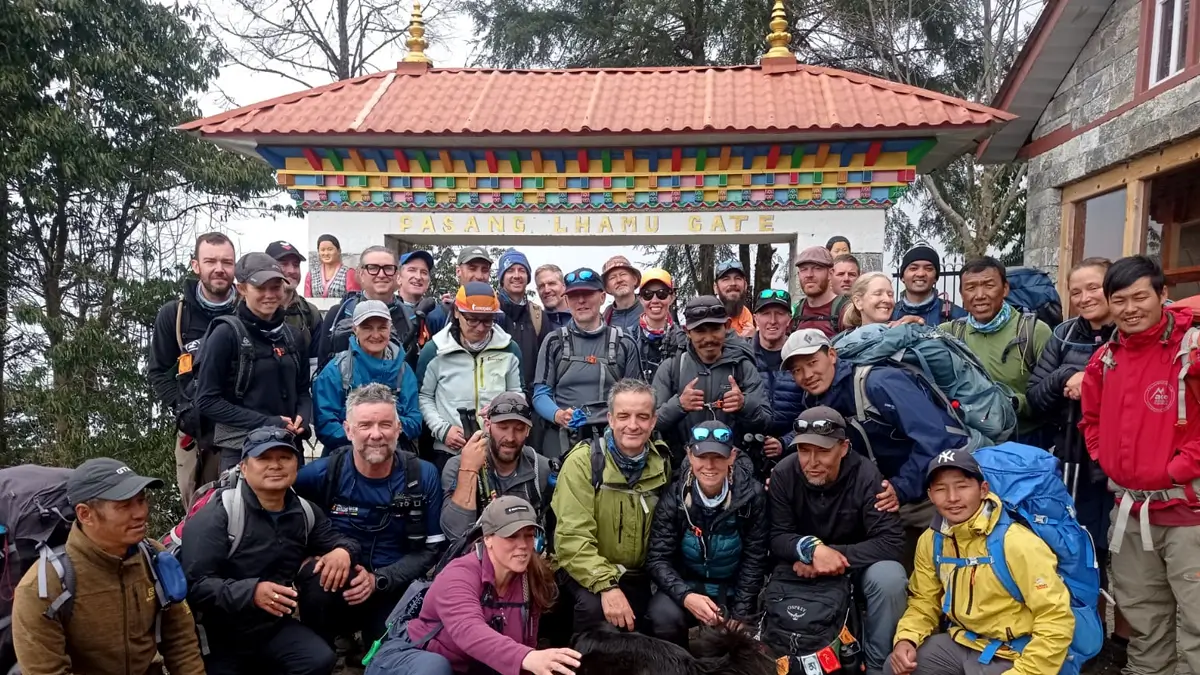
One of the team of Mountain Monarch at the Pasang Lhamu Sherpa entrance gate
Sagarmatha National Park Weather
Along with the seasons, the altitude and exposure to wind also significantly affect the weather and temperature in the Sagarmatha National Park. Usually, the lower region tends to be warmer, and despite the seasons in the upper Himalayas of the park, it can be cold throughout the year, with peaks and terrain beneath covered in snow. Still, there are times of the year that feature the most favorable conditions for visiting the park area.
Spring and autumn are from March to April and September; during these times, even the feared unpredictable Himalayan weather remains stable most of the time with comfortable temperatures, clear skies, and excellent visibility. In the monsoon (summer) from June to August, the park area experiences heavy rainfall, and in winter, which typically spans from December to February, high-altitude treks and climbs are not recommended in the park area during these times.
How to Reach the Sagarmatha National Park?
Sadly, up until recently, there hasn’t been a conventional road connection to the places regarded as the official Sagarmatha National Park entrance, Monjo, Jorsalle, or Lukla. The most common way to access is a mountain flight from Kathmandu or Manthali, Ramechap, to Lukla. Those who prefer overland access have an option to drive to Salleri, Jiri, Thamdanda, Shivalaya, or Surke and begin hiking all the way from there.
If you are more fond of classic Everest trekking and climbing experiences followed by ample opportunities for proper acclimatization, starting with a drive and hiking from a lower region to enter the Sagarmatha National Park is the best choice. Flight to Lukla is short and scenic; however, it is greatly affected by the changing weather and heavy air traffic during peak seasons, so we arrange the flights from Ramechap to avoid any disruptions.
Things to do in the Sagarmatha National Park
The Himalayan national park of Sagarmatha offers various golden opportunities to experience the epic mountain scenery, local traditions, wildlife, monasteries, glaciers, and remote mountain tribes of Nepal with popular treks such as the Everest Base Camp, Gokyo Lakes, Three High Passes, and the Everest Circuit Trek via Cho La Pass. Likewise, exploring the bustling Sherpa towns and monasteries like Namche Bazaar and Tengboche Monastery.
From relishing the stunning magical sunrise view from Kala Patthar, often also referred to as the ultimate Everest viewpoint, similar to Gokyo Ri Sagarmatha National Park, to daring Himalayan peak expeditions or observing some of the rarest and most elusive flora and fauna, the Sagarmatha National Park is a treasure hub for adventure enthusiasts across the globe. Let us know if you have any particular areas of interest; we are happy to customize the Everest trip.
Do you need permits to enter the Sagarmatha National Park in Nepal?
Yes, there is a specific Sagarmatha National Park permit one must obtain to enter the park premises regardless of the adventure activity you are attempting. Though the Sagarmatha National Park Permit cost remains similar throughout the years, unlike the special restricted area permit (RAP) required for journeying into the restricted areas of Nepal, such as the Upper Mustang Valley Trek and the Upper Dolpo Trek, it is mandatory to obtain.
It is the same whether you do the trek to Everest Base Camp in the Sagarmatha National Park or the Gokyo Lakes Trek with a side excursion to the Gokyo Ri peak nearby. Other Everest trekking permits are the local Khumbu Pasang Lhamu Rural Municipality permit and the climbing permit if a mountain expedition is involved. Checked at several entry points, these ensure that your visits to the national park are legal and support national initiatives to responsible tourism.
Practical tips for visiting the park area of the Sagarmatha
While the Everest trekking and climbing region in Nepal, where the Sagarmatha National Park serves as the core part, is one of the Himalayan zones of the nation that allows journeying without a guide, it is always better to choose to go through licensed and well-experienced travel, trekking, or expedition agencies such as Mountain Monarch. A comprehensive guided Everest Base Camp & Sagarmatha National Park package ensures your needs are prioritised.
From the legal permits that are checked at the Sagarmatha National Park Jorsalle Entrance Gate and other major entry points to logistics and essential trekking and climbing gear and equipment, we are known for premium services at a reasonable price. Once on the trail, it is for you to maintain your pace, listen to your body, eat healthy, stay hydrated, and properly acclimatize before going higher to avoid altitude sickness due to high altitude.
Conclusion
The Sagarmatha National Park strikes the right blend of natural beauty, cultural heritage, and out-of-the-world mountain scenery wherever in the park you choose to visit. When you understand its location, the Sagarmatha National Park Entry Permit, the Sagarmatha National Park Permit Cost, and things to do, it helps greatly with the right planning and preparation, including for the years 2027 and 2028, to pick the activities that suit you the best.
Or contact us now and share what your dream Himalayan holidays in the Everest Himalayas look like. Drawn to the Gokyo Lakes and Gokyo Ri Peak, the classic Everest Base Camp with a side trip to Kala Patthar, a short hike up to the Tengboche Monastery, or thrilling Everest mountain climbing, we can make all the essential arrangements for you so that you have a hassle-free experience from start to end safely and make the best out of the visit.