How to train for the Annapurna Circuit Trek in Nepal? Best Preparation Guide for 2026 and 2027
How to train for the Annapurna Circuit Trek in Nepal? Best Preparation Guide for 2026 and 2027
Updated on March 19, 2026
The Annapurna Circuit Trek that circumnavigates the 10th highest mountain in the world, Mt. Annapurna (8,091 m), is one of the most iconic high-altitude trekking routes in Nepal. The main highlight includes crossing the Thorong La Pass (5,416 m), also the highest point of the trekking journey; it takes you from lush forests and remote villages to alpine landscapes with sparse vegetation and human settlements.
Therefore, it is primarily a convenient high-Himalayan adventure for seasoned trekkers and climbers. It is not recommended for first-timers unless and until you are well prepared. So this is the Annapurna Circuit Trekking Preparation Guide in case you are planning a Himalayan trip in the years 2026 and 2027 as a beginner. Here is how to train for the Annapurna Circuit trek: What exercises to do and how to prepare for the Annapurna Circuit Trek?.
The Annapurna Circuit Trekking Itinerary of 16 Days
16 days is the standard Annapurna Circuit Trek itinerary handpicked by well-experienced professional mountain guides from Mountain Monarch. It ensures you have a balanced adventure from start to end. Marking a start with your arrival in Nepal, while the official trek begins only on the 4th day to make it to Chame after a trip preparation day in the Kathmandu Valley and a drive to Dharapani past Besisahar and Bulbhule. Then you follow the off-the-beaten-track route.
The Annapurna Circuit hiking trail continues with stops at Upper Pisang, Ngawal, Manang, Khangsar, Tilicho Base Camp, Tilicho Lake, Shree Kharka, Ledar, High Camp, and finally Muktinath via the Thorong La Pass. In addition, if you like, you may add extra trips to nearby famous high-altitude landmarks. We strive to meet your expectations, preferences, and any requirements.
What is the difficulty level of the trek to complete the Annapurna Himalayan trip?
The Annapurna Circuit hike is much more challenging than a casual walk in the park. 12-16 days of high-altitude trekking in the remote Himalayas is as mentally demanding as it is physically. At low oxygen, it gets tougher to walk 5-7 hours on a daily basis, especially when the trail consists of steep ascents and descents like any other mountainous terrain of Nepal, such as the Manaslu Circuit Trek and Upper Dolpo Trek.
The journey progresses through diverse landscapes and weather conditions, from subtropical forests to desert-like ones, such as the Tibetan plateaus in the trans-Himalayan rain shadow area. Structured training for the Annapurna Circuit Trekking is recommended at least 8-12 weeks before the trek departure date. Without proper preparation, high altitude, long trekking days, and rocky trails full of ups and downs can be overwhelming, especially for first-timers.
How to prepare for the Annapurna Circuit Trekking of 16 Days?
Preparing for the Annapurna Circuit Trekking means one should know how to maintain the balance between the body, mind, and logistics. Only strong determination is not enough, nor are mind-blowing physiques. The proper Annapurna Circuit Trek preparation requires attention to fitness, altitude management, gear, and logistics as well. The main highlight of the journey, crossing the Thorong La Pass, is also the toughest phase.
Often snowy throughout the years, regardless of when you plan the Annapurna Circuit of 16 days, due to a lack of safety awareness essentials while on high Himalayan trekking trails, there’s a record of many having to give up midway at the Thorong La Pass. Unpredictable Himalayan weather can be surprising in pre-existing taxing trekking routes to complete the around-Annapurna trek, so preparation involves understanding the trail conditions.
Fitness Preparation Guide for the Annapurna Circuit Trek
Being physically fit is non-negotiable. If you are suffering from any sort of permanent illness or have health issues related to the knees, lungs, and heart, it is imperative that you consult with the concerned authorities at first before booking the Himalayan trip to complete the Annapurna round trek. But if you are healthy individuals, whether you are a beginner or seasoned trekkers, here is the physical Annapurna Circuit Trek Training you can do for better preparation.
Cardiovascular activities to increase the capacity of your heart and lungs to adapt to mountainous surroundings are a must to not miss training for the Annapurna Circuit Trekking.
Training to build up strength and endurance to tackle the demanding uphill climbs and descending walks.
To keep yourself used to high-altitude trekking conditions, consider practicing multi-day hiking in local terrains.
In the Himalayas, you may hire porters to carry your trekking gear and equipment, but daypacks are to be carried by yourself, so in practice, make sure to carry your backpack for better conditioning.
Keep up-to-date information on the trekking region you are travelling to. Stay in contact with local experts, well-experienced, such as Mountain Monarch, for reliable updates.
Best Exercises to Prepare for the Annapurna Circuit Trek
To stimulate cardiovascular health and strength, we recommend to you these as the best exercises to prepare for the Annapurna Circuit Trekking: hiking on hills, stair climbing, running, jogging, cycling, swimming, squats, lunges, step-ups, deadlifts, and core workouts. 4-5 cardio sessions and 2-3 times per week strength training are what we highly encourage you for. 30-60 minutes is basic for you to slowly increase the intensity.
While these are activities to do for better physical preparation for the Annapurna Circuit Trek, as part of the mental preparation, it is suggested that you understand the geographical conditions of the Nepalese Himalayas, which make it hard to access modern-day amenities and extreme luxury. Even the fulfillment of daily meals, clothing, and shelter itself is a blessing, so keep your mind open to different cultures and simple living standards for more immersive experiences.
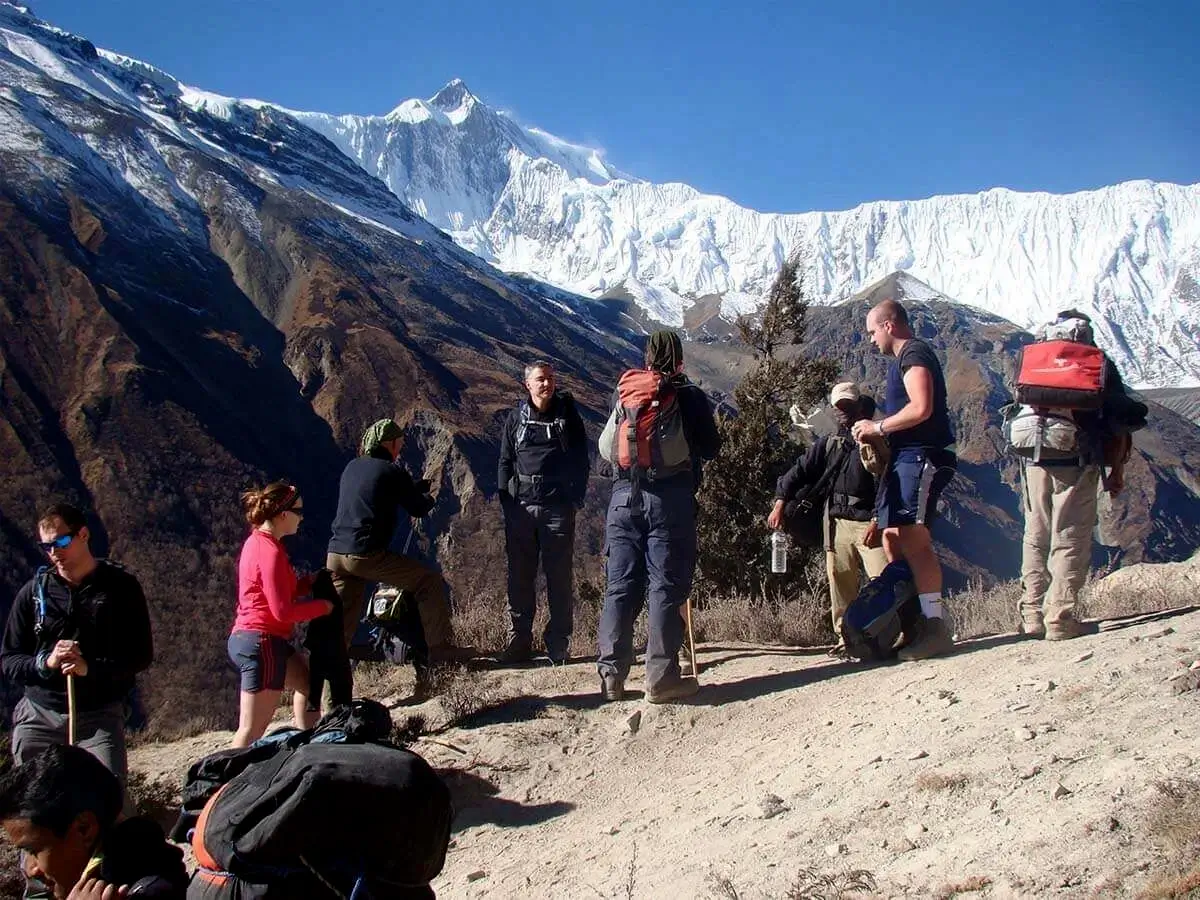
On the Annapurna Circuit Hiking Route
Plan Your Annapurna Circuit Trek at the Best Time
Yet another preparation guide for the Annapurna Circuit Trek is choosing the right seasons for trekking so that, in addition to inherent challenges, you do not have to deal with the seasonal demands that come with trekking in the Himalayas during summer and winter. Although the main Annapurna Circuit Trekking Trail falls in the trans-Himalayan rain shadow area in the lower region, there is a high chance of heavy rainfall, floods, and landslides in the summer.
In winter, it gets unbearably cold in the Himalayas, precisely 3,000 m above sea level. Dense snowfalls can cause blockage of the trail and also closing of the teahouses, making managing logistics challenging, so the best seasons for high-altitude treks and climbs in Nepal, including for the trekking that encircles Annapurna, are also spring and autumn. March to May and September to November feature the most stable weather, clear skies, and mild temperatures.
Why pack light and smart for the Annapurna Circuit Trekking?
The correct Annapurna Circuit Trek itinerary preparation is incomplete without the right trekking gear and equipment. While we say so, do not panic; it is not technical, but, as mentioned above, the weather in the Himalayas changes frequently. It can go from rainy to sunny anytime; hence, it is important that you have essential trekking gear to withstand it. A pair of high-quality broken-in trekking boots, three layers of clothing, trekking poles, and first aid kits are must-haves.
On booking with us, Mountain Monarch, we do provide you with all the group trekking gear and also 1 porter per trekker. In case you are looking forward to hiring a guide and porter only, there is a limitation on how much porters can carry. I.e., porters are allowed to carry only 25 kg shared between two trekkers; therefore, 25 kg of light packing is smart. Include essentials and leave unwanted items behind in Kathmandu or at the Mountain Monarch office.
Annapurna Circuit Trek Acclimatization and Altitude Preparation
A rapid ascent to a high-altitude zone without proper acclimatization, as the body fails to adapt, anyone on the trekking trail, be it on the classic Everest Base Camp Trek, Annapurna Sanctuary Trek, Everest Three High Passes Trek, Langtang Valley Trek, or the Annapurna Circuit Trek, can suffer from the symptoms of altitude sickness, also called acute mountain sickness (AMS). Mild signs include headaches, fatigue, loss of appetite, and shortness of breath.
If not taken care of on time, it can further escalate into serious conditions like HACE and HAPE, and its key ingredient for prevention is proper acclimatization. So, while planning your Annapurna Circuit Trek, make sure the package you have chosen allows you to maintain your pace and also facilitates an environment to follow the golden rule of hiking high and sleeping low. You are not in competition; take breaks when needed, there is no need to rush, and listen to your guide.
Annapurna Circuit Trek Preparation Tips: Must you add 2-3 days extra?
Other than adequate physical preparation for the Annapurna Circuit Trek and acclimatization, the Annapurna Circuit Trek preparation tips are to stay hydrated, eat healthy, and make peace with the simple living standards, the way locals have been closer to people and nature and farther from fast-paced modernity. A professional guide from Mountain Monarch monitors your health and also ensures the hygiene of the meals provided.
If you have any special requirements, such as vegan, lactose-free, or any others, feel free to communicate with us while booking the trip so we can make necessary arrangements for you. As per 2-3 extra days, it is not compulsory, but if you are keen to explore and discover hidden gems other than what the classic Annapurna Circuit Trekking route has to offer, it is worth adding and makes sure you do not miss any of the round-trip highlights to Annapurna.
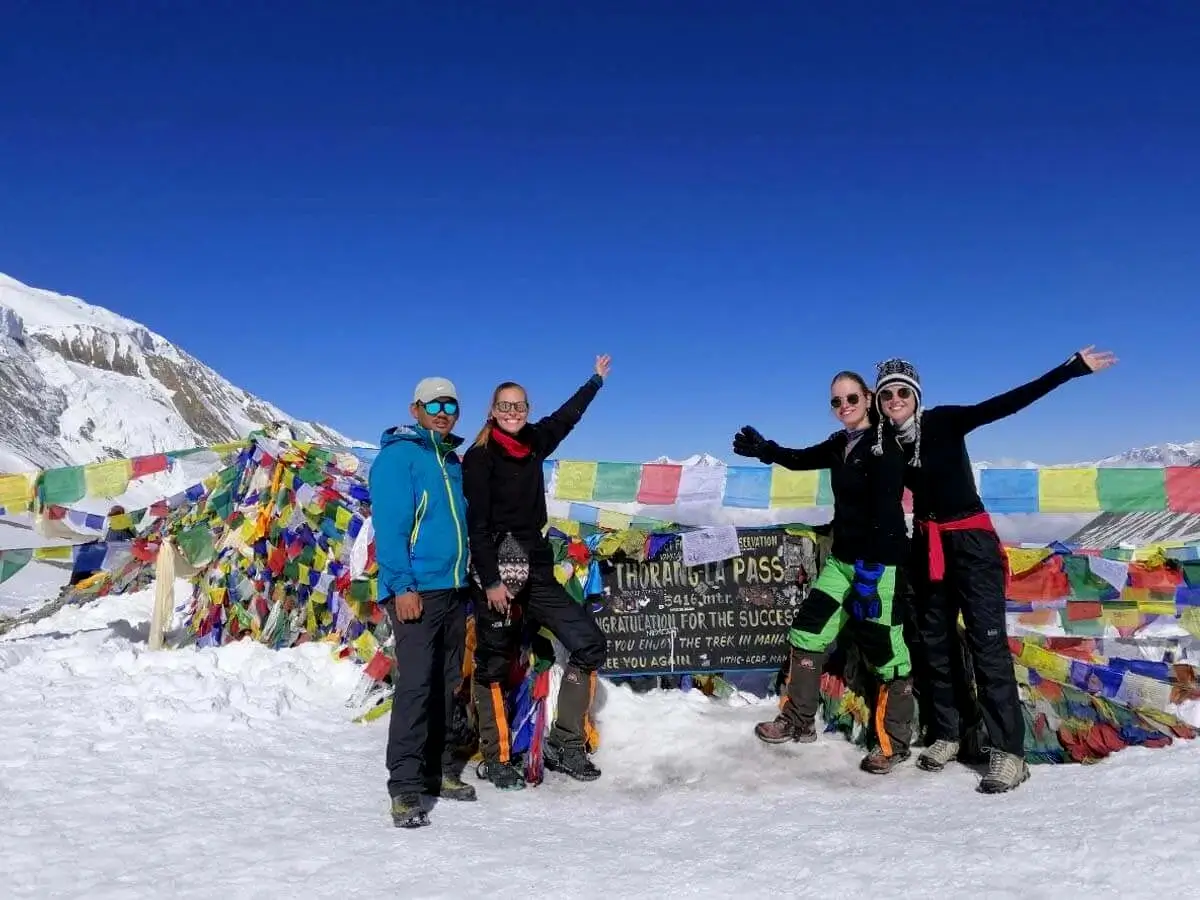
At Thorong La Pass (5,416m)
Conclusion: Preparation is the key!
How the Annapurna Circuit Trek is going to be for you is greatly dependent on how you have trained and prepared for it. Those who have focused on fitness training, proper planning, acclimatization, and safety not only build up confidence but also have a higher success rate with greater mobility, a more comfortable experience, and, overall, an incredibly memorable journey. We are happy to share this complete Annapurna Circuit trekking preparation guide.
Preparation is key, and with Mountain Monarch, more than two decades of dedicated years in tourism in Nepal, an epic Himalayan holiday with a more personalized touch is guaranteed. From handling essential paperwork to managing the logistics and sharing the safety tips for the Annapurna Circuit Trek, we are your reliable travel, trek, climb, and expedition partner in Nepal. Bookings are now open for 2026 and 2027. Book now!
Some FAQS
Is the Annapurna Circuit solo trek possible in Nepal?
Yes, solo trekking, as in not joining the group Annapurna Circuit hiking journey, is manageable, but it is a must that you hire a local licensed mountain guide, such as one from Mountain Monarch. Nepal has banned free individual trekkers (FITs) nationwide since April 1st, 2023, so hiring a guide is mandatory and is part of proper trek preparation.
Where to buy travel insurance for the Annapurna Circuit trekking?
Unfortunately, we do not sell travel insurance, but the safety tips for the Annapurna Circuit Trek are to purchase a comprehensive high-altitude coverage insurance policy. It ensures you have a better peace of mind and financial security at the high altitudes around the Annapurna Circuit Hike of 16 days. Make sure it has emergency helicopter evacuation, medical bills, and trip cancellations.
Do you need a special permit to do the Annapurna Circuit Trek?
No, as the Annapurna Circuit Trekking does not fall within the restricted areas of Nepal, such as the Tsum Valley Trek, Nar Phu Valley Trek, and Upper Mustang Trek, you do not need any special Restricted Area Permit (RAP). ACAP and TIMS cards are enough, and as part of preparing for the Annapurna Circuit Trekking, we obtain them for you, so rest assured.
Can children complete the Himalayan Trip to the Annapurna Circuit?
Yes, you may include children to complete the round trip to Annapurna; those 7-10 years old may conquer it safely and also enjoy it with their family. They must be keen on the Himalayas, active, healthy, and well-prepared for what the Himalayas have to offer, which is definitely not rewards only, but also challenges.
What to do if you spot symptoms of acute mountain sickness (AMS) on the Annapurna Trek?
The first thing you do if you spot altitude sickness is not to panic and descend immediately as soon as possible. Let it not get severe; if doubts on symptoms arise, communicate with your mountain guide, and preventable as it is, ginger and garlic soups might work best as natural ingredients even before it triggers. So consider drinking ample amounts of it.